Evans-Polce Rebecca J, Maggs Jennifer L, Staff Jeremy, Lanza Stephanie T
The Methodology Center and Prevention Research Center, Pennsylvania State University, University Park, Pennsylvania.
Department of Human Development and Family Studies and Prevention Research Center, Pennsylvania State University, University Park, Pennsylvania.
Alcohol Clin Exp Res. 2017 Feb;41(2):407-413. doi: 10.1111/acer.13294. Epub 2016 Dec 30.
There is a well-known link between attending college and engaging in excessive alcohol use. This study examines in a national sample how the association between student status and excessive alcohol use changes from late adolescence through young adulthood and whether the association of student status with excessive alcohol use is different for students residing with versus away from parents during the school year.
This study used cross-sectional data from the National Epidemiologic Survey on Alcohol and Related Conditions, a nationally representative sample of noninstitutionalized civilian adults residing in the United States. Our analyses included nonhigh school young adults who were ages 18 to 30 years (n = 8,645). Excessive alcohol use included past-year (i) high-intensity drinking (men: ≥10 standard drinks; women: ≥8) and (ii) exceeding weekly drinking guidelines (men: >14 drinks per week; women: >7). Students who resided away from their parents and students who lived with their parents during the school year were compared to nonstudents.
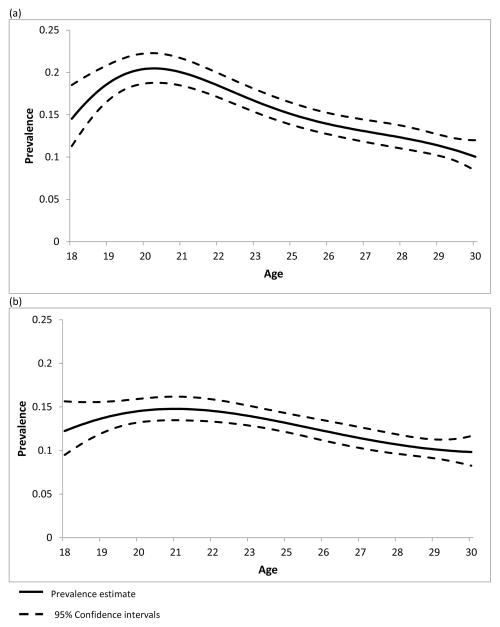
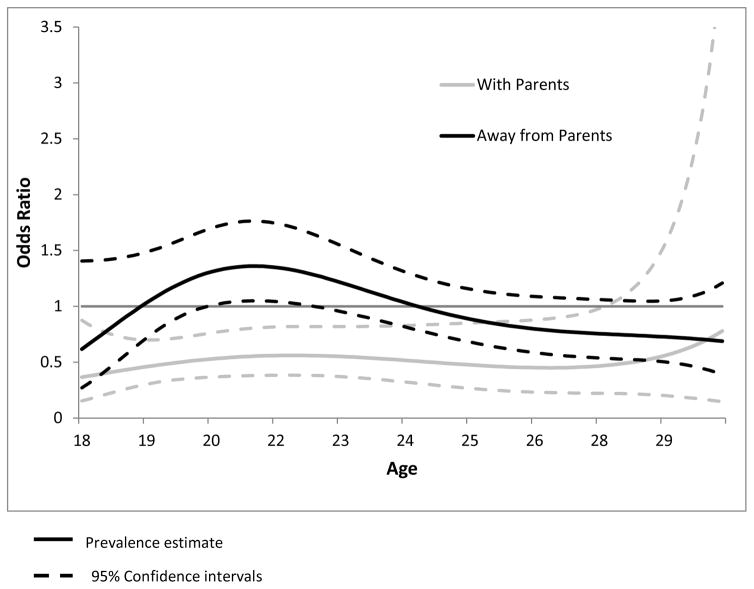
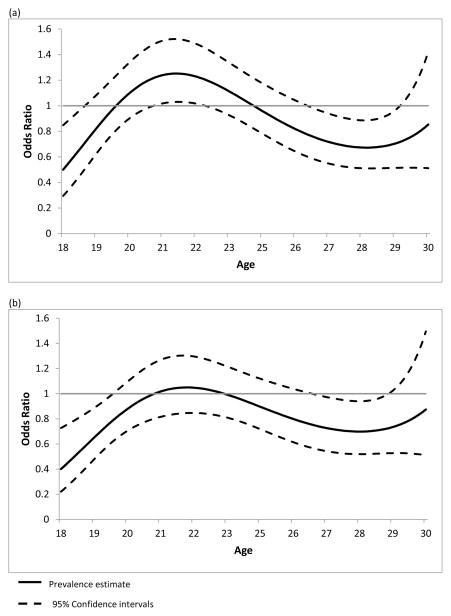
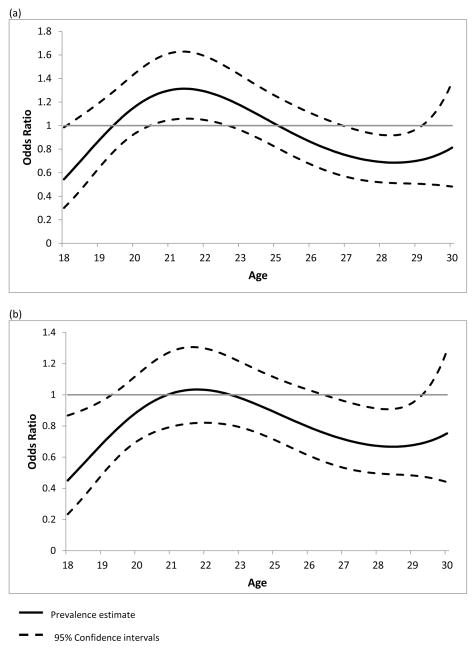
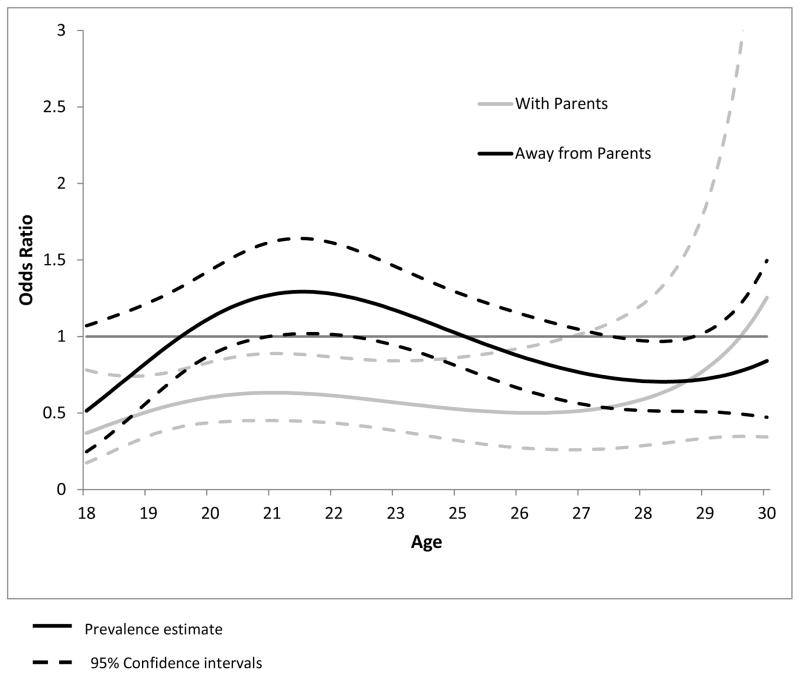
Analyses using time-varying effect modeling showed that the relationship of student status with excessive alcohol use varied as a function of age. Overall student status lost its association with excessive alcohol use in the early 20s, after controlling for demographics and other adult social roles. The association between student status and excessive alcohol use also varied considerably across age and depending on whether the student was residing with or away from parents.
The association of student status with excessive alcohol use is heterogeneous in terms of both age and living arrangements, suggesting opportunities for interventions targeting problematic alcohol use. Future research should examine additional sources of heterogeneity of students in their risk for excessive alcohol use.
上大学与过度饮酒之间存在着众所周知的联系。本研究在全国样本中考察了学生身份与过度饮酒之间的关联如何从青春期后期到青年期发生变化,以及在学年期间与父母同住和不住在一起的学生,学生身份与过度饮酒之间的关联是否存在差异。
本研究使用了来自全国酒精及相关状况流行病学调查的横断面数据,该调查是对居住在美国的非机构化成年平民的全国代表性样本。我们的分析纳入了年龄在18至30岁之间的非高中青年成年人(n = 8645)。过度饮酒包括过去一年(i)高强度饮酒(男性:≥10标准饮酒单位;女性:≥8)和(ii)超过每周饮酒指南(男性:每周>14杯;女性:每周>7杯)。将学年期间与父母不住在一起的学生和与父母住在一起的学生与非学生进行比较。
使用时变效应模型的分析表明,学生身份与过度饮酒之间的关系随年龄而变化。在控制了人口统计学和其他成人社会角色后,总体而言,学生身份在20岁出头时与过度饮酒失去了关联。学生身份与过度饮酒之间的关联在不同年龄以及取决于学生是与父母同住还是不住在一起方面也有很大差异。
学生身份与过度饮酒之间的关联在年龄和生活安排方面是异质性的,这表明针对有问题饮酒的干预存在机会。未来的研究应检查学生过度饮酒风险异质性的其他来源。