Rai Sharan K, Aviña-Zubieta J Antonio, McCormick Natalie, De Vera Mary A, Shojania Kam, Sayre Eric C, Choi Hyon K
Arthritis Research Canada, Vancouver, British Columbia, Canada; Department of Experimental Medicine, University of British Columbia, Vancouver, British Columbia, Canada.
Arthritis Research Canada, Vancouver, British Columbia, Canada; Department of Medicine, Division of Rheumatology, University of British Columbia, Vancouver, British Columbia, Canada.
Semin Arthritis Rheum. 2017 Feb;46(4):451-456. doi: 10.1016/j.semarthrit.2016.08.006. Epub 2016 Aug 17.
Gout is increasingly recognized as the most common form of inflammatory arthritis worldwide; however, no Canadian data on the disease burden of gout are available. We estimated the prevalence, incidence, prescription patterns, and comorbidity burden of gout in an entire Canadian province [British Columbia (BC)] over the last decade.
We utilized PopulationData BC, a province-wide database, to estimate temporal trends in the prevalence and incidence of gout from 2000 to 2012, as well as according to age category. Annual estimates were age-sex-standardized using 2012 as the reference. We also examined annual trends in prescription patterns of common gout medications and assessed the comorbidity burden among gout patients in 2012.
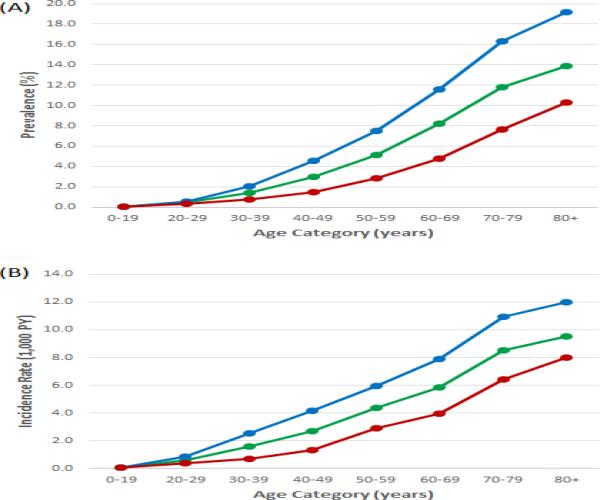
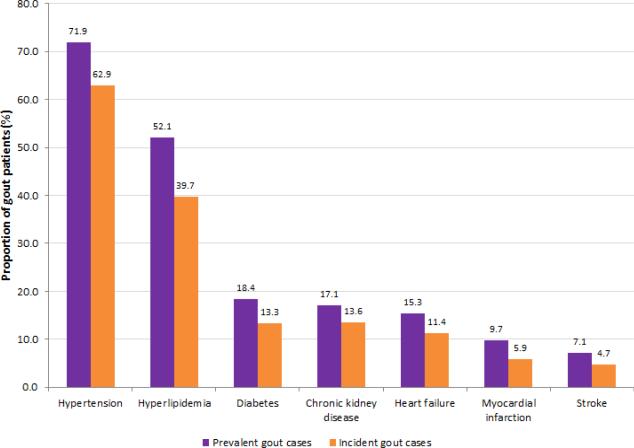
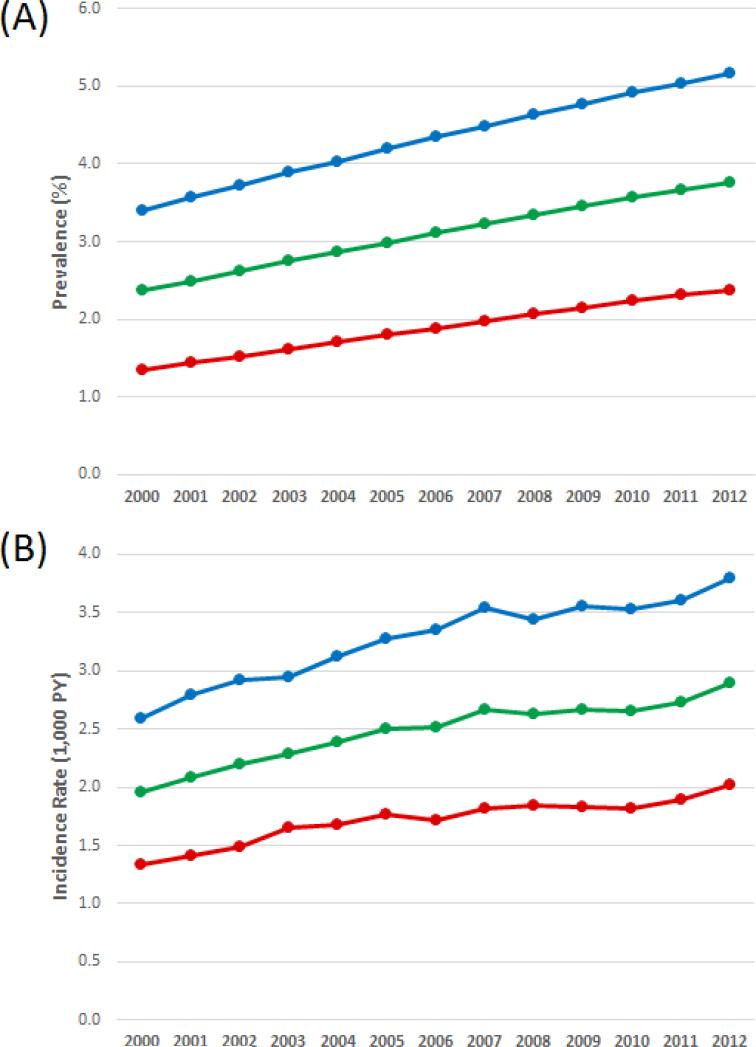
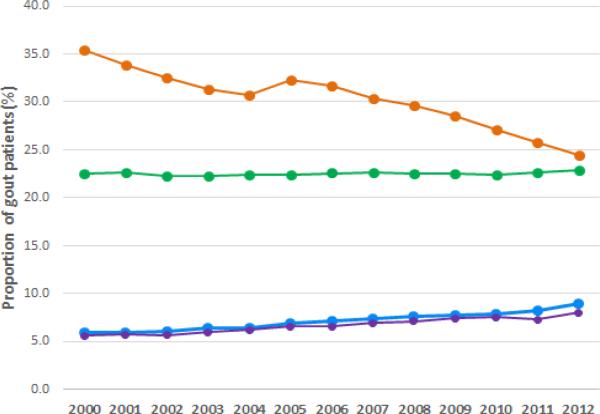
The 2012 prevalence of gout was 3.8% among the overall population, and the incidence rate was 2.9 per 1000 person-years. Both gout prevalence and incidence increased substantially over the study period. This burden additionally increased according to age category, affecting over 8% of those ages 60-69 years in 2012. Approximately 22% of gout patients received a prescription for urate-lowering therapy (ULT), which remained stable over the study period, while colchicine and oral glucocorticoid use both increased modestly. By 2012, 72%, 52%, and 18% of prevalent gout patients had been diagnosed with hypertension, hyperlipidemia, and diabetes, respectively.
The burden of gout in BC, Canada, is substantial, and both the prevalence and incidence have increased over the past decade, while prescription of ULT remains low. These data support the need to improve gout prevention and care.
痛风日益被认为是全球最常见的炎症性关节炎形式;然而,加拿大尚无关于痛风疾病负担的数据。我们估计了过去十年中加拿大一个省份[不列颠哥伦比亚省(BC)]痛风的患病率、发病率、处方模式和合并症负担。
我们利用全省范围的数据库“不列颠哥伦比亚省人口数据”来估计2000年至2012年痛风患病率和发病率的时间趋势,以及按年龄类别划分的趋势。年度估计值以2012年为参考进行年龄 - 性别标准化。我们还研究了常见痛风药物处方模式的年度趋势,并评估了2012年痛风患者的合并症负担。
2012年痛风在总体人群中的患病率为3.8%,发病率为每1000人年2.9例。在研究期间,痛风的患病率和发病率均大幅上升。这种负担还随年龄类别增加,在2012年影响了60 - 69岁人群中的8%以上。约22%的痛风患者接受了降尿酸治疗(ULT)处方,在研究期间保持稳定,而秋水仙碱和口服糖皮质激素的使用均略有增加。到2012年,分别有72%、52%和18%的痛风患者被诊断患有高血压、高脂血症和糖尿病。
加拿大不列颠哥伦比亚省的痛风负担很重,过去十年患病率和发病率均有所上升,而ULT的处方率仍然很低。这些数据支持改善痛风预防和护理的必要性。