MacPherson Sarah E, Healy Colm, Allerhand Michael, Spanò Barbara, Tudor-Sfetea Carina, White Mark, Smirni Daniela, Shallice Tim, Chan Edgar, Bozzali Marco, Cipolotti Lisa
Centre for Cognitive Ageing and Cognitive Epidemiology, University of Edinburgh, Edinburgh, UK; Department of Psychology, University of Edinburgh, Edinburgh, UK.
Department of Neuropsychology, National Hospital for Neurology and Neurosurgery, London, UK.
Neuropsychologia. 2017 Feb;96:19-28. doi: 10.1016/j.neuropsychologia.2016.12.028. Epub 2016 Dec 29.
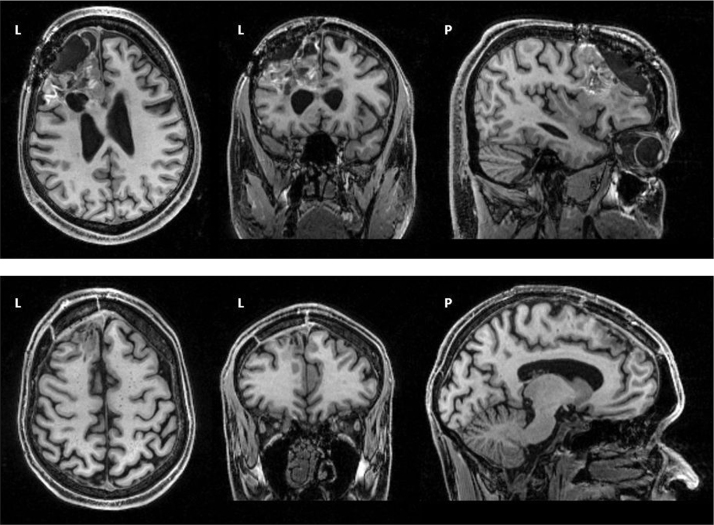
The Cognitive reserve (CR) hypothesis was put forward to account for the variability in cognitive performance of patients with similar degrees of brain pathology. Compensatory neural activity within the frontal lobes has often been associated with CR. For the first time we investigated the independent effects of two CR proxies, education and NART IQ, on measures of executive function, fluid intelligence, speed of information processing, verbal short term memory (vSTM), naming, and perception in a sample of 86 patients with focal, unilateral frontal lesions and 142 healthy controls. We fitted multiple linear regression models for each of the cognitive measures and found that only NART IQ predicted executive and naming performance. Neither education nor NART IQ predicted performance on fluid intelligence, processing speed, vSTM or perceptual abilities. Education and NART IQ did not modify the effect of lesion severity on cognitive impairment. We also found that age significantly predicted performance on executive tests and the majority of our other cognitive measures, except vSTM and GNT. Age was the only predictor for fluid intelligence. This latter finding suggests that age plays a role in executive performance over and above the contribution of CR proxies in patients with focal frontal lesions. Overall, our results suggest that the CR proxies do not appear to modify the relationship between cognitive impairment and frontal lesions.
认知储备(CR)假说被提出来解释脑病理学程度相似的患者认知表现的变异性。额叶内的代偿性神经活动常与认知储备相关。我们首次在86例局灶性单侧额叶病变患者和142例健康对照样本中,研究了两个认知储备指标,即教育程度和国家成人阅读测验(NART)智商,对执行功能、流体智力、信息处理速度、言语短期记忆(vSTM)、命名和感知能力测量的独立影响。我们为每个认知测量指标拟合了多元线性回归模型,发现只有NART智商能预测执行功能和命名表现。教育程度和NART智商均不能预测流体智力、处理速度、vSTM或感知能力的表现。教育程度和NART智商并未改变病变严重程度对认知损害的影响。我们还发现,年龄显著预测执行功能测试以及除vSTM和GNT(可能是某种测试,原文未明确)之外的大多数其他认知测量指标的表现。年龄是流体智力的唯一预测因素。后一发现表明,在局灶性额叶病变患者中,年龄在执行功能表现中所起的作用超过了认知储备指标的贡献。总体而言,我们的结果表明,认知储备指标似乎并未改变认知损害与额叶病变之间的关系。