Zhang Kecheng, Shi Hongzhi, Xi Hongqing, Wu Xiaosong, Cui Jianxin, Gao Yunhe, Liang Wenquan, Hu Chong, Liu Yi, Li Jiyang, Wang Ning, Wei Bo, Chen Lin
Department of General Surgery & Institute of General Surgery, Chinese People's Liberation Army General Hospital, Fuxing Road 28, Beijing 100853, P.R. China.
Department of General Surgery, General Hospital of Armed Police Force, Yongding Road 69, Beijing 100039, P.R. China.
Theranostics. 2017 Jan 1;7(1):213-227. doi: 10.7150/thno.16044. eCollection 2017.
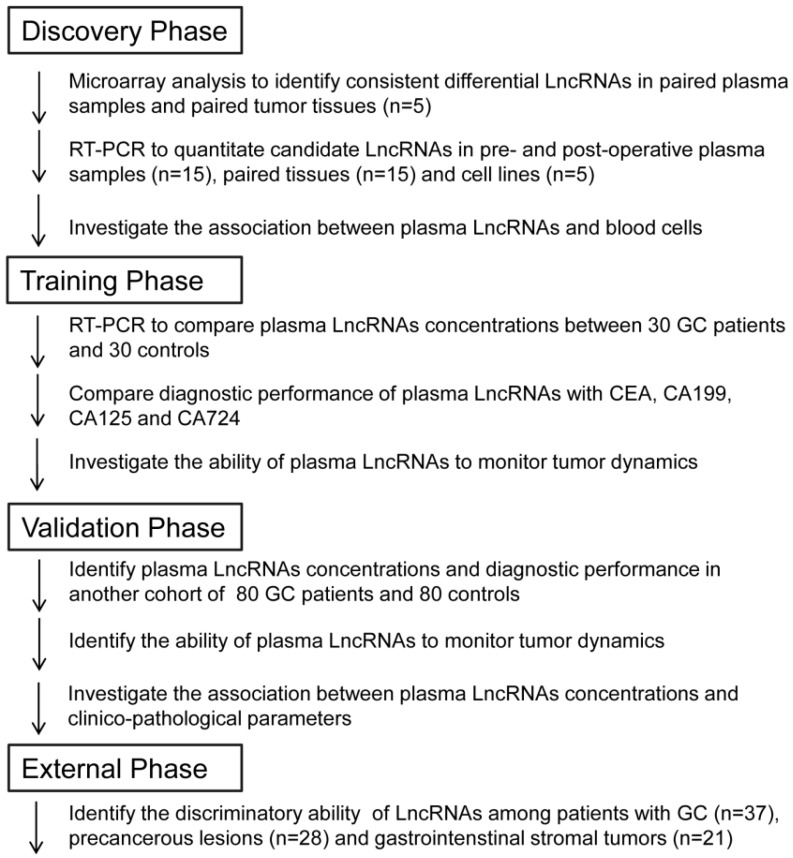
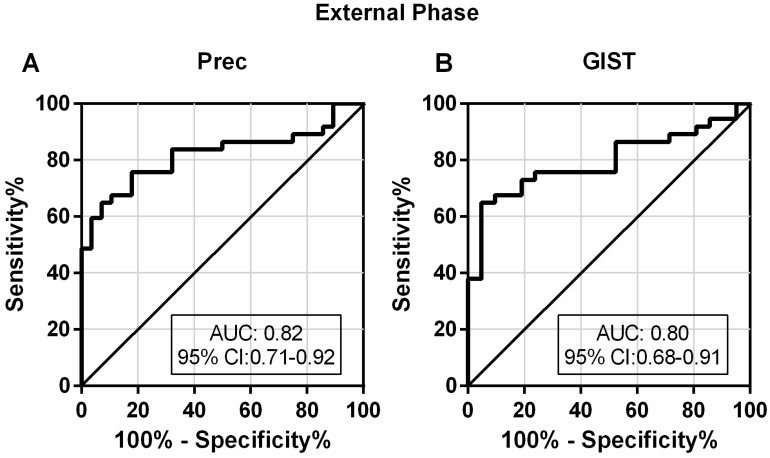
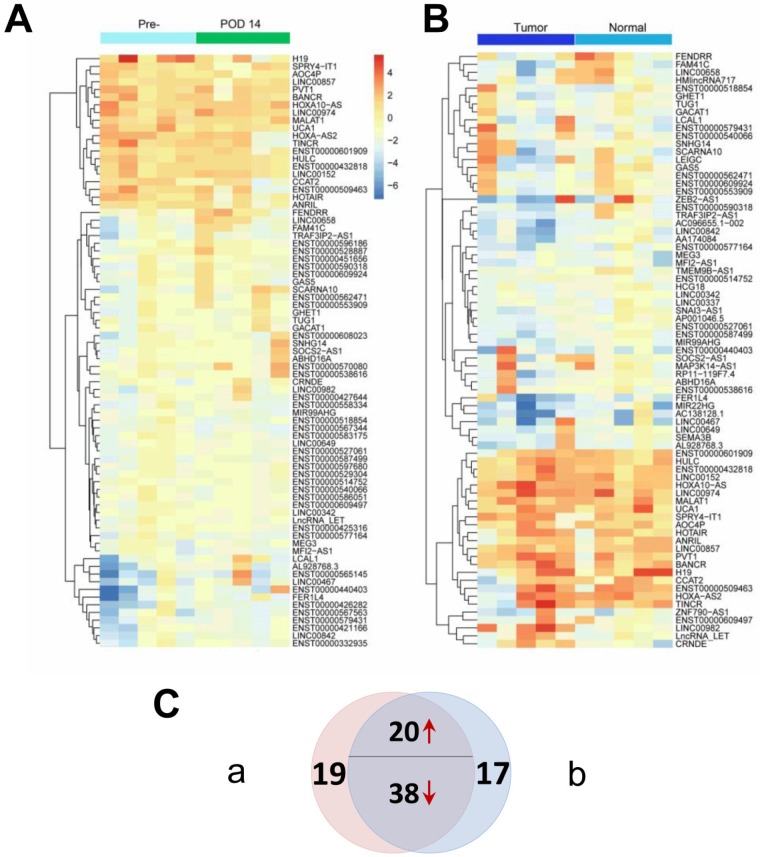
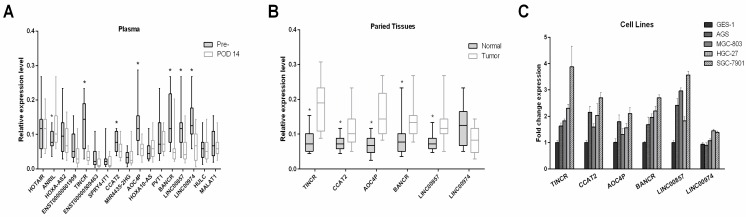
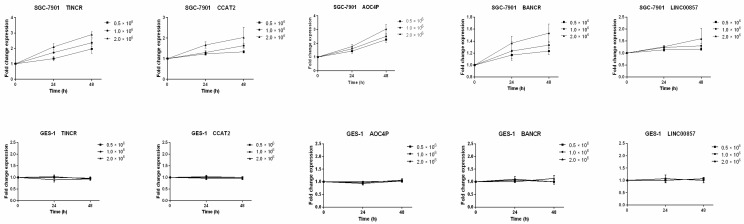
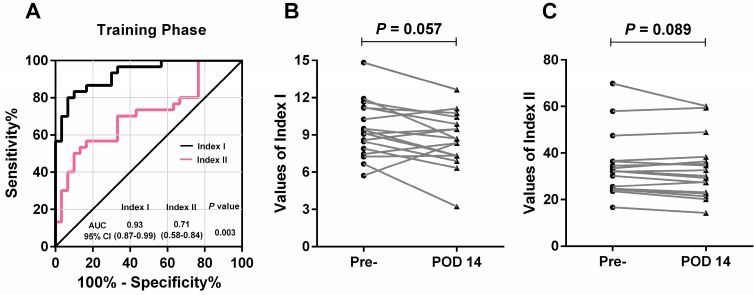
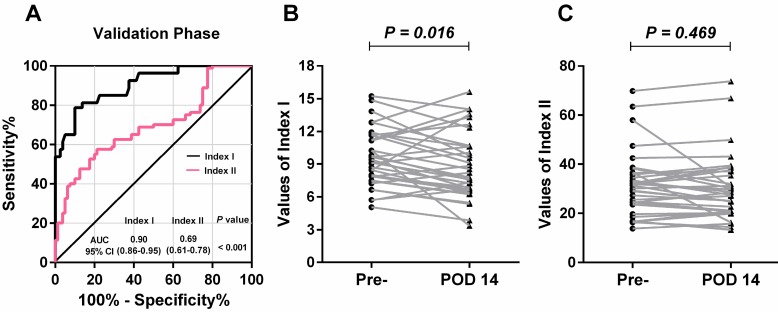
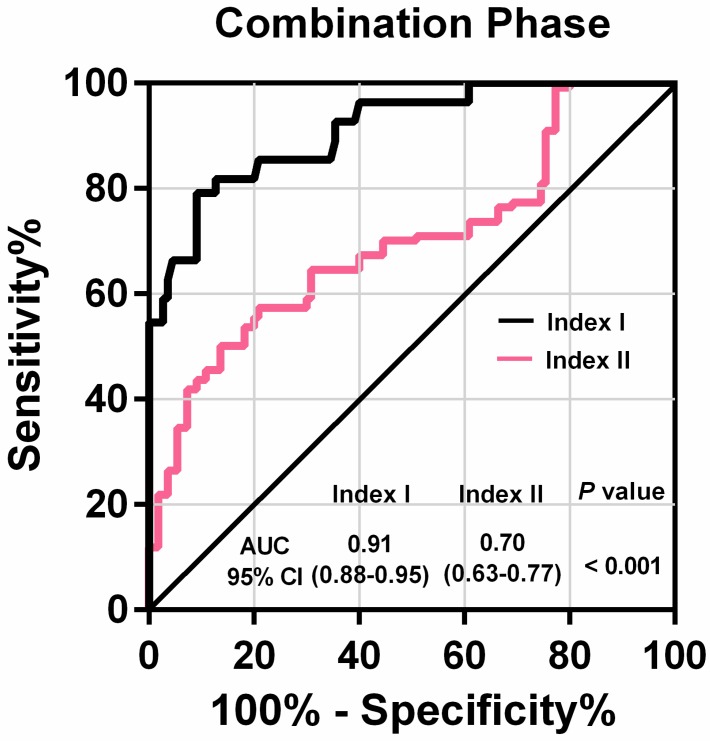
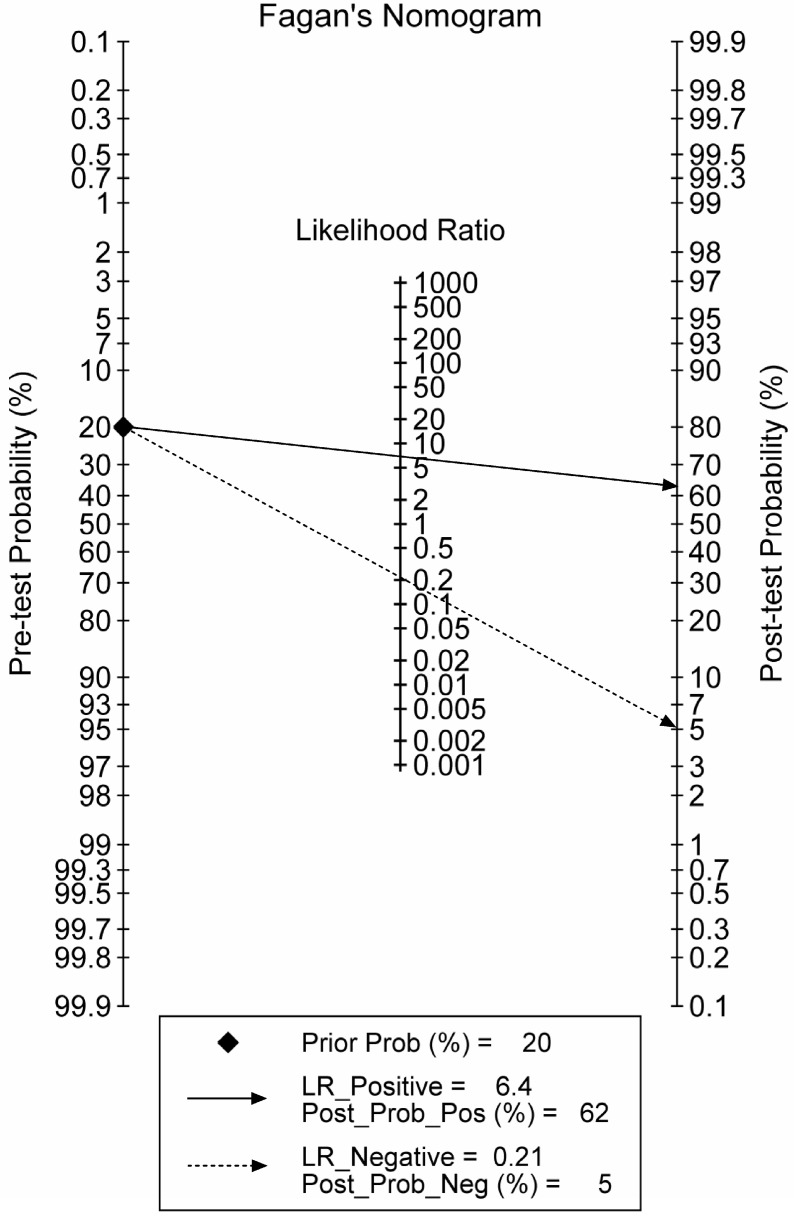
Long non-coding RNAs (lncRNAs) can serve as blood-based biomarkers for cancer detection. To identify novel lncRNA biomarkers for gastric cancer (GC), we conducted, for the first time, genome-wide lncRNA screening analysis in two sets of samples: five paired preoperative and postoperative day 14 plasma samples from GC patients, and tissue samples from tumor and adjacent normal tissues. Candidate tumor-related lncRNAs were then quantitated and evaluated in three independent phases comprising 321 participants. The expression levels of lncRNAs were also measured in GC cell lines and the corresponding culture medium. Biomarker panels, lncRNA-based Index I and carcinoembryonic antigen (CEA)-based Index II, were constructed using logistic regression, and their diagnostic performance compared. Fagan's nomogram was plotted to facilitate clinical application. As a result, we identified five novel plasma lncRNAs (, , , and ), which, when combined in the lncRNA-based Index I, outperformed the CEA-based Index II ( < 0.001) and could distinguish GC patients from healthy controls with an area under the receiver-operating curve (AUC) of 0.91 (95% confidence interval (CI): 0.88-0.95). The lncRNA-based index decreased significantly by postoperative day 14 ( = 0.016), indicating its ability to monitor tumor dynamics. High values of the lncRNA-based index were correlated with tumor size ( = 0.036), depth of invasion ( = 0.025), lymphatic metastasis ( = 0.012) and more advanced tumor stages ( = 0.003). The lncRNA-based index was also able to discriminate GC patients from precancerous individuals and patients with gastrointestinal stromal tumor with AUC values of 0.82 (95% CI: 0.71-0.92) and 0.80 (95% CI: 0.68-0.91), respectively. Taken together, our findings demonstrate that this panel of five plasma lncRNAs could serve as a set of novel diagnostic biomarkers for GC detection.
长链非编码RNA(lncRNAs)可作为基于血液的癌症检测生物标志物。为了鉴定胃癌(GC)的新型lncRNA生物标志物,我们首次在两组样本中进行了全基因组lncRNA筛选分析:来自GC患者的五对术前和术后第14天的血浆样本,以及肿瘤和相邻正常组织的组织样本。然后在三个独立阶段对321名参与者进行候选肿瘤相关lncRNAs的定量和评估。还在GC细胞系和相应的培养基中测量了lncRNAs的表达水平。使用逻辑回归构建生物标志物面板、基于lncRNA的指数I和基于癌胚抗原(CEA)的指数II,并比较它们的诊断性能。绘制了费根列线图以促进临床应用。结果,我们鉴定出五种新型血浆lncRNAs(、、、和),当它们组合在基于lncRNA的指数I中时,其表现优于基于CEA的指数II(<0.001),并且能够以受试者工作特征曲线下面积(AUC)为0.91(95%置信区间(CI):0.88 - 0.95)区分GC患者和健康对照。基于lncRNA的指数在术后第14天显著下降(=0.016),表明其监测肿瘤动态变化的能力。基于lncRNA的指数高值与肿瘤大小(=0.036)、浸润深度(=0.025)、淋巴转移(=0.012)和更晚期肿瘤分期(=0.003)相关。基于lncRNA的指数还能够分别以AUC值0.82(95%CI:0.71 - 0.92)和AUC值0.80(95%CI:0.68 - 0.91)区分GC患者与癌前个体和胃肠道间质瘤患者。综上所述,我们的研究结果表明,这五种血浆lncRNAs组成的面板可作为一组用于GC检测的新型诊断生物标志物。