Chatterjee Ruchira, Han Guangye, Kern Jan, Gul Sheraz, Fuller Franklin D, Garachtchenko Anna, Young Iris, Weng Tsu-Chien, Nordlund Dennis, Alonso-Mori Roberto, Bergmann Uwe, Sokaras Dimosthenis, Hatakeyama Makoto, Yachandra Vittal K, Yano Junko
Molecular Biophysics and Integrated Bioimaging Division, Lawrence Berkeley National Laboratory, Berkeley, CA, USA.
Molecular Biophysics and Integrated Bioimaging Division, Lawrence Berkeley National Laboratory, Berkeley, CA, USA; LCLS, SLAC National Accelerator Laboratory, Menlo Park, CA.
Chem Sci. 2016 Aug 1;7(8):5236-5248. doi: 10.1039/C6SC00512H. Epub 2016 May 9.
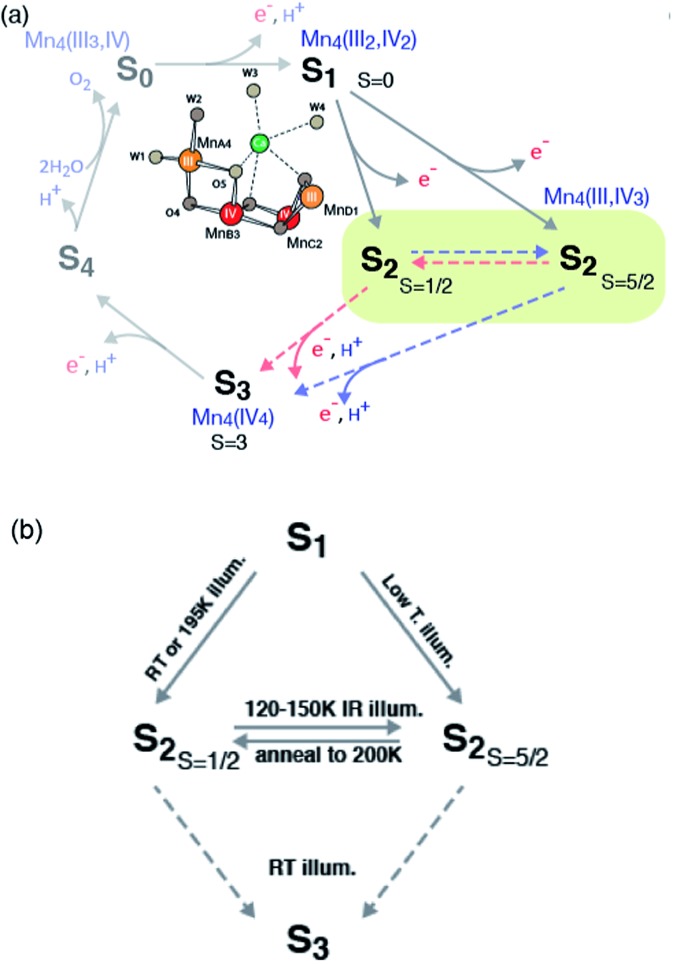
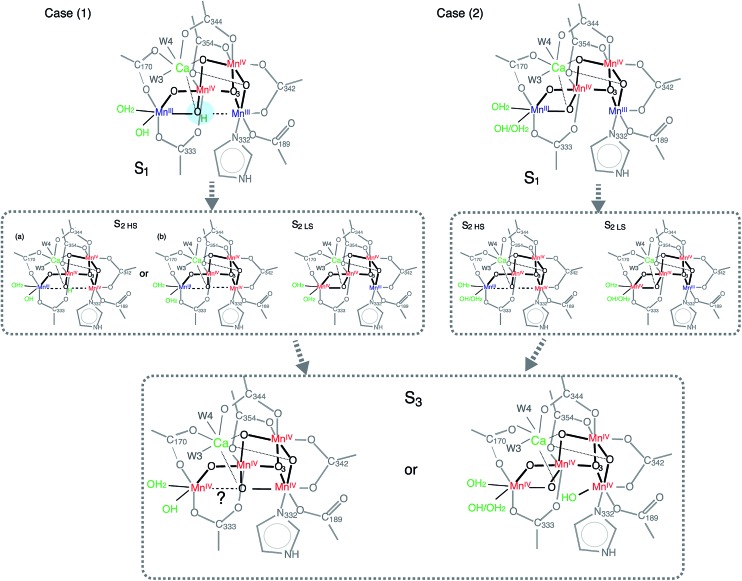
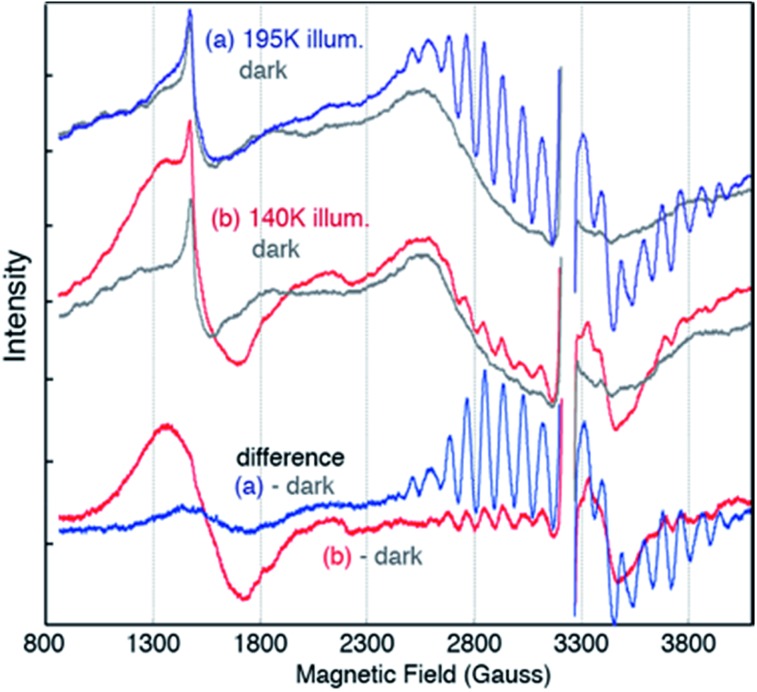
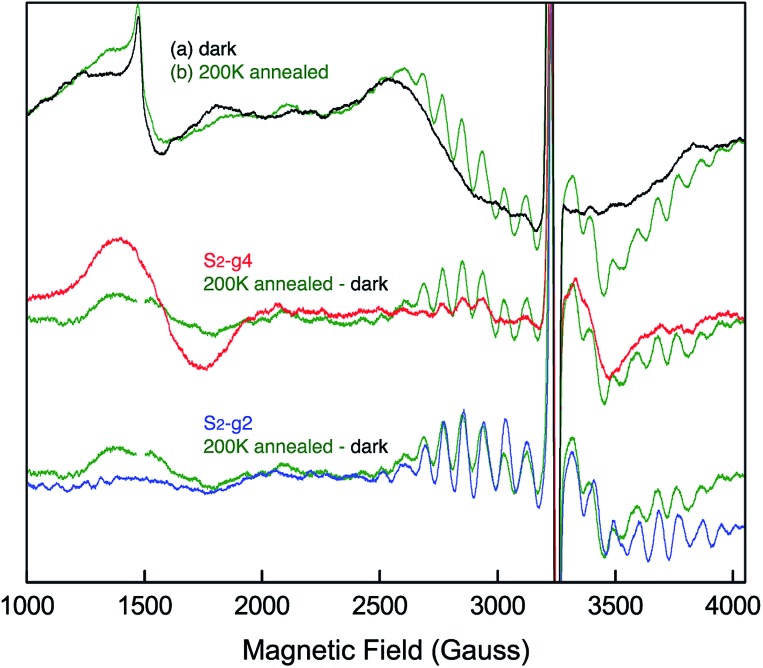
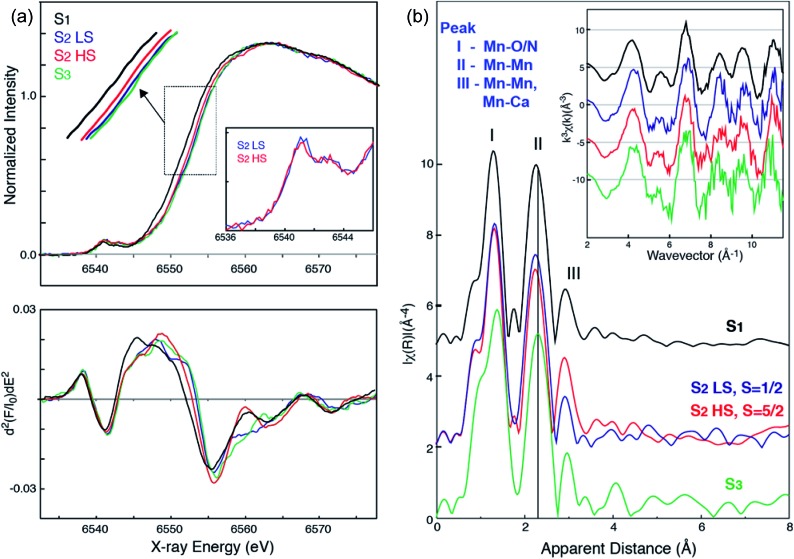
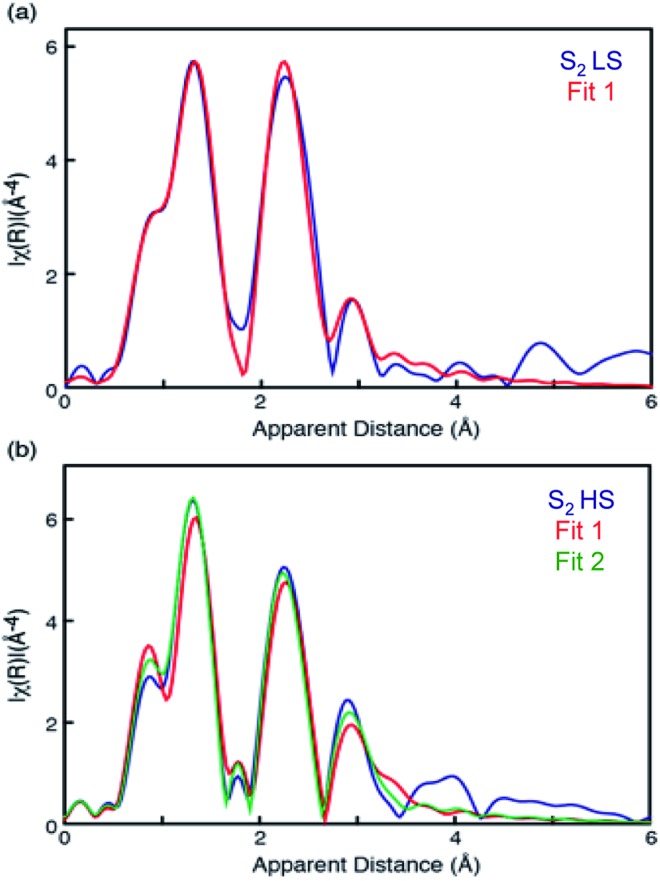
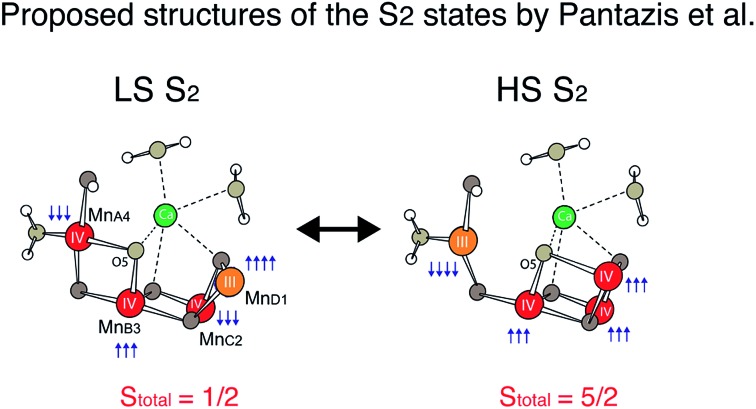
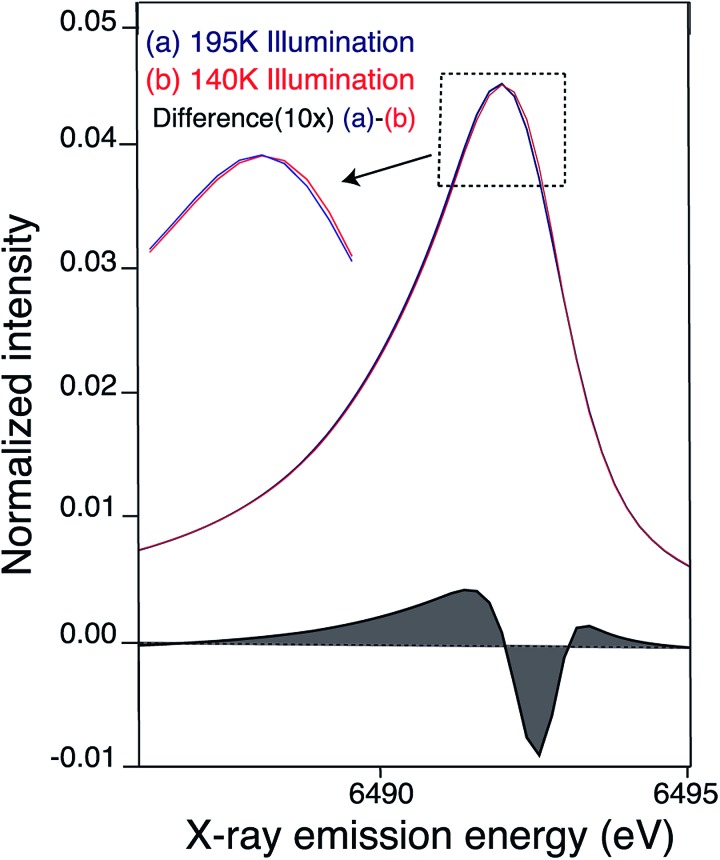
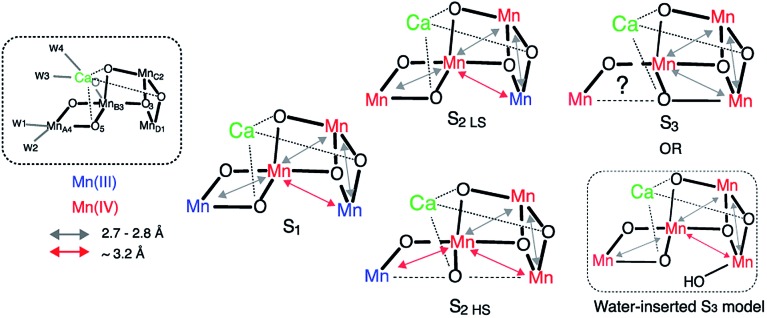
The MnCaO cluster in Photosystem II catalyzes the four-electron redox reaction of water oxidation in natural photosynthesis. This catalytic reaction cycles through four intermediate states (S, i = 0 to 4), involving changes in the redox state of the four Mn atoms in the cluster. Recent studies suggest the presence and importance of isomorphous structures within the same redox/intermediate S-state. It is highly likely that geometric and electronic structural flexibility play a role in the catalytic mechanism. Among the catalytic intermediates that have been identified experimentally thus far, there is clear evidence of such isomorphism in the S state, with a high-spin (5/2) (HS) and a low spin (1/2) (LS) form, identified and characterized by their distinct electron paramagnetic resonance (EPR spectroscopy) signals. We studied these two S isomers with Mn extended X-ray absorption fine structure (EXAFS) and absorption and emission spectroscopy (XANES/XES) to characterize the structural and electronic structural properties. The geometric and electronic structure of the HS and LS S states are different as determined using Mn EXAFS and XANES/XES, respectively. The Mn K-edge XANES and XES for the HS form are different from the LS and indicate a slightly lower positive charge on the Mn atoms compared to the LS form. Based on the EXAFS results which are clearly different, we propose possible structural differences between the two spin states. Such structural and magnetic redox-isomers if present at room temperature, will likely play a role in the mechanism for water-exchange/oxidation in photosynthesis.
光系统II中的MnCaO簇在自然光合作用中催化水氧化的四电子氧化还原反应。该催化反应通过四个中间态(S,i = 0至4)循环,涉及簇中四个锰原子氧化还原态的变化。最近的研究表明,在相同的氧化还原/中间S态中存在同构结构及其重要性。几何和电子结构的灵活性很可能在催化机制中起作用。在迄今为止通过实验鉴定的催化中间体中,在S态有这种同构的明确证据,其具有高自旋(5/2)(HS)和低自旋(1/2)(LS)形式,通过其独特的电子顺磁共振(EPR光谱)信号进行鉴定和表征。我们用锰扩展X射线吸收精细结构(EXAFS)以及吸收和发射光谱(XANES/XES)研究了这两种S异构体,以表征其结构和电子结构性质。分别使用锰EXAFS和XANES/XES确定,HS和LS S态的几何和电子结构不同。HS形式的锰K边XANES和XES与LS不同,表明与LS形式相比,锰原子上的正电荷略低。基于明显不同的EXAFS结果,我们提出了两种自旋态之间可能存在的结构差异。如果这种结构和磁性氧化还原异构体在室温下存在,可能会在光合作用中的水交换/氧化机制中发挥作用。