Institute for Advanced Studies in Basic Sciences (IASBS), Department of Physics, Zanjan, 45195-1159, Iran.
Institute for Research in Fundamental Sciences (IPM), School of Cognitive Sciences, Tehran, 19395-5746, Iran.
Sci Rep. 2017 Jan 3;7:39682. doi: 10.1038/srep39682.
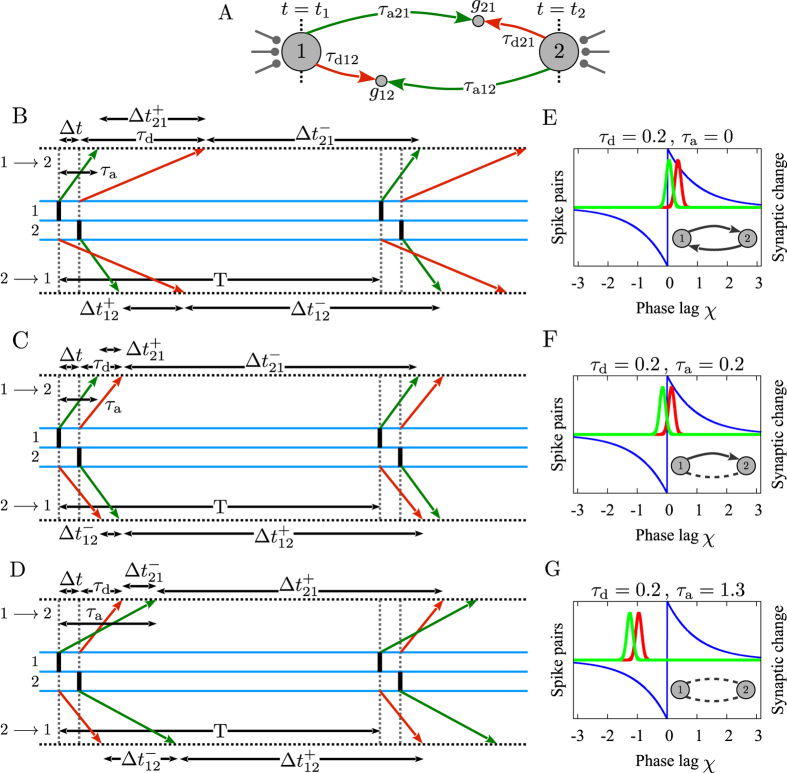
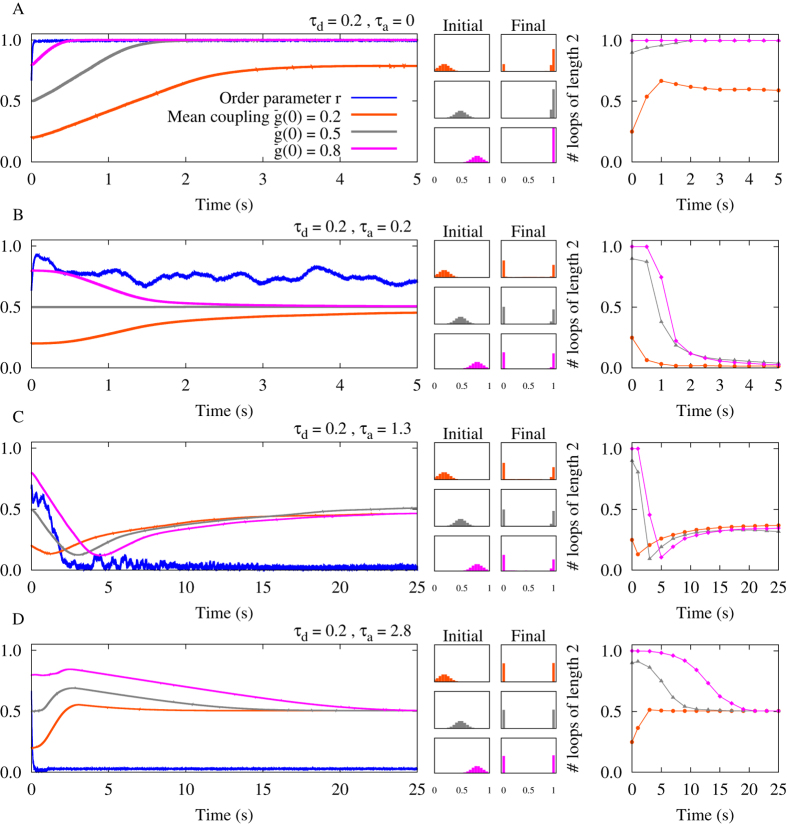
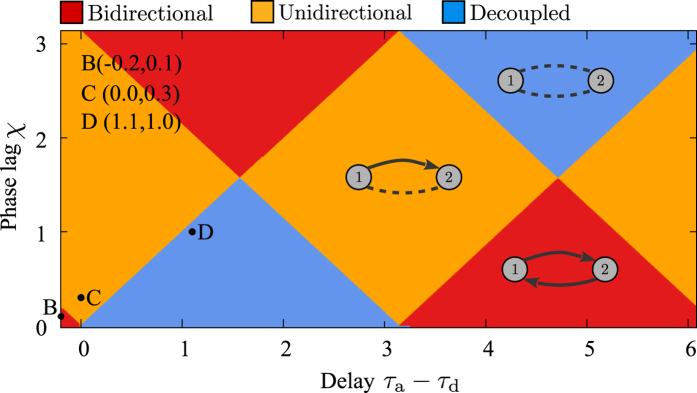
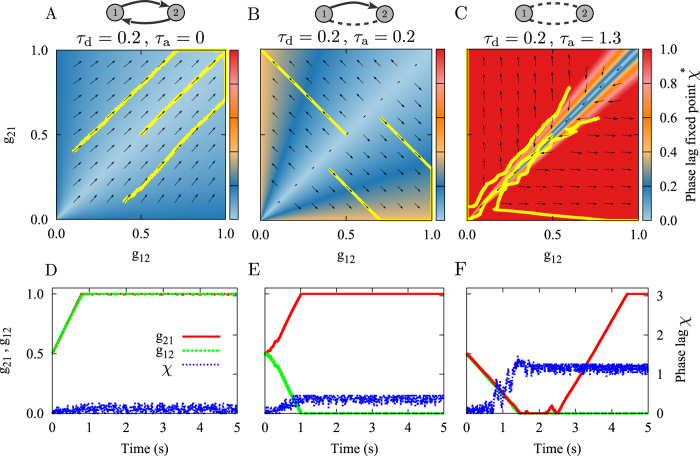
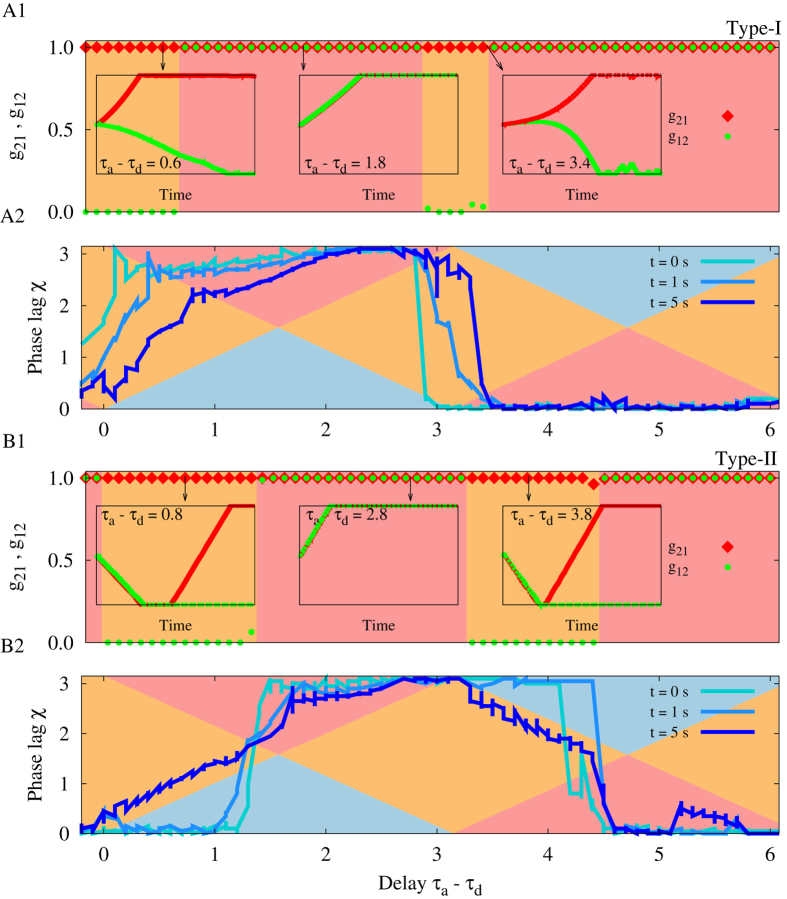
Spike-timing-dependent plasticity (STDP) modifies synaptic strengths based on the relative timing of pre- and postsynaptic spikes. The temporal order of spikes turned out to be crucial. We here take into account how propagation delays, composed of dendritic and axonal delay times, may affect the temporal order of spikes. In a minimal setting, characterized by neglecting dendritic and axonal propagation delays, STDP eliminates bidirectional connections between two coupled neurons and turns them into unidirectional connections. In this paper, however, we show that depending on the dendritic and axonal propagation delays, the temporal order of spikes at the synapses can be different from those in the cell bodies and, consequently, qualitatively different connectivity patterns emerge. In particular, we show that for a system of two coupled oscillatory neurons, bidirectional synapses can be preserved and potentiated. Intriguingly, this finding also translates to large networks of type-II phase oscillators and, hence, crucially impacts on the overall hierarchical connectivity patterns of oscillatory neuronal networks.
译文: 基于前后突触脉冲的相对时间,尖峰时间依赖性可塑性(STDP)会修改突触强度。事实证明,尖峰的时间顺序至关重要。在这里,我们考虑了由树突和轴突延迟时间组成的传播延迟如何影响尖峰的时间顺序。在一个最小的设置中,忽略树突和轴突的传播延迟,STDP 会消除两个耦合神经元之间的双向连接,并将其转换为单向连接。然而,在本文中,我们表明,取决于树突和轴突的传播延迟,突触处的尖峰时间顺序可能与细胞体中的尖峰时间顺序不同,因此会出现定性上不同的连接模式。特别是,我们表明,对于两个耦合的振荡神经元系统,可以保留和增强双向突触。有趣的是,这一发现也适用于 II 型相位振荡器的大型网络,因此对振荡神经元网络的整体分层连接模式产生了至关重要的影响。