Pollara Gabriele, Murray Matthew J, Heather James M, Byng-Maddick Rachel, Guppy Naomi, Ellis Matthew, Turner Carolin T, Chain Benjamin M, Noursadeghi Mahdad
Division of Infection & Immunity, University College London, London, United Kingdom.
UCL Advanced Diagnostics, University College London, London, United Kingdom.
PLoS One. 2017 Jan 3;12(1):e0169271. doi: 10.1371/journal.pone.0169271. eCollection 2017.
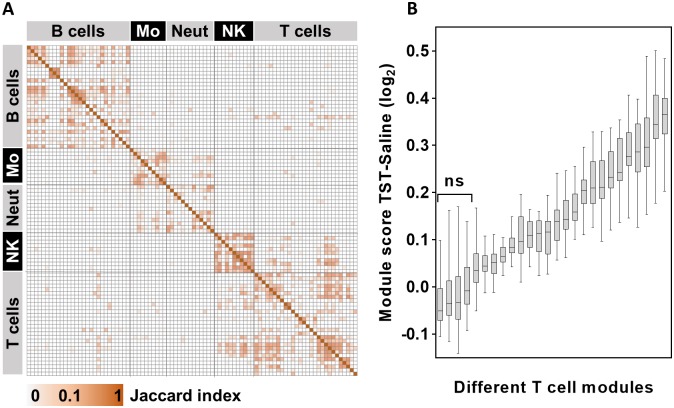
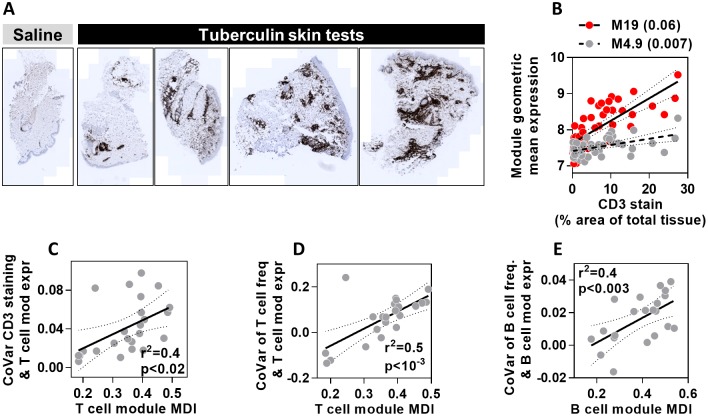
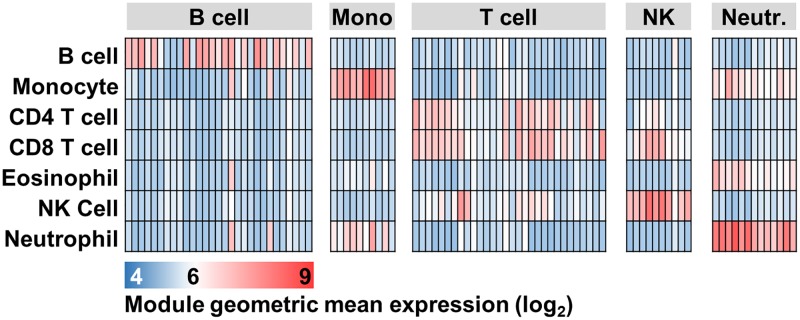
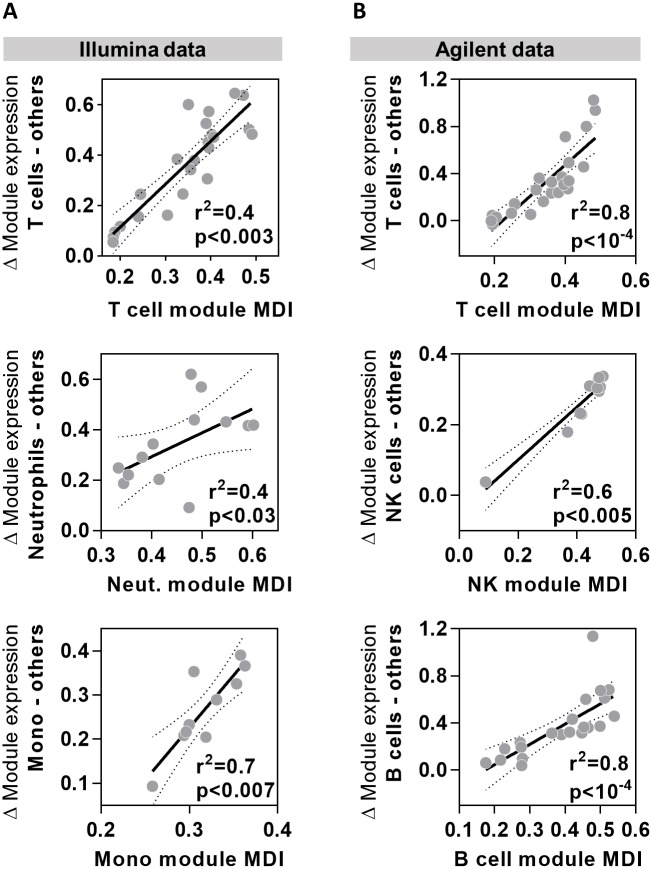
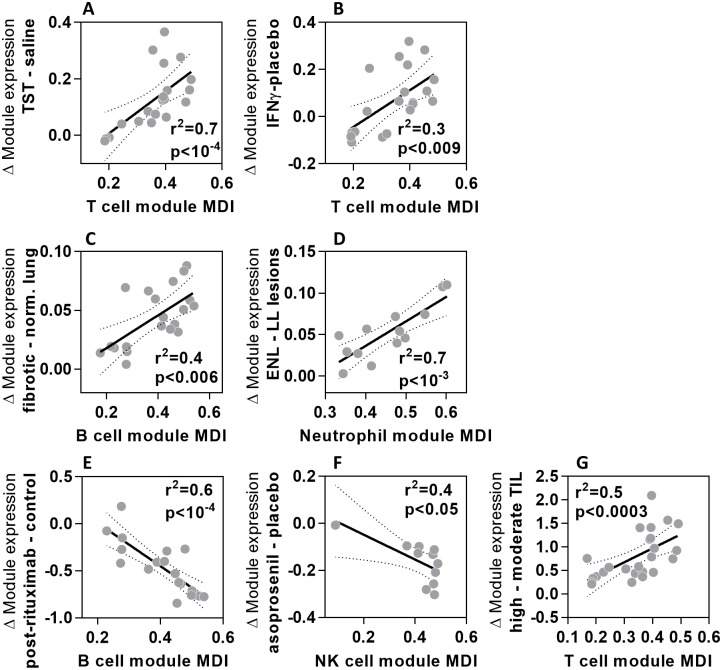
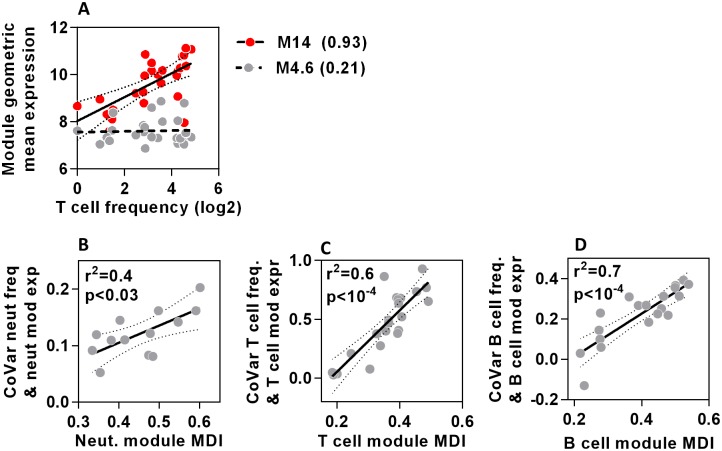
Numerous gene signatures, or modules have been described to evaluate the immune cell composition in transcriptomes of multicellular tissue samples. However, significant diversity in module gene content for specific cell types is associated with heterogeneity in their performance. In order to rank modules that best reflect their purported association, we have generated the modular discrimination index (MDI) score that assesses expression of each module in the target cell type relative to other cells. We demonstrate that MDI scores predict modules that best reflect independently validated differences in cellular composition, and correlate with the covariance between cell numbers and module expression in human blood and tissue samples. Our analyses demonstrate that MDI scores provide an ordinal summary statistic that reliably ranks the accuracy of gene expression modules for deconvolution of cell type abundance in transcriptional data.
已有许多基因特征或模块被用于评估多细胞组织样本转录组中的免疫细胞组成。然而,特定细胞类型的模块基因内容存在显著差异,这与其性能的异质性有关。为了对最能反映其假定关联的模块进行排名,我们生成了模块化判别指数(MDI)分数,该分数评估每个模块在目标细胞类型中相对于其他细胞的表达。我们证明,MDI分数能够预测最能反映细胞组成中经独立验证的差异的模块,并且与人类血液和组织样本中细胞数量与模块表达之间的协方差相关。我们的分析表明,MDI分数提供了一个有序的汇总统计量,能够可靠地对基因表达模块在转录数据中反卷积细胞类型丰度的准确性进行排名。