Newnham Elizabeth C, McKellar Lois V, Pincombe Jan I
School of Nursing and Midwifery, University of South Australia, GPO Box 2471, Adelaide, South Australia, 5001, Australia.
BMC Pregnancy Childbirth. 2017 Jan 3;17(1):2. doi: 10.1186/s12884-016-1193-4.
Interest in the influence of culture on birth practices is on the rise, and with it comes a sense of urgency to implement practices that aid the normalisation and humanisation of birth. This groundswell is occurring despite a broader cultural milieu of escalating technology-use and medicalisation of birth across the globe. Against this background, rates of epidural analgesia use by women in labour are increasing, despite the risk of side effects. Socio-cultural norms and beliefs are likely to influence pain relief choices but there is currently scant research on this topic.
This study was undertaken to gain insight into the personal, social, cultural and institutional influences on women in deciding whether or not to use epidural analgesia in labour. The study had an ethnographic approach within a theoretical framework of Critical Medical Anthropology (CMA), Foucauldian and feminist theory. Given the nature of ethnographic research, it was assumed that using the subject of epidural analgesia to gain insight into Western birth practices could illuminate broader cultural ideals and that the epidural itself may not remain the focus of the research.
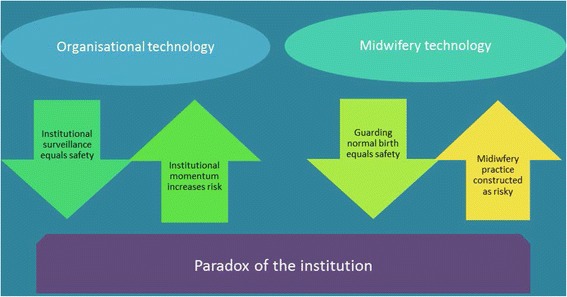
Findings from the study showed how institutional surveillance, symbolised by the Journey Board led to an institutional momentum that in its attempt to keep women safe actually introduced new areas of risk, a situation which we named the Paradox of the institution.
These findings, showing a risk/safety paradox at the centre of institutionalised birth, add a qualitative dimension to the growing number of quantitative studies asserting that acute medical settings can be detrimental to normal birth practices and outcomes.
文化对分娩习俗影响的关注度日益提高,随之而来的是实施有助于分娩正常化和人性化的习俗的紧迫感。尽管全球范围内技术使用不断升级以及分娩医学化的文化环境更为普遍,但这种热潮仍在兴起。在此背景下,尽管存在副作用风险,分娩妇女使用硬膜外镇痛的比例仍在上升。社会文化规范和信仰可能会影响疼痛缓解方式的选择,但目前关于这一主题的研究很少。
本研究旨在深入了解个人、社会、文化和机构因素对女性决定是否在分娩时使用硬膜外镇痛的影响。该研究在批判医学人类学(CMA)、福柯理论和女性主义理论的理论框架内采用人种志方法。鉴于人种志研究的性质,假定以硬膜外镇痛为主题来深入了解西方分娩习俗能够阐明更广泛的文化理想,且硬膜外镇痛本身可能并非研究的重点。
研究结果表明,以行程板为象征的机构监督如何导致一种机构动力,这种动力在试图保障女性安全时实际上引入了新的风险领域,我们将这种情况称为机构悖论。
这些结果表明在制度化分娩的核心存在风险/安全悖论,为越来越多的定量研究增添了定性维度,这些定量研究断言急性医疗环境可能不利于正常分娩习俗和结果。