Schwarzer Martin, Srutkova Dagmar, Hermanova Petra, Leulier Francois, Kozakova Hana, Schabussova Irma
Laboratory of Gnotobiology, Institute of Microbiology of the Czech Academy of Sciences, v. v. i., Novy Hradek, Czech Republic.
Institut de Génomique Fonctionnelle de Lyon (IGFL), Ecole Normale Supérieure de Lyon, CNRS UMR 5242, Iniversité Claude Bernard Lyon 1, Lyon, France.
PLoS One. 2017 Jan 4;12(1):e0167786. doi: 10.1371/journal.pone.0167786. eCollection 2017.
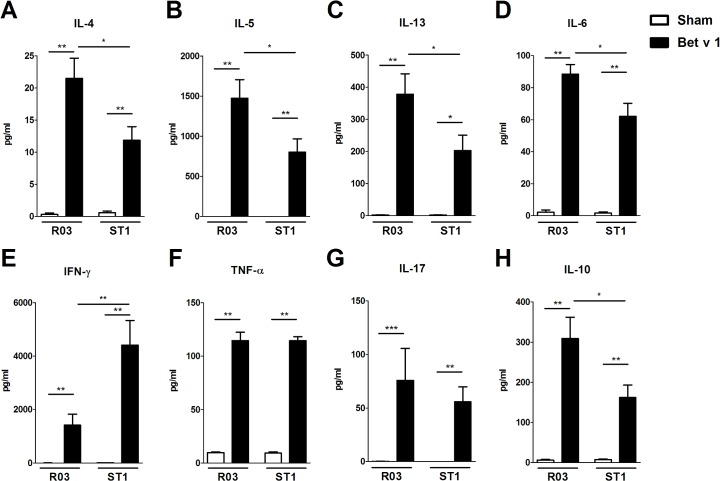
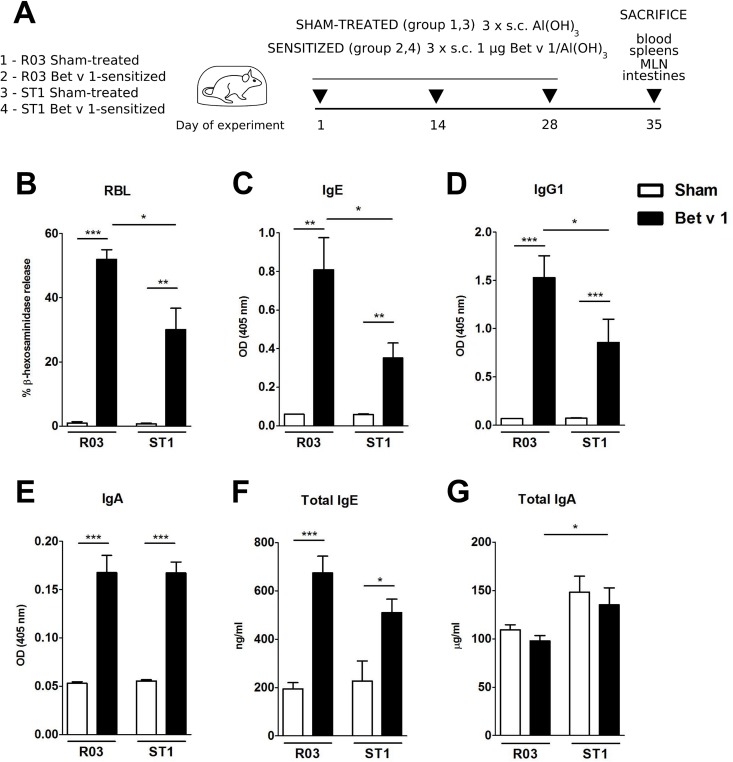
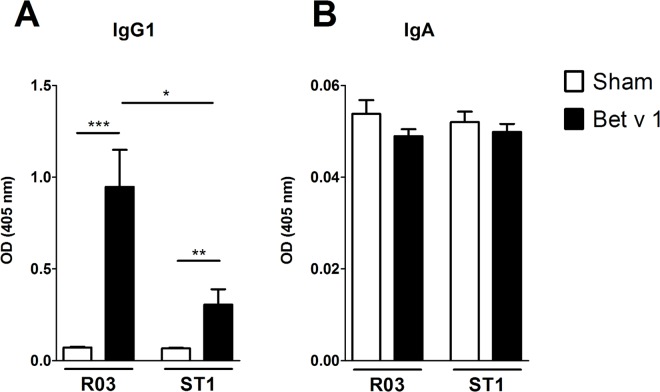
Germ-free animals have been used to define the vital role of commensal bacteria on the maturation of the host immune system. However, the role of bacterial residues in diet in this setting is poorly understood. Here we investigated the effect of bacterial contamination in sterile diet on the level of allergic sensitization in germ-free mice. Sterile grain-based diets ST1 and R03 were tested for the level of bacterial contamination. ST1 contained higher amount of bacterial DNA, approximately ten times more endotoxin, and induced higher, TLR4-dependent, cytokine production in dendritic cells compared to R03. In a germ-free mouse model of sensitization to the major birch pollen allergen Bet v 1, feeding on ST1 for at least two generations was associated with decreased production of allergen-specific IgE and IgG1 antibodies in sera in comparison to R03. Furthermore, reduced levels of allergen-specific and ConA-induced cytokines IL-4, IL-5 and IL-13 accompanied by increased levels of IFN-γ were detected in splenocytes cultures of these mice. Our results show that contamination of experimental diet with bacterial residues, such as endotoxin, significantly affects the development of allergic sensitization in germ-free mice. Therefore, careful selection of sterile food is critical for the outcomes of germ-free or gnotobiotic experimental models of immune-deviated diseases.
无菌动物已被用于确定共生细菌在宿主免疫系统成熟过程中的重要作用。然而,在这种情况下,饮食中细菌残留物的作用却知之甚少。在此,我们研究了无菌饮食中的细菌污染对无菌小鼠过敏致敏水平的影响。对无菌谷物类饮食ST1和R03的细菌污染水平进行了检测。与R03相比,ST1含有更多的细菌DNA、约十倍的内毒素,并且在树突状细胞中诱导产生更高水平的、依赖TLR4的细胞因子。在对主要桦树花粉过敏原Bet v 1致敏的无菌小鼠模型中,与R03相比,连续至少两代喂食ST1与血清中过敏原特异性IgE和IgG1抗体产生减少有关。此外,在这些小鼠的脾细胞培养物中检测到过敏原特异性和刀豆蛋白A诱导的细胞因子IL-4、IL-5和IL-13水平降低,同时IFN-γ水平升高。我们的结果表明,实验饮食被内毒素等细菌残留物污染会显著影响无菌小鼠过敏致敏的发展。因此,仔细选择无菌食物对于免疫偏离疾病的无菌或悉生实验模型的结果至关重要。