Prunetti Laurence, Graf Michael, Blaby Ian K, Peil Lauri, Makkay Andrea M, Starosta Agata L, Papke R Thane, Oshima Tairo, Wilson Daniel N, de Crécy-Lagard Valérie
Department of Microbiology and Cell Science, Institute for Food and Agricultural Sciences and Genetic Institute, University of Florida, P.O. Box 110700, Gainesville, FL 32611-0700, USA.
Gene Center and Department for Biochemistry, University of Munich, 81377 Munich, Germany; Center for Integrated Protein Science Munich, University of Munich, 81377 Munich, Germany.
Archaea. 2016 Dec 8;2016:7316725. doi: 10.1155/2016/7316725. eCollection 2016.
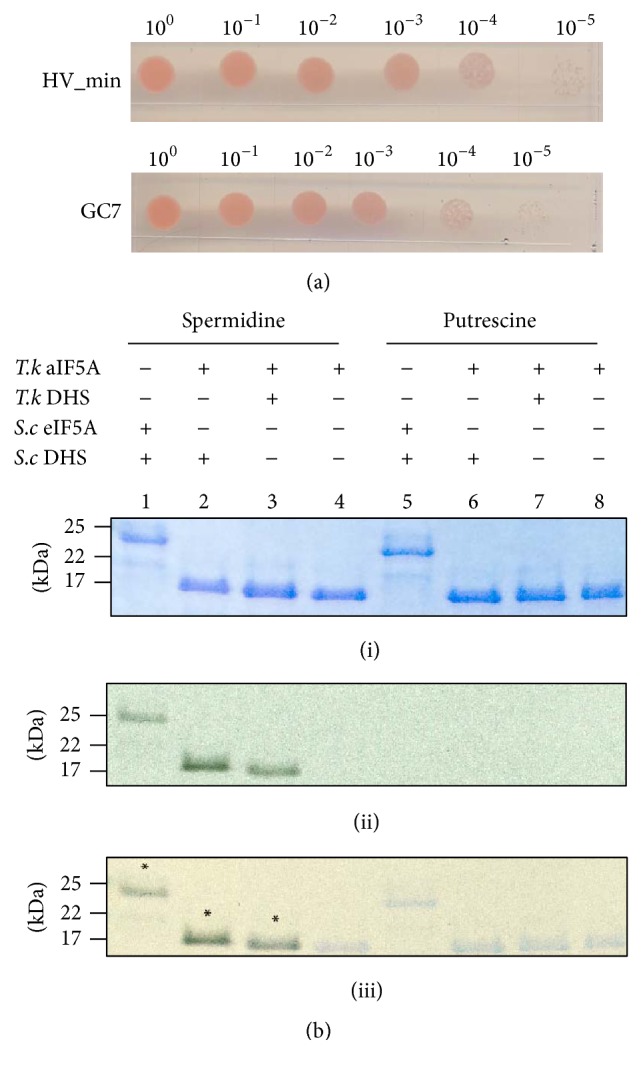
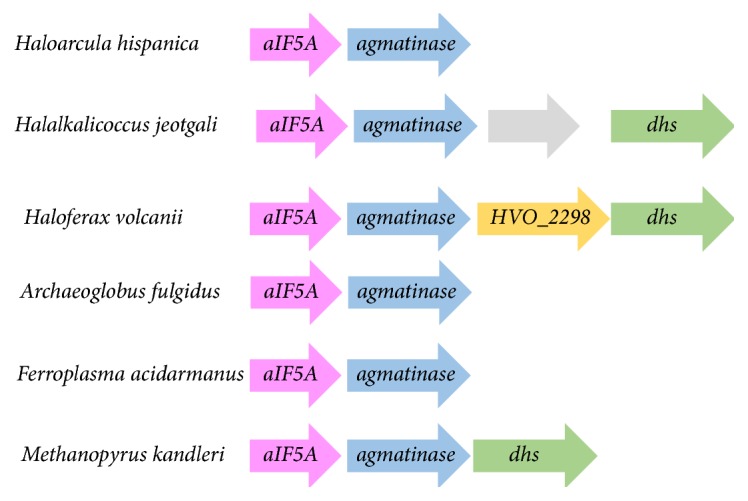
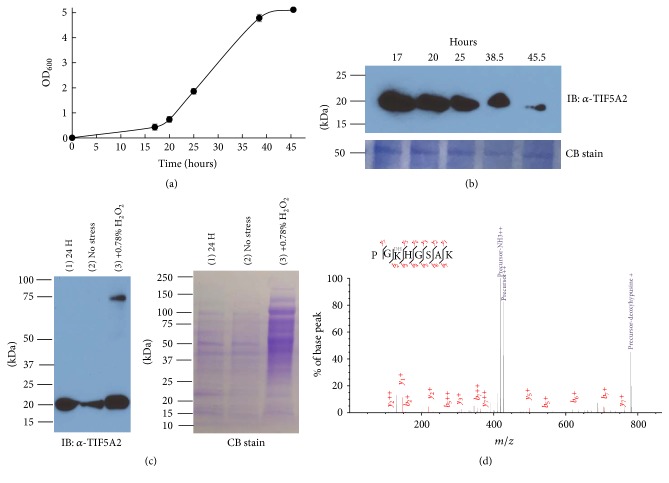
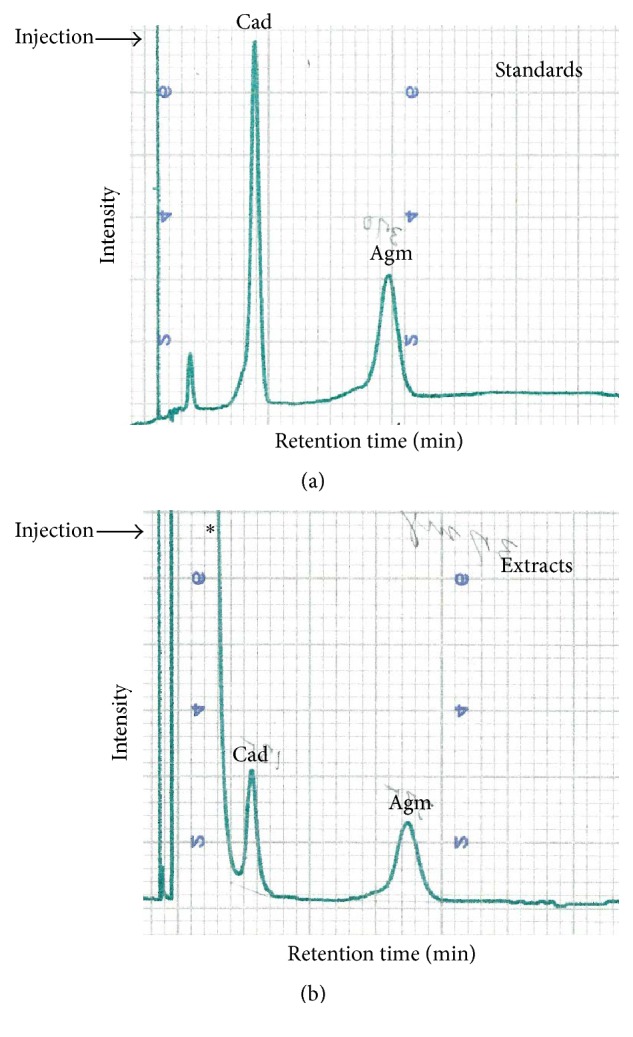
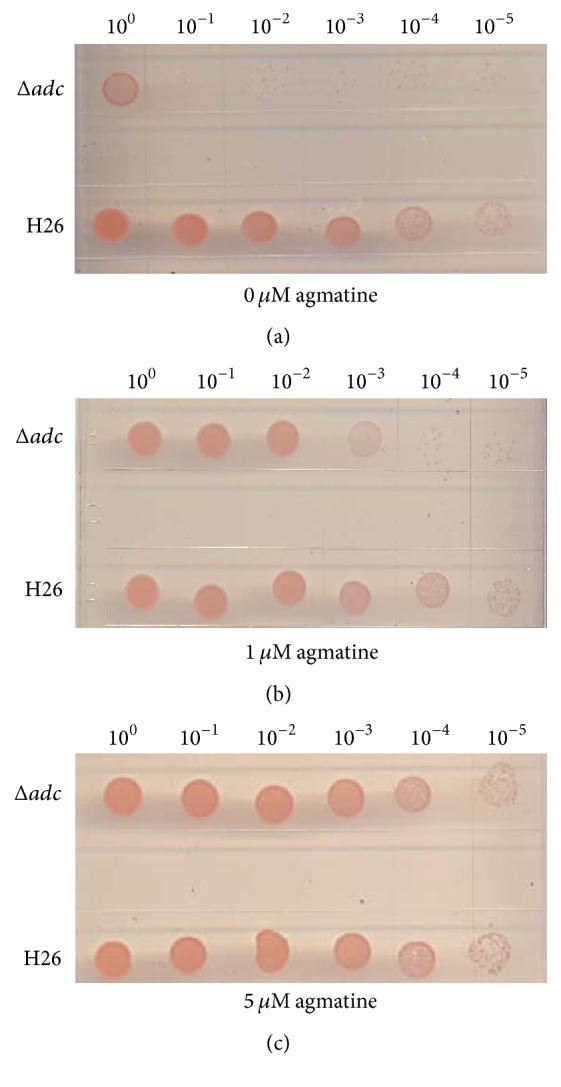
Translation initiation factor 5A (IF5A) is essential and highly conserved in Eukarya (eIF5A) and Archaea (aIF5A). The activity of IF5A requires hypusine, a posttranslational modification synthesized in Eukarya from the polyamine precursor spermidine. Intracellular polyamine analyses revealed that agmatine and cadaverine were the main polyamines produced in in minimal medium, raising the question of how hypusine is synthesized in this halophilic Archaea. Metabolic reconstruction led to a tentative picture of polyamine metabolism and aIF5A modification in that was experimentally tested. Analysis of aIF5A from by LC-MS/MS revealed it was exclusively deoxyhypusinylated. Genetic studies confirmed the role of the predicted arginine decarboxylase gene in agmatine synthesis. The agmatinase-like gene was found to be essential, consistent with a role in aIF5A modification predicted by physical clustering evidence. Recombinant deoxyhypusine synthase (DHS) from was shown to transfer 4-aminobutyl moiety from spermidine to aIF5A from However, at least under conditions tested, this transfer was not observed with the DHS. Furthermore, the growth of was not inhibited by the classical DHS inhibitor GC7. We propose a model of deoxyhypusine synthesis in that differs from the canonical eukaryotic pathway, paving the way for further studies.
翻译起始因子5A(IF5A)在真核生物(eIF5A)和古细菌(aIF5A)中是必需的且高度保守。IF5A的活性需要hypusine,这是一种在真核生物中由多胺前体亚精胺合成的翻译后修饰。细胞内多胺分析表明,胍丁胺和尸胺是在基本培养基中产生的主要多胺,这就提出了在这种嗜盐古细菌中hypusine是如何合成的问题。代谢重建得出了多胺代谢和aIF5A修饰的初步情况,并进行了实验验证。通过液相色谱-串联质谱法(LC-MS/MS)对[具体物种]的aIF5A进行分析,发现其仅被脱氧hypusinylated修饰。遗传学研究证实了预测的精氨酸脱羧酶基因[具体基因名称]在胍丁胺合成中的作用。发现类似胍丁胺酶的基因[具体基因名称]是必需的,这与物理聚类证据预测的其在aIF5A修饰中的作用一致。来自[具体物种]的重组脱氧hypusine合酶(DHS)被证明能将亚精胺的4-氨基丁基部分转移到[具体物种]的aIF5A上。然而,至少在所测试的条件下,未观察到[另一种具体物种]的DHS有这种转移。此外,经典的DHS抑制剂GC7并未抑制[具体物种]的生长。我们提出了一种[具体物种]中脱氧hypusine合成的模型,该模型不同于经典的真核生物途径,为进一步研究铺平了道路。