Balius Ramon, Álvarez Guillermo, Baró Fernando, Jiménez Fernando, Pedret Carles, Costa Ester, Martínez-Puig Daniel
Centre de Estudios del Alto Rendimiento Deportivo, Barcelona, Spain; Clínica Centro Médico Internacional Diagonal, Esplugues de Llobregat, Spain.
AMS Centro de Ejercicio, Málaga, Spain.
Curr Ther Res Clin Exp. 2016 Nov 18;78:1-7. doi: 10.1016/j.curtheres.2016.11.001. eCollection 2016.
Tendinopathy is an overuse tendon injury that occurs in loaded tendons and results in pain and functional impairment. Although many treatments for painful tendons are described, the scientific evidence for most of the conservative and surgical treatments is not always conclusive.
This study was designed to evaluate the efficacy of 3 different interventions in patients with Achilles tendinopathy. The interventions include the combination of 2 physical therapy programs (eccentric training [EC] or passive stretching [PS]) with a supplement containing mucopolisaccharides. The efficacy of the interventions was evaluated depending on the stage of the disease.
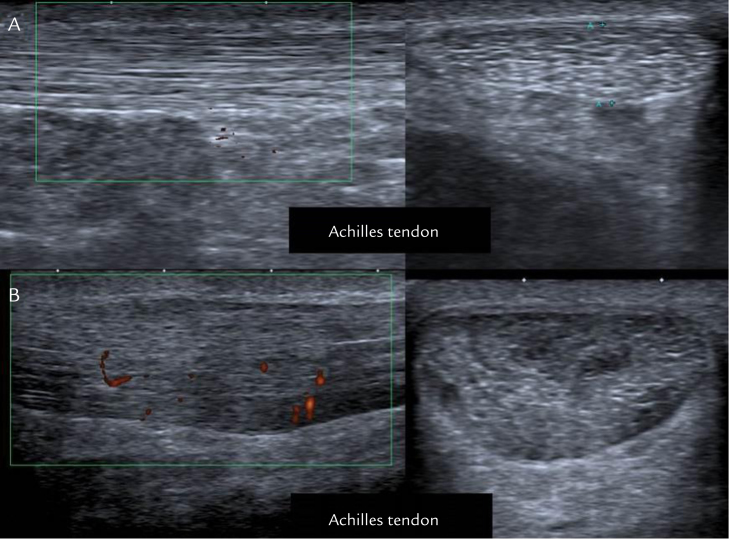
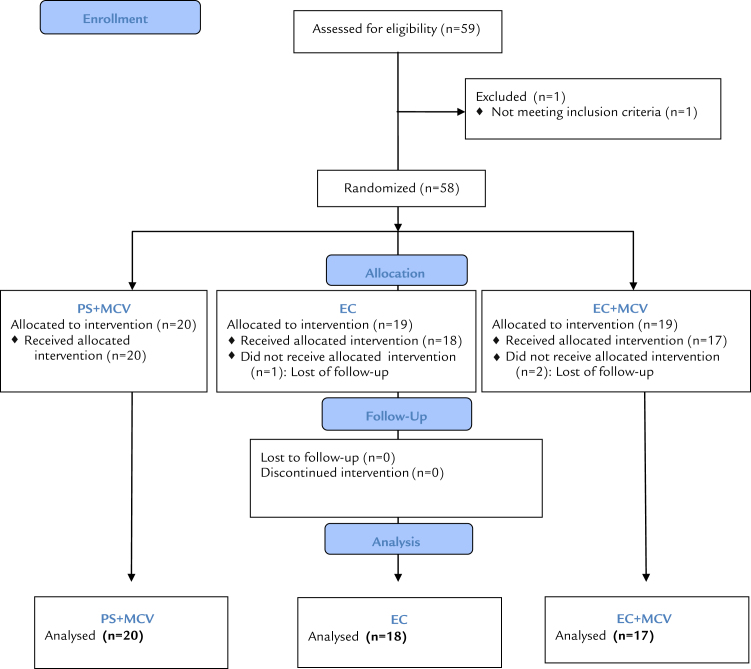
Fifty-nine patients were randomly assigned to 1 of 3 treatment groups, and classified according to the disease stage: reactive versus degenerative tendinopathy. Treatment groups were EC; EC + a dietary supplement containing mucopolisaccharides, type I collagen, and vitamin C (MCVC); and a passive stretching program + MCVC. Patients were evaluated at baseline, 6 weeks, and 12 weeks with the Victorian Institute of Sports Assessment-Achilles questionnaire for function, a visual analog scale for pain, and ultrasound characterization for the evolution of tendon structure.
A significant improvement in Victorian Institute of Sports Assessment-Achilles questionnaire score, pain at rest, and pain during activity were detected in all 3 treatment groups at 6 and 12 weeks' follow-up when compared with baseline. In patients with reactive tendinopathy, the reduction in pain at rest was greater in the groups who took the supplemental MCVC than in the EC alone group ( < 0.05).
MCVC seems to be therapeutically useful for management of tendinopathies, providing some additional benefit to physical therapy. This is especially evident in early stages of the disease, when the tendon does not present severe matrix and vascular changes.
NCT01691716.
肌腱病是一种过度使用导致的肌腱损伤,发生于承受负荷的肌腱,会引起疼痛和功能障碍。尽管有许多针对疼痛肌腱的治疗方法,但大多数保守治疗和手术治疗的科学证据并不总是确凿的。
本研究旨在评估3种不同干预措施对跟腱病患者的疗效。这些干预措施包括将2种物理治疗方案(离心训练[EC]或被动拉伸[PS])与一种含黏多糖的补充剂相结合。根据疾病阶段评估干预措施的疗效。
59例患者被随机分配至3个治疗组中的1组,并根据疾病阶段分类:反应性肌腱病与退行性肌腱病。治疗组分别为EC组;EC + 一种含黏多糖、I型胶原蛋白和维生素C的膳食补充剂(MCVC)组;以及被动拉伸方案 + MCVC组。在基线、6周和12周时,使用维多利亚运动评估-跟腱问卷评估患者的功能,用视觉模拟量表评估疼痛程度,并用超声检查评估肌腱结构的演变。
与基线相比,在6周和12周的随访中,所有3个治疗组的维多利亚运动评估-跟腱问卷评分、静息痛和活动时疼痛均有显著改善。在反应性肌腱病患者中,服用补充剂MCVC的组静息痛的减轻程度大于单纯EC组(<0.05)。
MCVC似乎对肌腱病的治疗有用,可为物理治疗提供一些额外益处。这在疾病早期尤为明显,此时肌腱未出现严重的基质和血管变化。
NCT01691716。