de Alcântara Glaura Fernandes Teixeira, Simões-Neto Eudes, da Cruz Giovany Michely Pinto, Nobre Maria Elizabeth Pereira, Neves Kelly Rose Tavares, de Andrade Geanne Matos, Brito Gerly Anne de Castro, Viana Glauce Socorro de Barros
Faculty of Medicine Estácio of Juazeiro do Norte, Brazil.
Faculty of Medicine of the Federal University of Ceará, Brazil.
J Tradit Complement Med. 2016 Feb 11;7(1):14-23. doi: 10.1016/j.jtcme.2015.10.001. eCollection 2017 Jan.
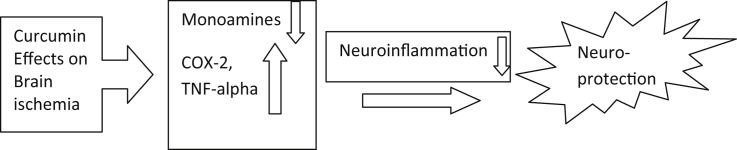
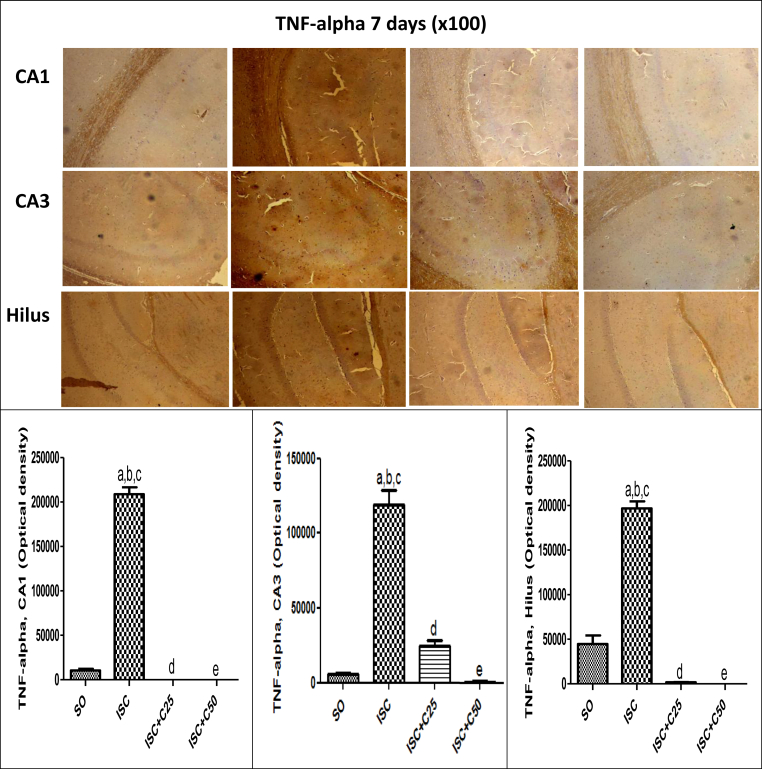
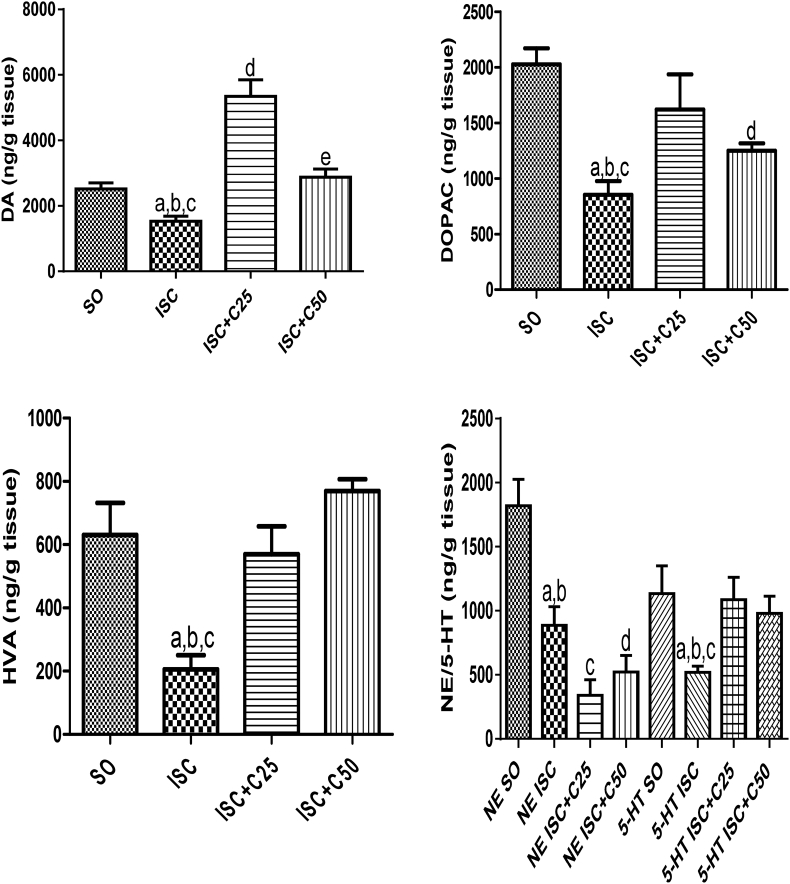
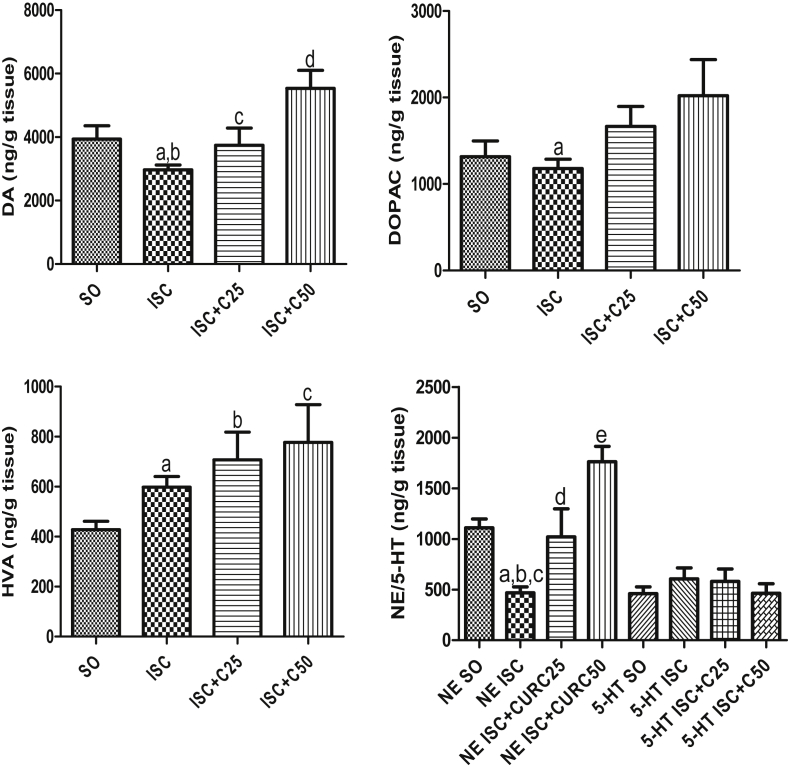
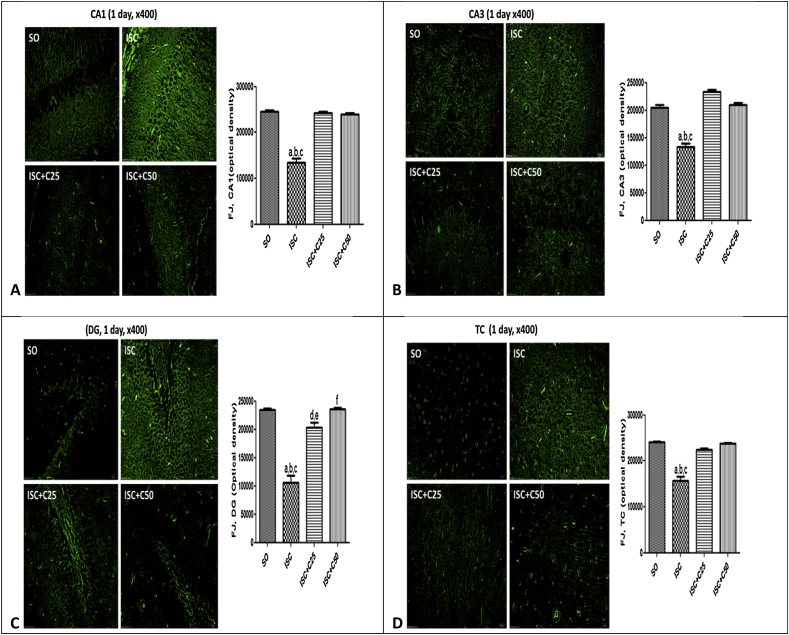
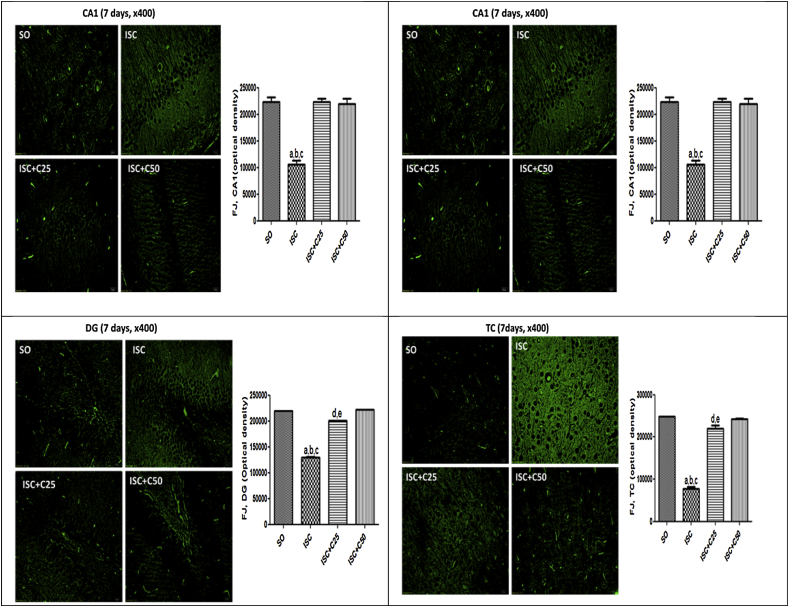
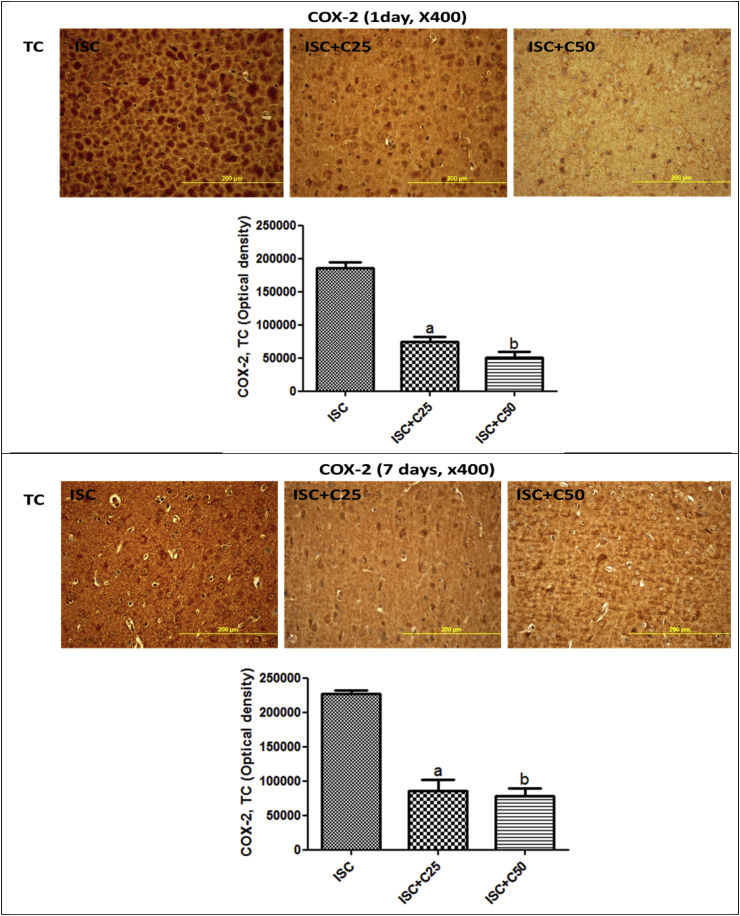
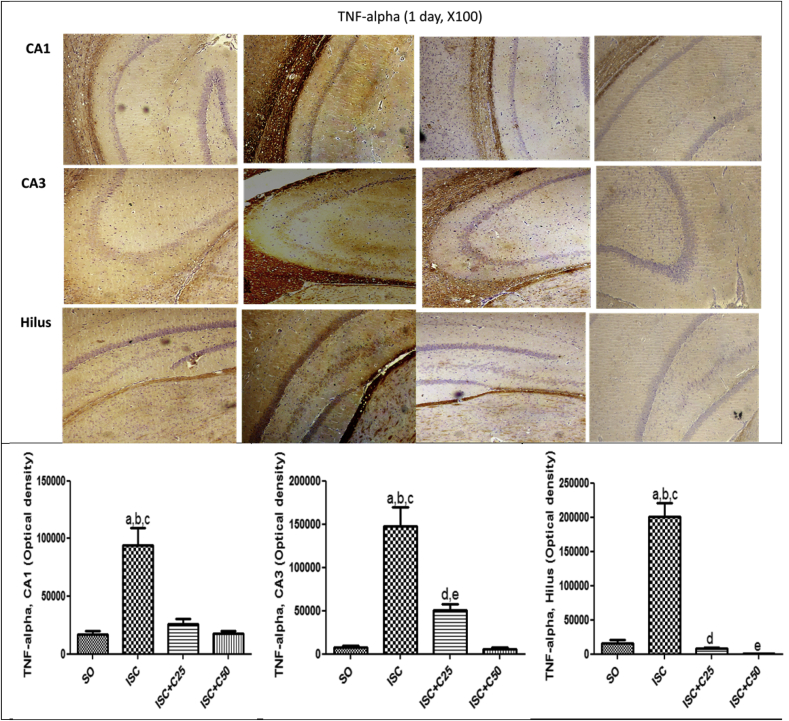
Curcumin, a curcuminoid from , presents antioxidant and anti-inflammatory actions and, among pathological changes of cerebral ischemic injury, inflammation is an important one. The objectives were to study the neuroprotective action of curcumin, in a model of global ischemia. Male Wistar rats (sham-operated, ischemic untreated and ischemic treated with curcumin, 25 or 50 mg/kg, p.o.) were anesthesized and their carotid arteries occluded, for 30 min. The SO group had the same procedure, except for carotid occlusion. In the 1 protocol, animals were treated 1 h before ischemia and 24 h later; and in the 2 protocol, treatments began 1 h before ischemia, continuing for 7 days. Twenty four hours after the last administration, animals were euthanized and measurements for striatal monoamines were performed, at the 1 and 7 days after ischemia, as well as histological and immunohistochemical assays in hippocampi. We showed in both protocols, depletions of DA and its metabolites (DOPAC and HVA), in the ischemic group, but these effects were reversed by curcumin. Additionally, a decrease seen in 5-HT contents, 1 day after ischemia, was also reversed by curcumin. This reversion was not seen 7 days later. On the other hand, a decrease observed in NE levels, at the 7 day, was totally reversed by curcumin. Furthermore, curcumin treatments increased neuronal viability and attenuated the immunoreactivity for COX-2 and TNF-alpha, in the hippocampus in both protocols. We showed that curcumin exerts neuroprotective actions, in a model of brain ischemia that are probably related to its anti-inflammatory activity.
姜黄素是一种源自[具体来源未给出]的姜黄素类化合物,具有抗氧化和抗炎作用,而在脑缺血损伤的病理变化中,炎症是一个重要方面。本研究目的是在全脑缺血模型中研究姜黄素的神经保护作用。将雄性Wistar大鼠(假手术组、缺血未治疗组以及缺血后用25或50mg/kg姜黄素口服治疗组)麻醉后结扎其颈动脉30分钟。假手术组(SO组)除不结扎颈动脉外,进行相同操作。在方案1中,动物在缺血前1小时和缺血后24小时接受治疗;在方案2中,治疗从缺血前1小时开始,持续7天。在最后一次给药24小时后,处死动物,在缺血后1天和7天测量纹状体单胺含量,并对海马进行组织学和免疫组织化学分析。我们发现在两个方案中,缺血组均出现多巴胺(DA)及其代谢产物(3,4-二羟基苯乙酸(DOPAC)和高香草酸(HVA))的耗竭,但这些效应被姜黄素逆转。此外,缺血后1天观察到的5-羟色胺(5-HT)含量降低也被姜黄素逆转。7天后未观察到这种逆转。另一方面,在第7天观察到的去甲肾上腺素(NE)水平降低被姜黄素完全逆转。此外,在两个方案中,姜黄素治疗均增加了神经元活力,并减弱了海马中环氧合酶-2(COX-2)和肿瘤坏死因子-α(TNF-α)的免疫反应性。我们表明,在脑缺血模型中,姜黄素发挥神经保护作用,这可能与其抗炎活性有关。