Department of Pathology, Chongqing Medical University, Chongqing, People's Republic of China.
PLoS One. 2013;8(3):e59843. doi: 10.1371/journal.pone.0059843. Epub 2013 Mar 28.
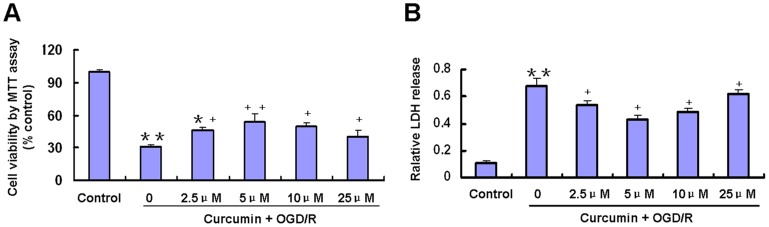
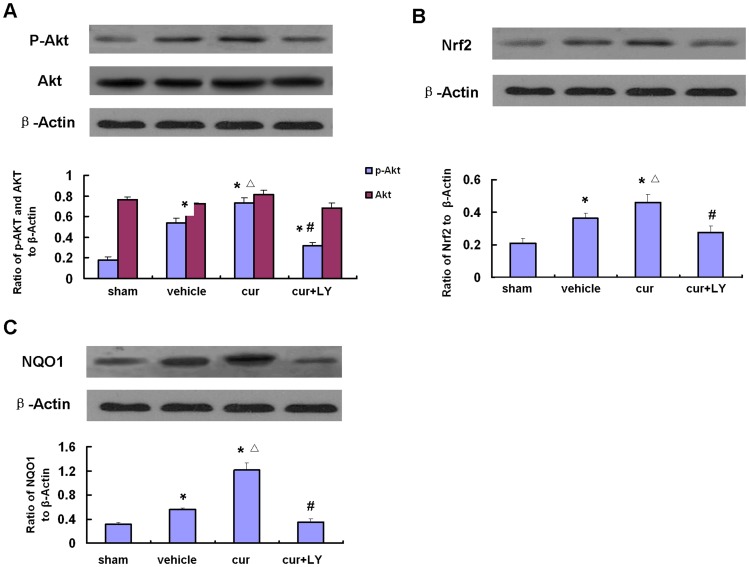
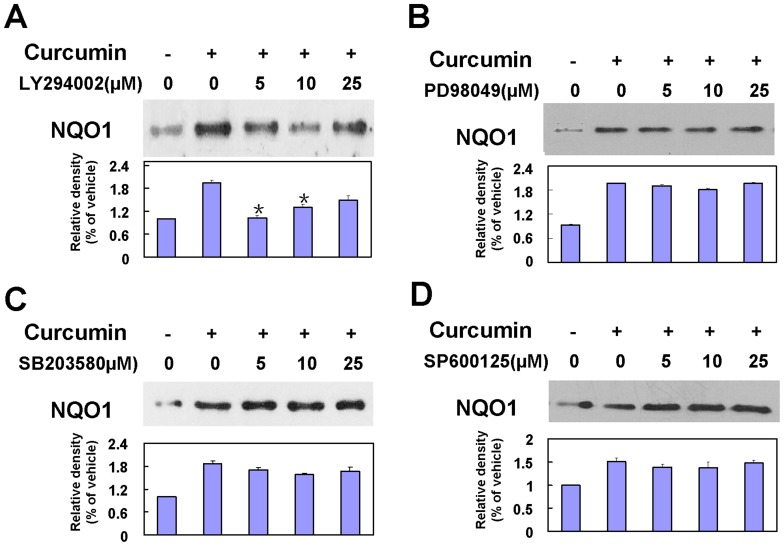
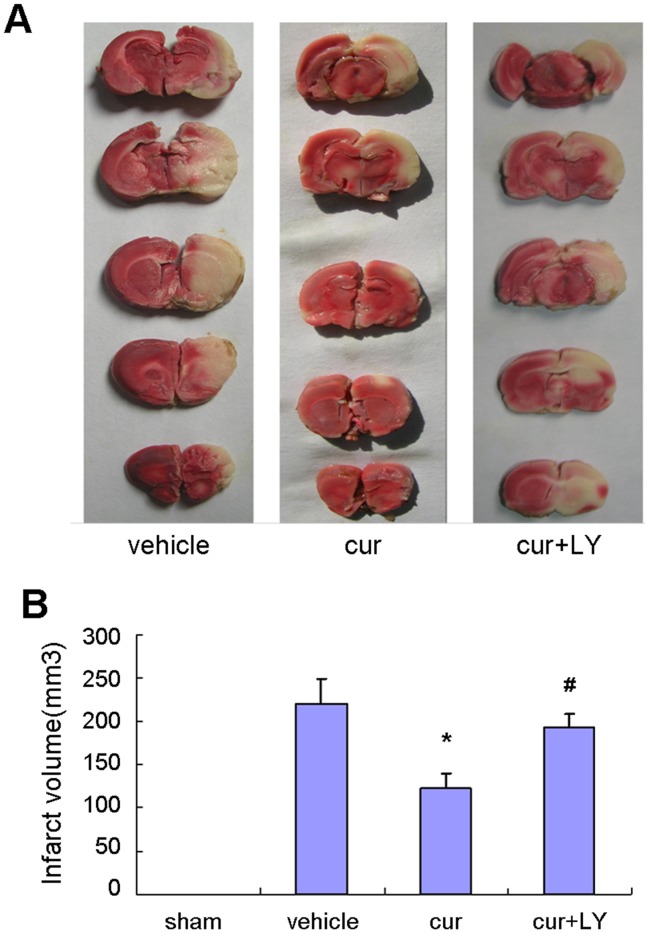
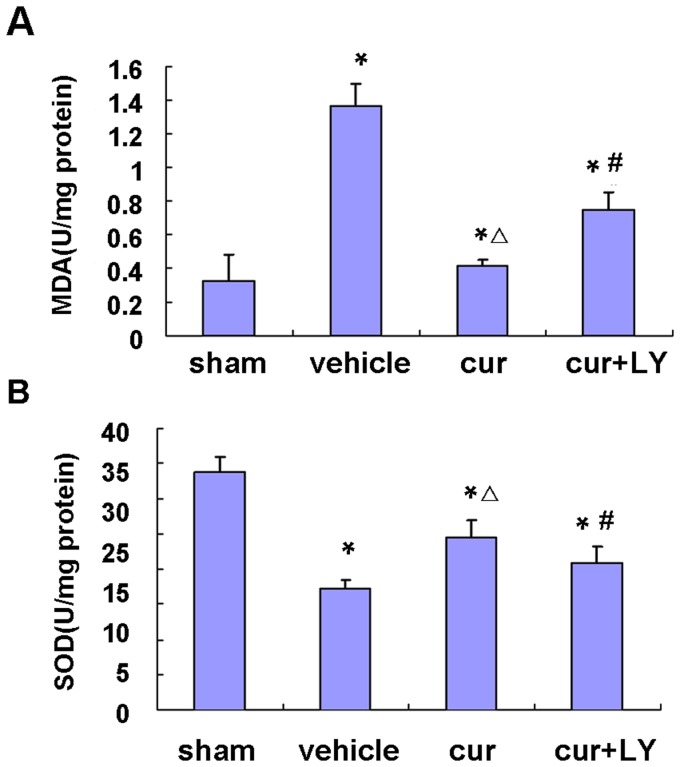
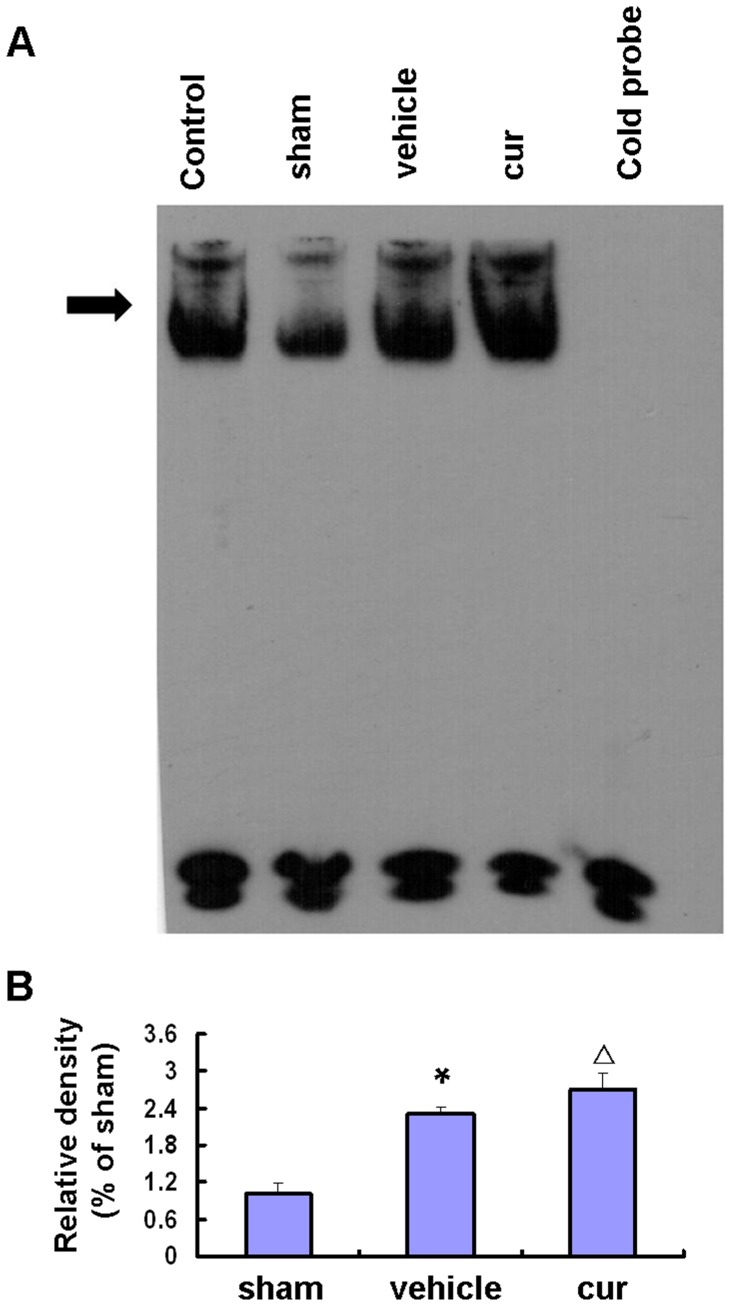
Oxidative damage plays a critical role in many diseases of the central nervous system. This study was conducted to determine the molecular mechanisms involved in the putative anti-oxidative effects of curcumin against experimental stroke. Oxygen and glucose deprivation/reoxygenation (OGD/R) was used to mimic ischemic insult in primary cultured cortical neurons. A rapid increase in the intracellular expression of NAD(P)H: quinone oxidoreductase1 (NQO1) induced by OGD was counteracted by curcumin post-treatment, which paralleled attenuated cell injury. The reduction of phosphorylation Akt induced by OGD was restored by curcumin. Consequently, NQO1 expression and the binding activity of nuclear factor-erythroid 2-related factor 2 (Nrf2) to antioxidant response element (ARE) were increased. LY294002 blocked the increase in phospho-Akt evoked by curcumin and abolished the associated protective effect. Adult male Sprague-Dawley rats were subjected to transient middle cerebral artery occlusion for 60 minutes. Curcumin administration significantly reduced infarct size. Curcumin also markedly reduced oxidative stress levels in middle cerebral artery occlusion (MCAO) rats; hence, these effects were all suppressed by LY294002. Taken together, these findings provide evidence that curcumin protects neurons against ischemic injury, and this neuroprotective effect involves the Akt/Nrf2 pathway. In addition, Nrf2 is involved in the neuroprotective effects of curcumin against oxidative damage.
氧化损伤在中枢神经系统的许多疾病中起着关键作用。本研究旨在确定姜黄素对实验性中风的潜在抗氧化作用所涉及的分子机制。使用氧和葡萄糖剥夺/再氧合(OGD/R)模拟原代培养皮质神经元中的缺血性损伤。OGD 诱导的细胞内 NAD(P)H:醌氧化还原酶 1(NQO1)表达的快速增加被姜黄素的后期处理所拮抗,这与细胞损伤的减轻平行。OGD 诱导的磷酸化 Akt 的减少被姜黄素恢复。因此,NQO1 表达和核因子-红细胞 2 相关因子 2(Nrf2)与抗氧化反应元件(ARE)的结合活性增加。LY294002 阻断了姜黄素引起的磷酸化 Akt 的增加,并消除了相关的保护作用。雄性 Sprague-Dawley 大鼠接受 60 分钟的短暂性大脑中动脉闭塞。姜黄素给药显著减少梗死面积。姜黄素还显著降低大脑中动脉闭塞(MCAO)大鼠的氧化应激水平;因此,这些作用都被 LY294002 抑制。总之,这些发现提供了证据表明姜黄素可以保护神经元免受缺血性损伤,这种神经保护作用涉及 Akt/Nrf2 途径。此外,Nrf2 参与了姜黄素对氧化损伤的神经保护作用。