Raman Mekala R, Kantarci Kejal, Murray Melissa E, Jack Clifford R, Vemuri Prashanthi
Department of Radiology, Mayo Clinic, Rochester, MN, USA.
Department of Neuroscience, Mayo Clinic, Jacksonville, FL, USA.
Alzheimers Dement (Amst). 2016 Dec 18;5:5-14. doi: 10.1016/j.dadm.2016.12.006. eCollection 2016.
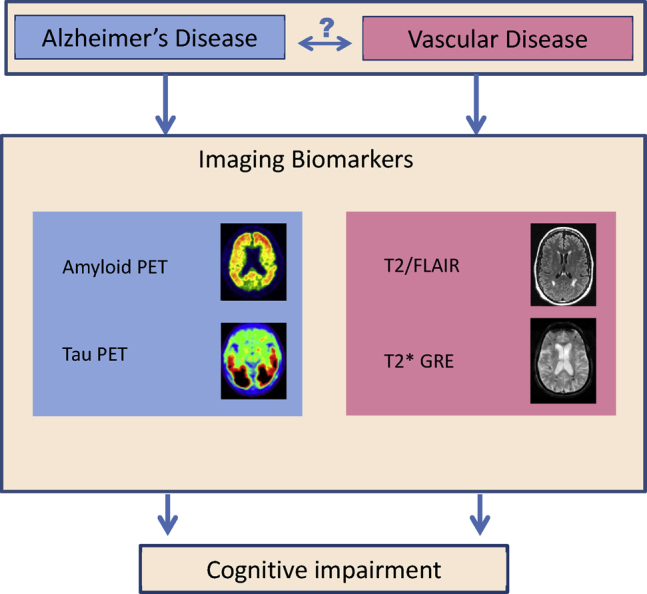
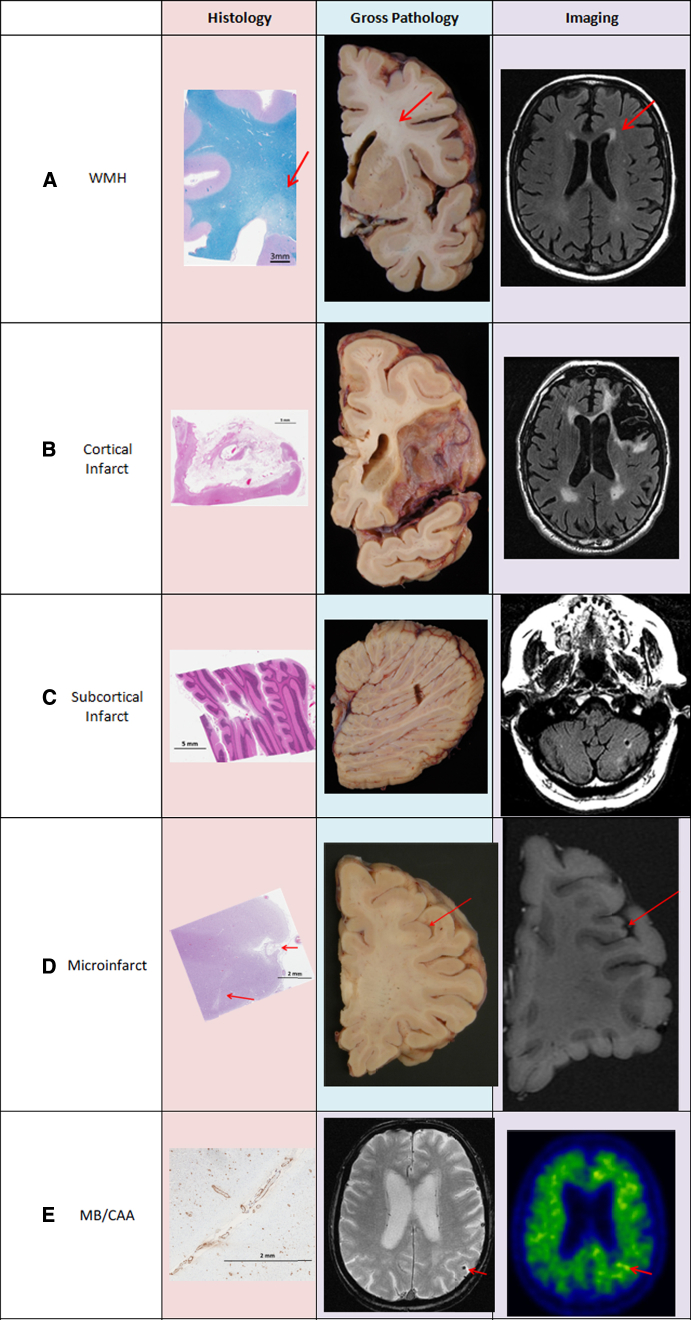
Cerebrovascular pathologies (CVPs) are common pathologies associated with age-related cognitive decline along with Alzheimer disease pathologies. The impact of CVP on the prevalence of dementia is increasingly being recognized. The goal of this review is to improve our understanding of the pathophysiological underpinnings and the multimodal magnetic resonance imaging and positron emission tomography imaging changes that are associated with the hallmarks of CVP. This knowledge will facilitate the development of early detection, intervention, and prevention strategies that may contribute to lowering the risk of dementia. In this review, we will first discuss currently known risk factors of CVPs including cardiovascular, lifestyle, genetic, sex differences, and head injury. Next, we will focus on the pathophysiology of CVPs and their impact on neurodegeneration and downstream cognitive impairment. Specifically, we will discuss three of the most common cerebrovascular lesions seen on MRI: white-matter hyperintensity, microbleeds, and infarcts. Finally, we will discuss the unanswered open questions in this field.
脑血管病变(CVP)是与年龄相关的认知衰退以及阿尔茨海默病病变相关的常见病变。CVP对痴呆症患病率的影响日益受到认可。本综述的目的是增进我们对与CVP特征相关的病理生理基础以及多模态磁共振成像和正电子发射断层扫描成像变化的理解。这些知识将有助于制定早期检测、干预和预防策略,可能有助于降低痴呆症风险。在本综述中,我们首先将讨论CVP目前已知的风险因素,包括心血管、生活方式、遗传、性别差异和头部损伤。接下来,我们将重点关注CVP的病理生理学及其对神经退行性变和下游认知障碍的影响。具体而言,我们将讨论在MRI上看到的三种最常见的脑血管病变:白质高信号、微出血和梗死。最后,我们将讨论该领域尚未解决的开放性问题。