Plant Jon D, Neradilek Moni B
SkinVet Clinic, 15800 Upper Boones Ferry Road, Suite 120, Lake Oswego, 97035, OR, USA.
The Mountain-Whisper-Light Statistics, 1827 23rd Avenue East, Seattle, 98112, WA, USA.
BMC Vet Res. 2017 Jan 5;13(1):4. doi: 10.1186/s12917-016-0917-z.
Canine atopic dermatitis is a common pruritic skin disease often treated with allergen immunotherapy (AIT). AIT in dogs traditionally begins with attempting to identify clinically relevant environmental allergens. Current allergen testing methodologies and immunotherapy techniques in dogs are not standardized. Immunotherapy with a mixture of allergenic extracts selected based on regional aerobiology rather than intradermal tests or serum IgE assays has been described. The objective of this study was to evaluate the effectiveness of regionally-specific immunotherapy in dogs with atopic dermatitis. The medical records of a veterinary dermatology referral clinic were searched for dogs with atopic dermatitis that began regionally-specific subcutaneous immunotherapy from June, 2010 to May, 2013. An overall assessment of treatment effectiveness (excellent, good, fair, or poor) was assigned based upon changes in pruritus severity, lesion severity, and the reduction in concurrent medication(s) during a follow-up period of at least 270 days. Baseline characteristics that might predict treatment success were analyzed with the Spearman's correlation and the Kruskal-Wallis tests.
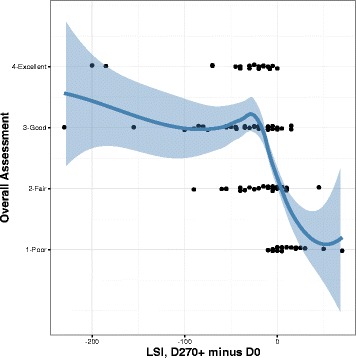
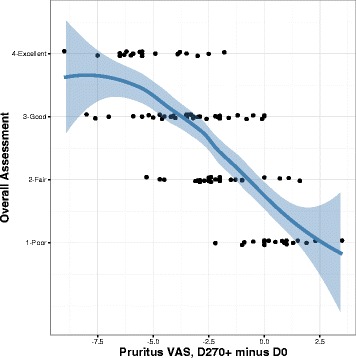
Of the 286 dogs that began regionally-specific immunotherapy (RESPIT) during a 3 year period, 103 met the inclusion criteria. The overall response to RESPIT was classified as excellent in 19%, good in 38%, fair in 25%, and poor in 18% of dogs. The response classification correlated significantly with a reduction in pruritus severity (r = 0.72, p < 0.001) and lesion severity (r = 0.54, p < 0.001), but not with the dogs' baseline characteristics. Adverse reactions were reported in 7/286 (2.4%) of treated dogs.
Under the conditions of this study, RESPIT was safe and effective for the treatment of atopic dermatitis in dogs.
犬特应性皮炎是一种常见的瘙痒性皮肤病,通常采用变应原免疫疗法(AIT)进行治疗。传统上,犬的AIT始于尝试识别临床相关的环境变应原。目前犬的变应原检测方法和免疫疗法技术尚未标准化。已有研究描述了基于区域空气生物学而非皮内试验或血清IgE检测来选择变应原提取物混合物进行免疫治疗。本研究的目的是评估区域特异性免疫疗法对犬特应性皮炎的有效性。检索了一家兽医皮肤科转诊诊所2010年6月至2013年5月开始接受区域特异性皮下免疫疗法的犬特应性皮炎病例的病历。根据瘙痒严重程度、皮损严重程度的变化以及在至少270天的随访期内同时使用药物的减少情况,对治疗效果进行总体评估(优秀、良好、中等或差)。使用Spearman相关性分析和Kruskal-Wallis检验分析可能预测治疗成功的基线特征。
在3年期间开始接受区域特异性免疫疗法(RESPIT)的286只犬中,103只符合纳入标准。对RESPIT的总体反应在19%的犬中被分类为优秀,38%为良好,25%为中等,18%为差。反应分类与瘙痒严重程度的降低(r = 0.72,p < 0.001)和皮损严重程度的降低(r = 0.54,p < 0.001)显著相关,但与犬的基线特征无关。在286只接受治疗的犬中,有7只(2.4%)报告了不良反应。
在本研究条件下,RESPIT对犬特应性皮炎的治疗是安全有效的。