Interventional Molecular Imaging Laboratory, Department of Radiology, Leiden University Medical Center, Albinusdreef 2, PO BOX 9600, 2300 RC, Leiden, The Netherlands.
Laboratory of BioNanoTechnology, Axis, Building 118, Bornse weilanden 9, 6708 WG Wageningen, The Netherlands.
Sci Rep. 2017 Jan 6;7:39908. doi: 10.1038/srep39908.
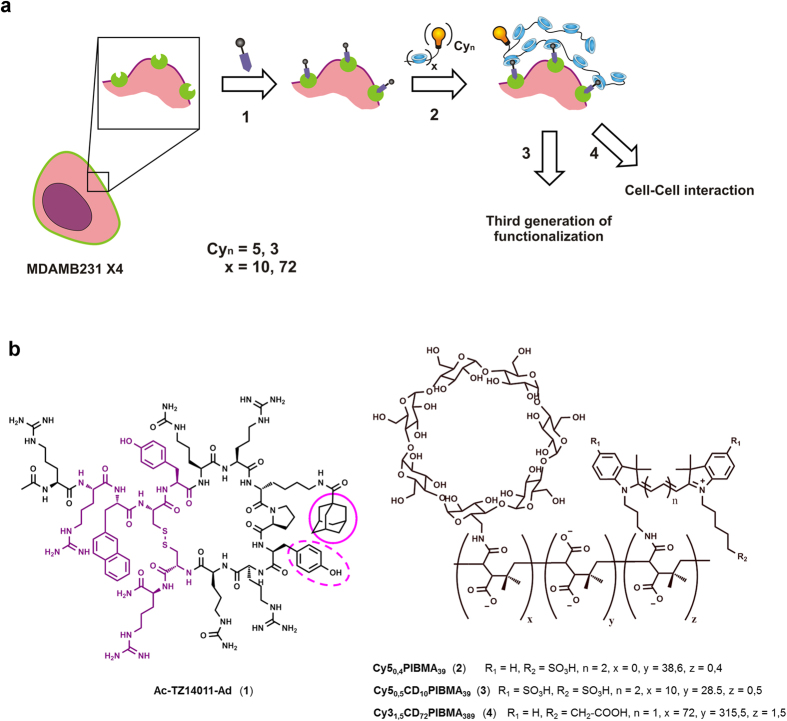
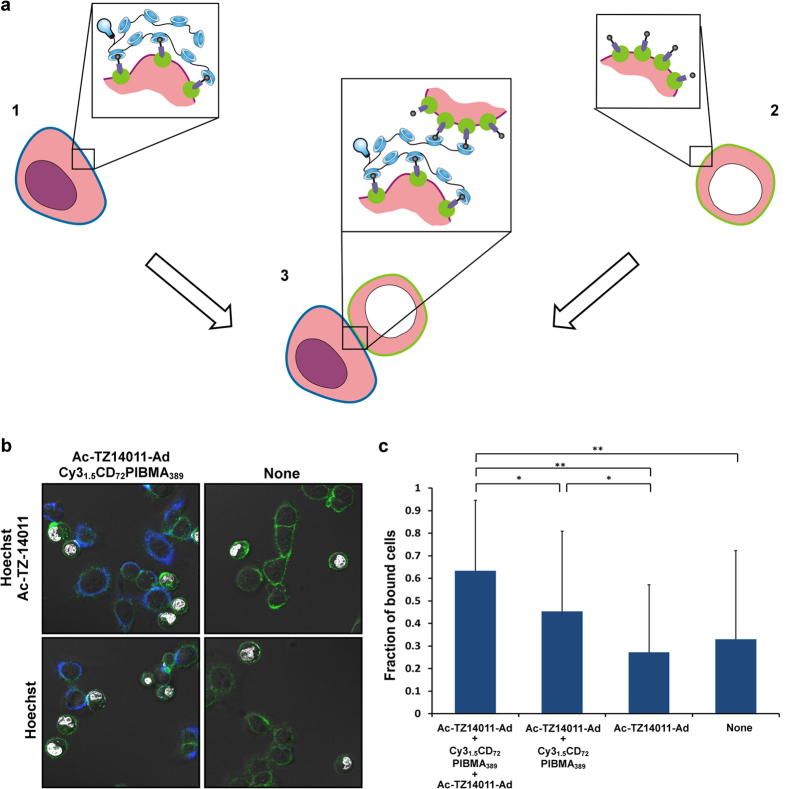
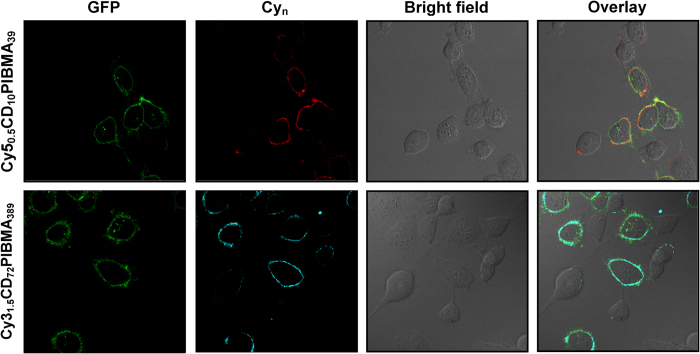
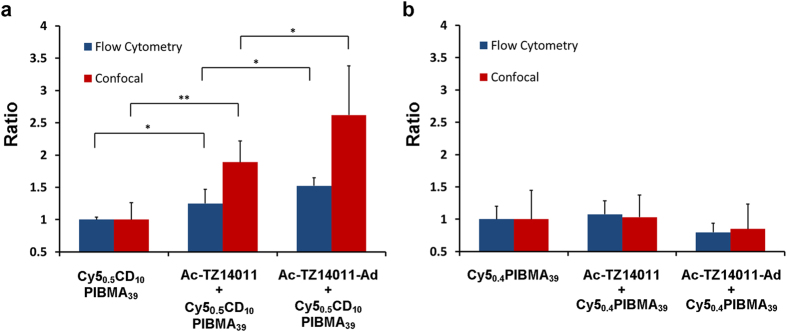
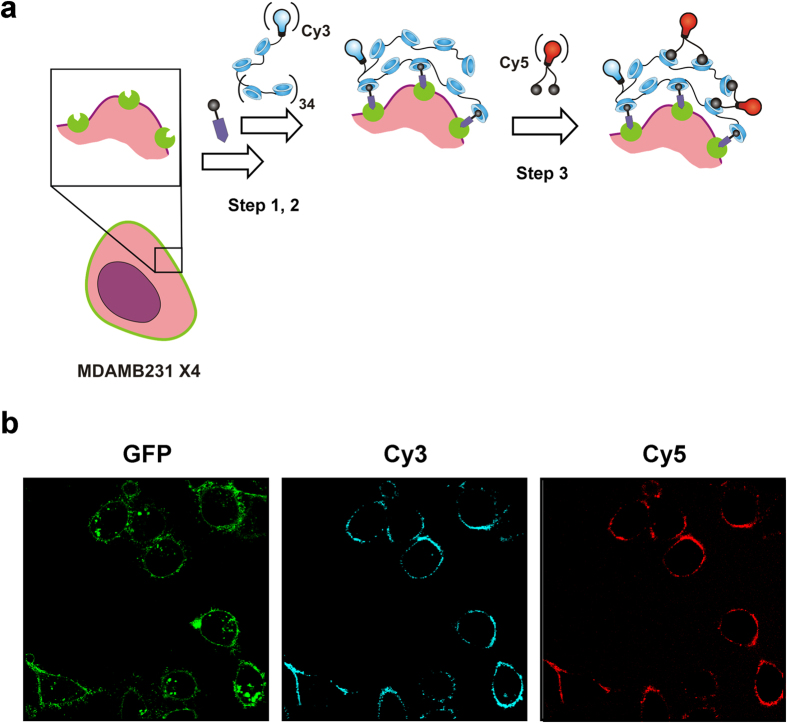
The use of mammalian cells for therapeutic applications is finding its way into modern medicine. However, modification or "training" of cells to make them suitable for a specific application remains complex. By envisioning a chemical toolbox that enables specific, but straight-forward and generic cellular functionalization, we investigated how membrane-receptor (pre)targeting could be combined with supramolecular host-guest interactions based on β-cyclodextrin (CD) and adamantane (Ad). The feasibility of this approach was studied in cells with membranous overexpression of the chemokine receptor 4 (CXCR4). By combining specific targeting of CXCR4, using an adamantane (Ad)-functionalized Ac-TZ14011 peptide (guest; K = 56 nM), with multivalent host molecules that entailed fluorescent β-CD-Poly(isobutylene-alt-maleic-anhydride)-polymers with different fluorescent colors and number of functionalities, host-guest cell-surface modifications could be studied in detail. A second set of Ad-functionalized entities enabled introduction of additional surface functionalities. In addition, the attraction between CD and Ad could be used to drive cell-cell interactions. Combined we have shown that supramolecular interactions, that are based on specific targeting of an overexpressed membrane-receptor, allow specific and stable, yet reversible, surface functionalization of viable cells and how this approach can be used to influence the interaction between cells and their surroundings.
哺乳动物细胞在治疗应用中的使用正在进入现代医学。然而,对细胞进行修饰或“训练”以使它们适用于特定应用仍然很复杂。通过设想一个化学工具箱,使细胞能够进行特定但直接和通用的功能化,我们研究了如何将膜受体(前)靶向与基于β-环糊精(CD)和金刚烷(Ad)的超分子主体-客体相互作用结合使用。通过用金刚烷(Ad)功能化的 Ac-TZ14011 肽(客体;K=56 nM)对趋化因子受体 4(CXCR4)进行特异性靶向,研究了这种方法在膜过表达 CXCR4 的细胞中的可行性。通过将特定的靶向 CXCR4,使用金刚烷(Ad)功能化的 Ac-TZ14011 肽(客体;K=56 nM),与多价主体分子结合,这些主体分子涉及带有不同荧光颜色和功能数目的荧光β-CD-聚(异丁烯-alt-马来酸酐)-聚合物,可以详细研究主体-客体细胞表面修饰。第二组 Ad 功能化实体能够引入额外的表面功能。此外,CD 和 Ad 之间的吸引力可用于驱动细胞-细胞相互作用。综合起来,我们已经表明,基于过表达膜受体的特异性靶向的超分子相互作用允许对活细胞进行特异性和稳定但可还原的表面功能化,以及如何使用这种方法来影响细胞及其周围环境之间的相互作用。