Department of Anatomy &Anthropology, Sackler Faculty of Medicine, Tel Aviv University, Israel.
Department of Prosthodontics, Goldschleger School of Dental Medicine, Sackler Faculty of Medicine, Tel Aviv University, Israel.
Sci Rep. 2017 Jan 6;7:39612. doi: 10.1038/srep39612.
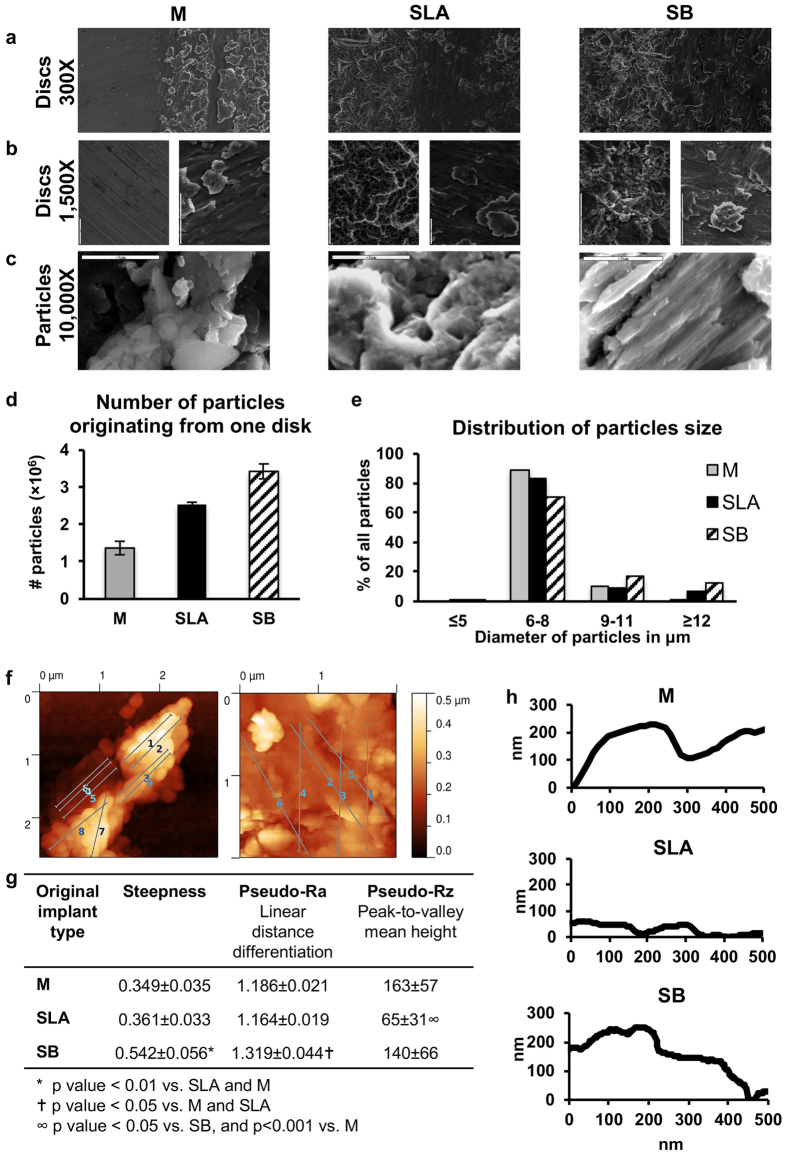
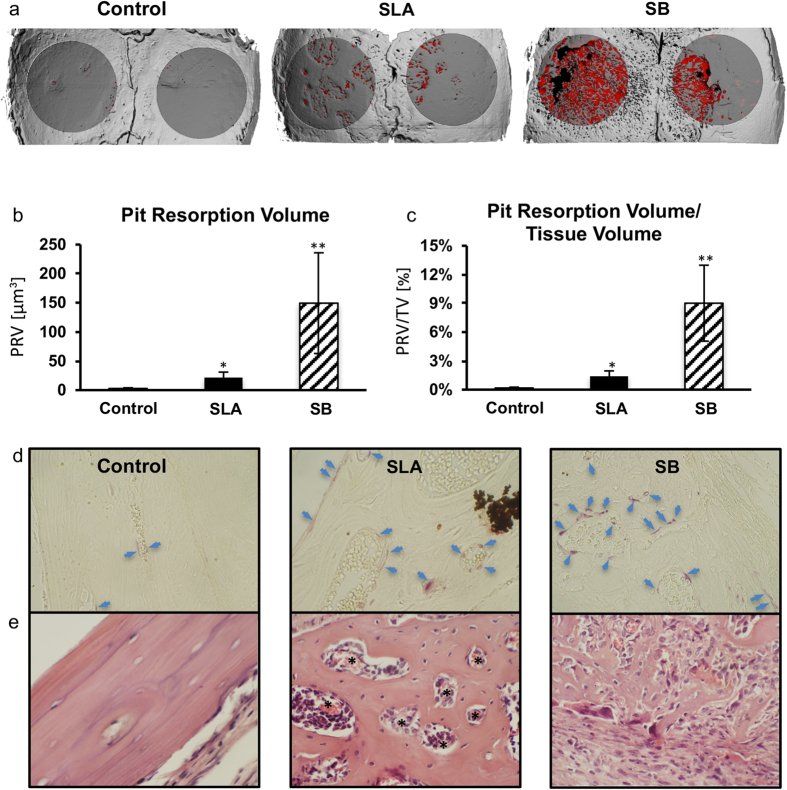
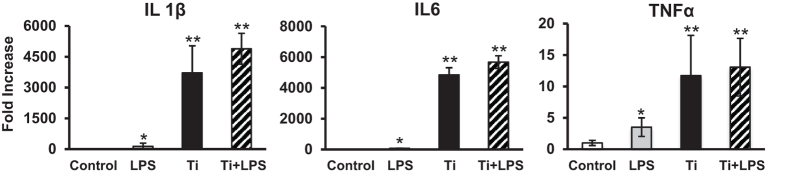
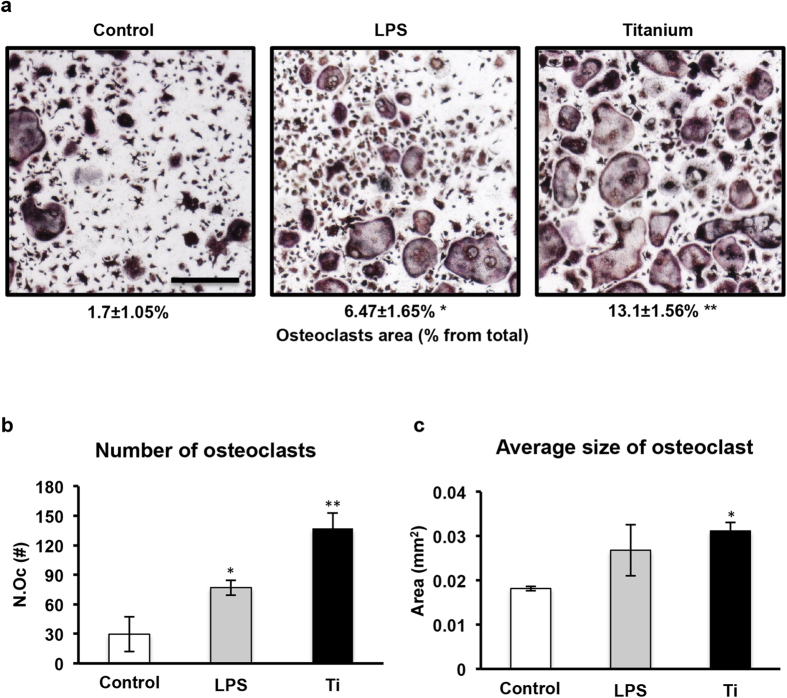
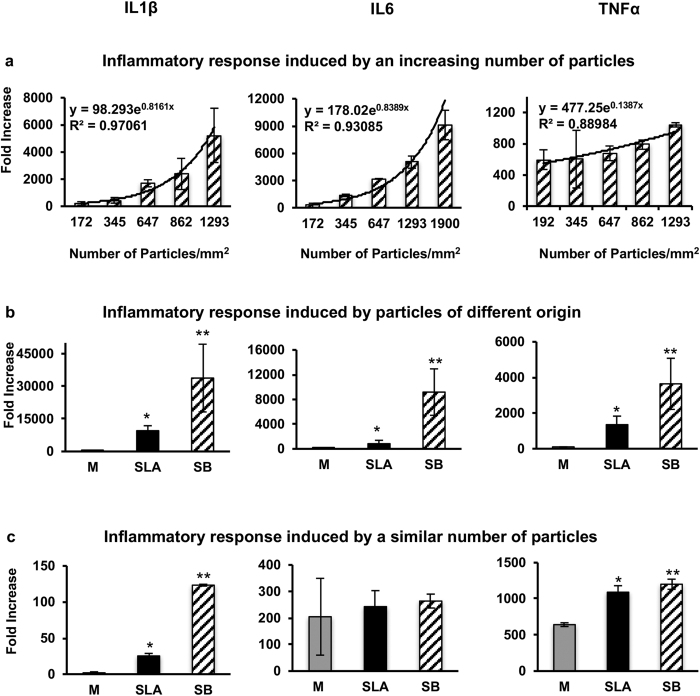
With millions of new dental and orthopedic implants inserted annually, periprosthetic osteolysis becomes a major concern. In dentistry, peri-implantitis management includes cleaning using ultrasonic scaling. We examined whether ultrasonic scaling releases titanium particles and induces inflammation and osteolysis. Titanium discs with machined, sandblasted/acid-etched and sandblasted surfaces were subjected to ultrasonic scaling and we physically and chemically characterized the released particles. These particles induced a severe inflammatory response in macrophages and stimulated osteoclastogenesis. The number of released particles and their chemical composition and nanotopography had a significant effect on the inflammatory response. Sandblasted surfaces released the highest number of particles with the greatest nanoroughness properties. Particles from sandblasted/acid-etched discs induced a milder inflammatory response than those from sandblasted discs but a stronger inflammatory response than those from machined discs. Titanium particles were then embedded in fibrin membranes placed on mouse calvariae for 5 weeks. Using micro-CT, we observed that particles from sandblasted discs induced more osteolysis than those from sandblasted/acid-etched discs. In summary, ultrasonic scaling of titanium implants releases particles in a surface type-dependent manner and may aggravate peri-implantitis. Future studies should assess whether surface roughening affects the extent of released wear particles and aseptic loosening of orthopedic implants.
每年有数百万个新的牙科和骨科植入物被植入,因此假体周围骨溶解成为一个主要关注点。在牙科领域,种植体周围炎的治疗包括使用超声洁治进行清洁。我们研究了超声洁治是否会释放钛颗粒,并引发炎症和骨溶解。对经过机械加工、喷砂酸蚀和喷砂处理的钛盘进行了超声洁治,并对释放的颗粒进行了物理和化学特性分析。这些颗粒在巨噬细胞中引发了严重的炎症反应,并刺激破骨细胞生成。释放颗粒的数量及其化学成分和纳米形貌对炎症反应有显著影响。喷砂表面释放的颗粒数量最多,纳米粗糙度最高。喷砂/酸蚀盘释放的颗粒引起的炎症反应比喷砂盘释放的颗粒温和,但比机械加工盘释放的颗粒强烈。然后将钛颗粒嵌入放置在小鼠颅骨上 5 周的纤维蛋白膜中。通过 micro-CT 观察到,喷砂盘释放的颗粒比喷砂/酸蚀盘释放的颗粒引起更多的骨溶解。总之,钛植入物的超声洁治会以表面类型依赖的方式释放颗粒,可能会加重种植体周围炎。未来的研究应评估表面粗糙度是否会影响释放的磨损颗粒数量以及骨科植入物的无菌性松动。