Fujita Yuhzo, Tsuno Haruo, Nakayama Jiro
Yuno Onsen Hospital, Yuno, Syunan-shi, Yamaguchi, Japan.
Laboratory of Microbial Technology, Division of Systems Bioengineering, Department of Bioscience and Biotechnology, Faculty of Agriculture, Graduate School, Kyushu University, Hakozaki, Higashi-ku, Fukuoka, Japan.
PLoS One. 2017 Jan 6;12(1):e0169240. doi: 10.1371/journal.pone.0169240. eCollection 2017.
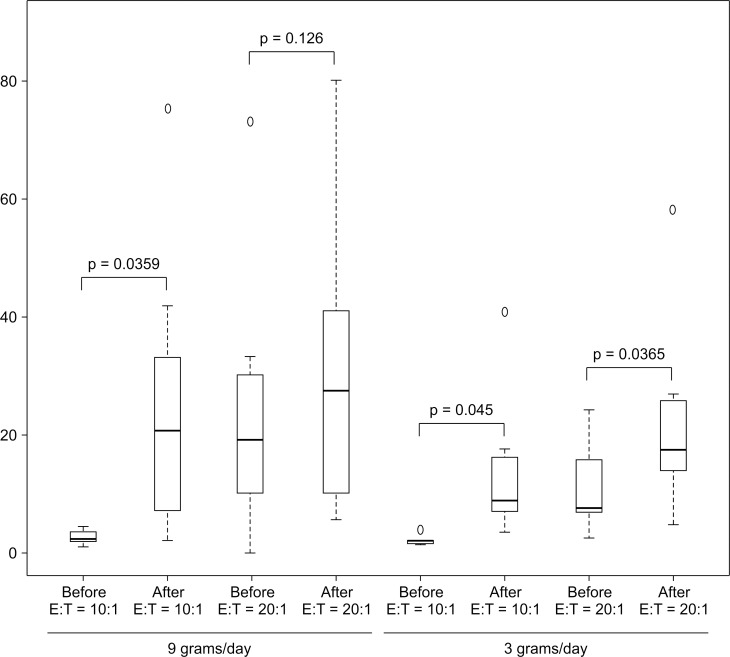
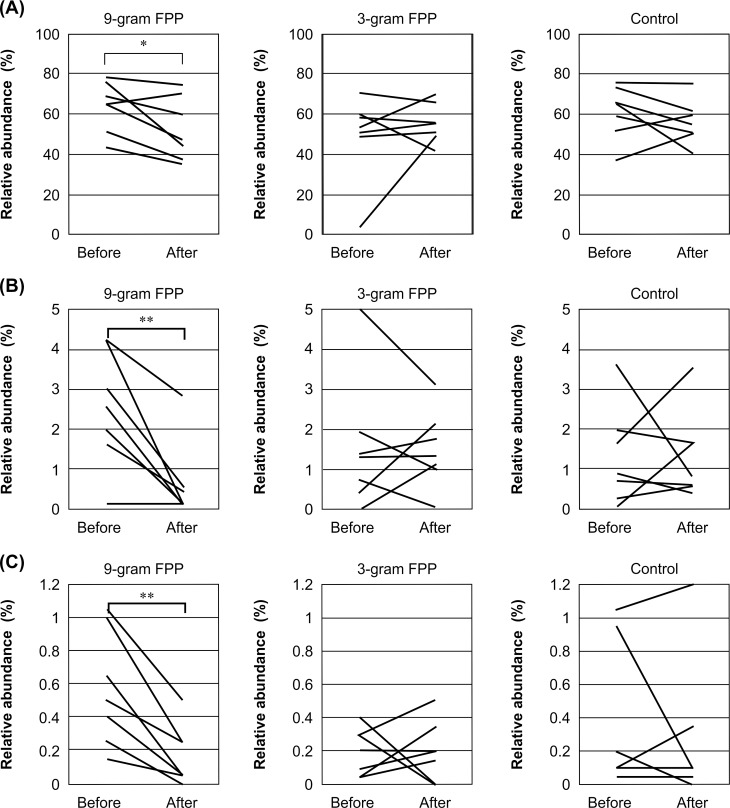
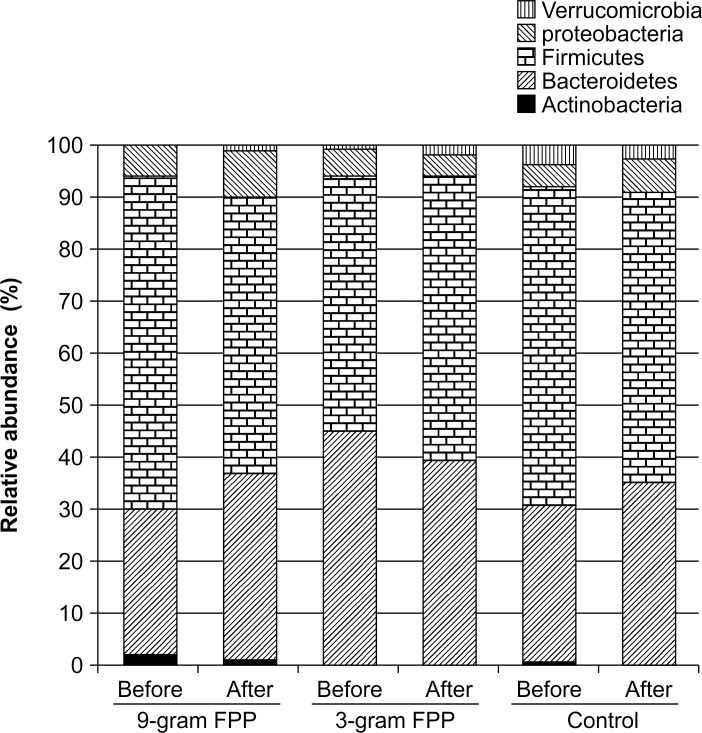
Tube-fed elderly patients are generally supplied with the same type of nutrition over long periods, resulting in an increased risk for micronutrient deficiencies. Dietary polyphenols promote immunity and have anti-inflammatory, anti-carcinogenic, and anti-oxidative properties. Carica papaya Linn. is rich in several polyphenols; however, these polyphenols are poorly absorbed from the digestive tract in their original polymerized form. Therefore, we determined the molecular components of a fermented Carica papaya Linn. preparation, as well as its effects on immunity and the composition of gut microbiota in tube-fed patients. Different doses of the fermented C. papaya L. preparation were administered to three groups of tube-fed patients for 30 days. Its effects on fecal microbiota composition and immunity were assessed by 16S rRNA gene sequencing and immune-marker analysis, respectively. The chemical composition of the fermented C. papaya L. preparation was analyzed by capillary electrophoresis- and liquid chromatography- time of flight mass spectrometry. The fermented C. papaya L. preparation restored peripheral blood mononuclear cell (PBMC) cytolytic activity; however, no other biomarkers of immunity were observed. Treatment with the preparation (9 g/day) significantly reduced the abundance of Firmicutes in the fecal microbiota. In particular, treatment reduced Clostridium scindens and Eggerthella lenta in most patients receiving 9 g/day. Chemical analysis identified low-molecular-weight phenolic acids as polyphenol metabolites; however, no polymerized, large-molecular-weight molecules were detected. Our study indicates that elderly patients who are tube-fed over the long-term have decreased PBMC cytolytic activity. In addition, low-molecular-weight polyphenol metabolites fermented from polymerized polyphenols restore PBMC cytolytic activity and modulate the composition of gut microbiota in tube-fed patients.
长期通过鼻饲管进食的老年患者通常长时间摄入同类型营养物质,这会增加微量营养素缺乏的风险。膳食多酚可增强免疫力,具有抗炎、抗癌和抗氧化特性。番木瓜富含多种多酚;然而,这些多酚以其原始聚合形式从消化道吸收很差。因此,我们确定了发酵番木瓜制剂的分子成分,以及其对鼻饲患者免疫力和肠道微生物群组成的影响。将不同剂量的发酵番木瓜制剂给予三组鼻饲患者,持续30天。分别通过16S rRNA基因测序和免疫标志物分析评估其对粪便微生物群组成和免疫力的影响。通过毛细管电泳和液相色谱-飞行时间质谱分析发酵番木瓜制剂的化学成分。发酵番木瓜制剂恢复了外周血单个核细胞(PBMC)的细胞溶解活性;然而,未观察到其他免疫生物标志物。用该制剂(9克/天)治疗显著降低了粪便微生物群中厚壁菌门的丰度。特别是,在大多数接受9克/天治疗的患者中,治疗降低了梭状芽孢杆菌和迟缓埃格特菌的数量。化学分析确定低分子量酚酸为多酚代谢产物;然而,未检测到聚合的大分子物质。我们的研究表明,长期通过鼻饲管进食的老年患者PBMC细胞溶解活性降低。此外,由聚合多酚发酵产生的低分子量多酚代谢产物可恢复PBMC细胞溶解活性,并调节鼻饲患者的肠道微生物群组成。