• 文献检索
  • 文档翻译
  • 深度研究
  • 学术资讯
  • Suppr Zotero 插件Zotero 插件
  • 邀请有礼
  • 套餐&价格
  • 历史记录
应用&插件
Suppr Zotero 插件Zotero 插件浏览器插件Mac 客户端Windows 客户端微信小程序
定价
高级版会员购买积分包购买API积分包
服务
文献检索文档翻译深度研究API 文档MCP 服务
关于我们
关于 Suppr公司介绍联系我们用户协议隐私条款
关注我们

Suppr 超能文献

核心技术专利:CN118964589B侵权必究
粤ICP备2023148730 号-1Suppr @ 2026

文献检索

告别复杂PubMed语法,用中文像聊天一样搜索,搜遍4000万医学文献。AI智能推荐,让科研检索更轻松。

立即免费搜索

文件翻译

保留排版,准确专业,支持PDF/Word/PPT等文件格式,支持 12+语言互译。

免费翻译文档

深度研究

AI帮你快速写综述,25分钟生成高质量综述,智能提取关键信息,辅助科研写作。

立即免费体验

男性希望从健康筛查移动应用程序中获得什么?一项定性研究。

What Do Men Want from a Health Screening Mobile App? A Qualitative Study.

作者信息

Teo Chin Hai, Ng Chirk Jenn, White Alan

机构信息

Department of Primary Care Medicine, Faculty of Medicine, University of Malaya, Kuala Lumpur, Malaysia.

Centre for Men's Health, Leeds Beckett University, Leeds, United Kingdom.

出版信息

PLoS One. 2017 Jan 6;12(1):e0169435. doi: 10.1371/journal.pone.0169435. eCollection 2017.

DOI:10.1371/journal.pone.0169435
PMID:28060953
原文链接:https://pmc.ncbi.nlm.nih.gov/articles/PMC5217942/
Abstract

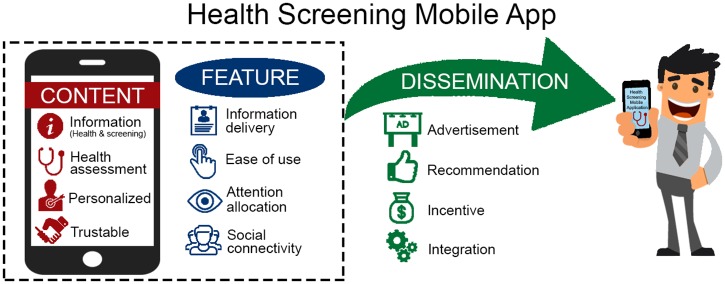
There is a lack of mobile app which aims to improve health screening uptake developed for men. As part of the study to develop an effective mobile app to increase health screening uptake in men, we conducted a needs assessment to find out what do men want from a health screening mobile app. In-depth interviews and focus group discussions were conducted with 31 men from a banking institution in Kuala Lumpur. The participants were purposely sampled according to their job position, age, ethnicity and screening status. The recruitment was stopped once data saturation was achieved. The audio-recorded interviews were transcribed verbatim and analyzed using thematic approach. Three themes emerged from the analysis and they were: content, feature and dissemination. In terms of the content, men wanted the app to provide information regarding health screening and functions that can assess their health; which must be personalized to them and are trustable. The app must have user-friendly features in terms of information delivery, ease of use, attention allocation and social connectivity. For dissemination, men proposed that advertisements, recommendations by health professionals, providing incentive and integrating the app as into existing systems may help to increase the dissemination of the app. This study identified important factors that need to be considered when developing a mobile app to improve health screening uptake. Future studies on mobile app development should elicit users' preference and need in terms of its content, features and dissemination strategies to improve the acceptability and the chance of successful implementation.

摘要

目前缺乏专门为男性开发的旨在提高健康筛查参与率的移动应用程序。作为开发一款有效提高男性健康筛查参与率的移动应用程序研究的一部分,我们进行了一项需求评估,以了解男性对健康筛查移动应用程序的期望。我们对吉隆坡一家银行机构的31名男性进行了深入访谈和焦点小组讨论。参与者是根据他们的工作岗位、年龄、种族和筛查状况进行有目的抽样的。一旦达到数据饱和,招募即停止。对录音访谈进行逐字转录,并采用主题分析法进行分析。分析得出了三个主题,分别是:内容、功能和传播。在内容方面,男性希望该应用程序能提供有关健康筛查的信息以及可评估其健康状况的功能;这些信息和功能必须针对他们个人进行定制且值得信赖。该应用程序在信息传递、易用性、注意力分配和社交连接方面必须具备用户友好的功能。在传播方面,男性建议广告、健康专业人员的推荐、提供激励措施以及将该应用程序整合到现有系统中可能有助于提高该应用程序的传播。本研究确定了开发一款提高健康筛查参与率的移动应用程序时需要考虑的重要因素。未来关于移动应用程序开发的研究应在其内容、功能和传播策略方面引出用户的偏好和需求,以提高可接受性和成功实施的机会。
https://cdn.ncbi.nlm.nih.gov/pmc/blobs/b992/5217942/64972ded41ed/pone.0169435.g001.jpg

相似文献

1
What Do Men Want from a Health Screening Mobile App? A Qualitative Study.男性希望从健康筛查移动应用程序中获得什么?一项定性研究。
PLoS One. 2017 Jan 6;12(1):e0169435. doi: 10.1371/journal.pone.0169435. eCollection 2017.
2
A Mobile Web App to Improve Health Screening Uptake in Men (ScreenMen): Utility and Usability Evaluation Study.一款用于提高男性健康筛查参与度的移动网页应用(ScreenMen):实用和可用性评估研究。
JMIR Mhealth Uhealth. 2019 Apr 15;7(4):e10216. doi: 10.2196/10216.
3
Factors influencing young men's decision to undergo health screening in Malaysia: a qualitative study.影响马来西亚年轻男性进行健康筛查决策的因素:一项定性研究。
BMJ Open. 2017 Mar 10;7(3):e014364. doi: 10.1136/bmjopen-2016-014364.
4
Early Detection of Dengue Fever Outbreaks Using a Surveillance App (Mozzify): Cross-sectional Mixed Methods Usability Study.利用监控应用程序(Mozzify)早期发现登革热疫情:横断面混合方法可用性研究。
JMIR Public Health Surveill. 2021 Mar 1;7(3):e19034. doi: 10.2196/19034.
5
Factors Influencing the Use of a Mobile App for Reporting Adverse Drug Reactions and Receiving Safety Information: A Qualitative Study.影响使用移动应用报告药物不良反应及接收安全信息的因素:一项定性研究
Drug Saf. 2017 May;40(5):443-455. doi: 10.1007/s40264-016-0494-x.
6
Development of Mobile App for Breast Examination Awareness Using Health Belief Model: A Qualitative Study.基于健康信念模型的乳房检查意识手机应用程序开发:定性研究。
Asian Pac J Cancer Prev. 2021 Oct 1;22(10):3151-3163. doi: 10.31557/APJCP.2021.22.10.3151.
7
What Patients Want in a Smartphone App That Supports Colonoscopy Preparation: Qualitative Study to Inform a User-Centered Smartphone App.患者希望智能手机应用程序在结肠镜检查准备中提供什么:一项定性研究,为以用户为中心的智能手机应用程序提供信息。
JMIR Mhealth Uhealth. 2019 Jul 2;7(7):e12242. doi: 10.2196/12242.
8
Understanding the predisposing, enabling, and reinforcing factors influencing the use of a mobile-based HIV management app: A real-world usability evaluation.了解影响使用基于移动设备的 HIV 管理应用程序的倾向因素、促成因素和强化因素:一项真实世界的可用性评估。
Int J Med Inform. 2018 Sep;117:88-95. doi: 10.1016/j.ijmedinf.2018.06.007. Epub 2018 Jun 18.
9
The Preferences of Patients With Cancer Regarding Apps to Help Meet Their Illness-Related Information Needs: Qualitative Interview Study.癌症患者对帮助满足其疾病相关信息需求的应用程序的偏好:定性访谈研究。
JMIR Mhealth Uhealth. 2019 Jul 31;7(7):e14187. doi: 10.2196/14187.
10
What overweight women want from a weight loss app: a qualitative study on arabic women.超重女性对减肥应用的期望:一项针对阿拉伯女性的定性研究。
JMIR Mhealth Uhealth. 2015 May 20;3(2):e41. doi: 10.2196/mhealth.4409.

引用本文的文献

1
Stakeholders' perceptions and experiences of factors influencing the commissioning, delivery, and uptake of general health checks: a qualitative evidence synthesis.利益相关者对影响一般健康检查的委托、提供和接受因素的看法与体验:一项定性证据综合分析
Cochrane Database Syst Rev. 2025 Mar 20;3(3):CD014796. doi: 10.1002/14651858.CD014796.pub2.
2
Under-utilisation of noncommunicable disease screening and healthy lifestyle promotion centres: A cross-sectional study from Sri Lanka.非传染性疾病筛查和促进健康生活方式中心的未充分利用:来自斯里兰卡的一项横断面研究。
PLoS One. 2024 Apr 4;19(4):e0301510. doi: 10.1371/journal.pone.0301510. eCollection 2024.
3

本文引用的文献

1
Diet and Physical Activity Apps: Perceived Effectiveness by App Users.饮食和体育活动应用程序:应用程序用户感知的有效性。
JMIR Mhealth Uhealth. 2016 Apr 7;4(2):e33. doi: 10.2196/mhealth.5114.
2
A brief mobile app reduces nonsuicidal and suicidal self-injury: Evidence from three randomized controlled trials.一款简短的移动应用程序可减少非自杀性和自杀性自我伤害:来自三项随机对照试验的证据。
J Consult Clin Psychol. 2016 Jun;84(6):544-57. doi: 10.1037/ccp0000093. Epub 2016 Mar 28.
3
A user-centered model for designing consumer mobile health (mHealth) applications (apps).
The Use of Robotic Technology in the Healthcare of People above the Age of 65-A Systematic Review.
65岁以上人群医疗保健中机器人技术的应用——一项系统综述
Healthcare (Basel). 2023 Mar 21;11(6):904. doi: 10.3390/healthcare11060904.
4
Digital Health Technologies for Long-term Self-management of Osteoporosis: Systematic Review and Meta-analysis.数字健康技术用于骨质疏松症的长期自我管理:系统评价和荟萃分析。
JMIR Mhealth Uhealth. 2022 Apr 21;10(4):e32557. doi: 10.2196/32557.
5
Patient and physician perspectives of a smartphone application for depression: a qualitative study.患者和医生对用于治疗抑郁症的智能手机应用的看法:一项定性研究。
BMC Psychiatry. 2021 Jan 29;21(1):65. doi: 10.1186/s12888-021-03064-x.
6
Designing Effective Warnings about Addiction on the Patient Information Leaflet of Over-the-Counter Codeine Sold in England to University Students.设计关于英格兰向大学生出售的非处方可待因患者信息传单上成瘾性警示的有效性。
Int J Environ Res Public Health. 2020 Jul 29;17(15):5490. doi: 10.3390/ijerph17155490.
7
Identification of Type 2 Diabetes Management Mobile App Features and Engagement Strategies: Modified Delphi Approach.采用改良德尔菲法鉴定 2 型糖尿病管理移动应用的功能和参与策略。
JMIR Mhealth Uhealth. 2020 Sep 11;8(9):e17083. doi: 10.2196/17083.
8
Barriers to implementing a national health screening program for men in Malaysia: An online survey of healthcare providers.马来西亚实施全国男性健康筛查计划的障碍:医疗服务提供者的在线调查
Malays Fam Physician. 2020 Mar 18;15(1):6-14. eCollection 2020.
9
Usability and Utility of a Mobile App to Improve Medication Adherence Among Ambulatory Care Patients in Malaysia: Qualitative Study.马来西亚门诊患者使用移动应用程序提高用药依从性的可用性和实用性:定性研究。
JMIR Mhealth Uhealth. 2020 Jan 31;8(1):e15146. doi: 10.2196/15146.
10
What Kind Of A Mobile Health App Do Patients Truly Want? A Pilot Study Among Ambulatory Surgery Patients.患者真正想要的是哪种移动健康应用程序?一项针对门诊手术患者的试点研究。
Patient Prefer Adherence. 2019 Dec 4;13:2039-2046. doi: 10.2147/PPA.S220207. eCollection 2019.
一种以用户为中心的消费者移动健康(mHealth)应用程序(app)设计模型。
J Biomed Inform. 2016 Apr;60:243-51. doi: 10.1016/j.jbi.2016.02.002. Epub 2016 Feb 20.
4
Guidelines and Recommendations for Developing Interactive eHealth Apps for Complex Messaging in Health Promotion.健康促进中复杂信息交互电子健康应用程序开发的指南和建议
JMIR Mhealth Uhealth. 2016 Feb 9;4(1):e14. doi: 10.2196/mhealth.4423.
5
MoodHacker Mobile Web App With Email for Adults to Self-Manage Mild-to-Moderate Depression: Randomized Controlled Trial.用于成年人自我管理轻度至中度抑郁的 MoodHacker 移动网络应用程序及电子邮件:随机对照试验。
JMIR Mhealth Uhealth. 2016 Jan 26;4(1):e8. doi: 10.2196/mhealth.4231.
6
Utilizing a Personal Smartphone Custom App to Assess the Patient Health Questionnaire-9 (PHQ-9) Depressive Symptoms in Patients With Major Depressive Disorder.利用个人智能手机定制应用程序评估患有重度抑郁症患者的患者健康问卷-9(PHQ-9)抑郁症状。
JMIR Ment Health. 2015 Mar 24;2(1):e8. doi: 10.2196/mental.3889. eCollection 2015 Jan-Mar.
7
Health App Use Among US Mobile Phone Owners: A National Survey.美国手机用户使用健康类 APP 情况的全国性调查
JMIR Mhealth Uhealth. 2015 Nov 4;3(4):e101. doi: 10.2196/mhealth.4924.
8
Setting a research agenda for medical overuse.制定医疗过度使用的研究议程。
BMJ. 2015 Aug 25;351:h4534. doi: 10.1136/bmj.h4534.
9
The HOPE social media intervention for global HIV prevention in Peru: a cluster randomised controlled trial.秘鲁 HOPE 社交媒体干预在全球艾滋病预防中的应用:一项群组随机对照试验。
Lancet HIV. 2015 Jan;2(1):e27-32. doi: 10.1016/S2352-3018(14)00006-X.
10
Mobile-health: A review of current state in 2015.移动健康:2015年现状综述
J Biomed Inform. 2015 Aug;56:265-72. doi: 10.1016/j.jbi.2015.06.003. Epub 2015 Jun 11.