de Winkel Ksander N, Katliar Mikhail, Bülthoff Heinrich H
Department of Human Perception, Cognition, and Action, Max Planck Institute for Biological Cybernetics, Tübingen, Baden-Württemburg, Germany.
PLoS One. 2017 Jan 6;12(1):e0169676. doi: 10.1371/journal.pone.0169676. eCollection 2017.
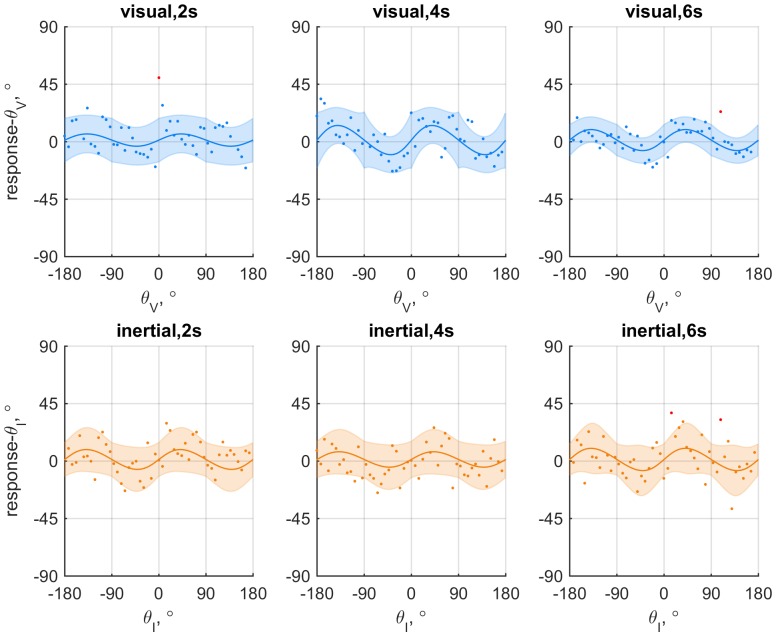
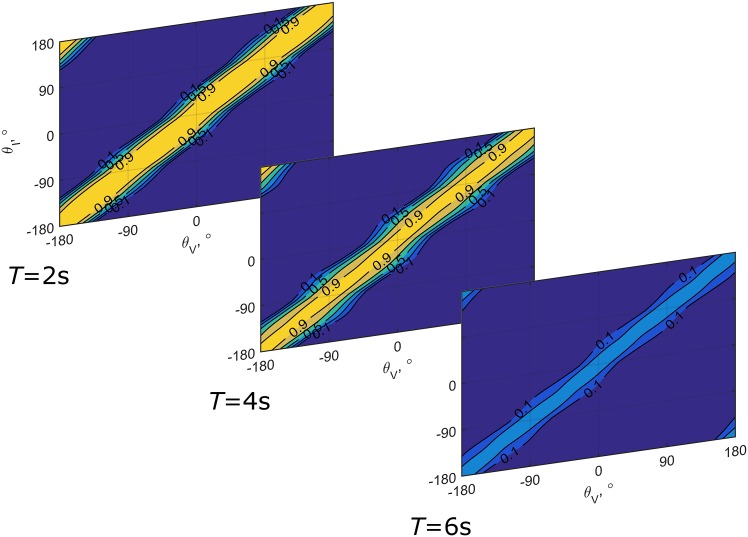
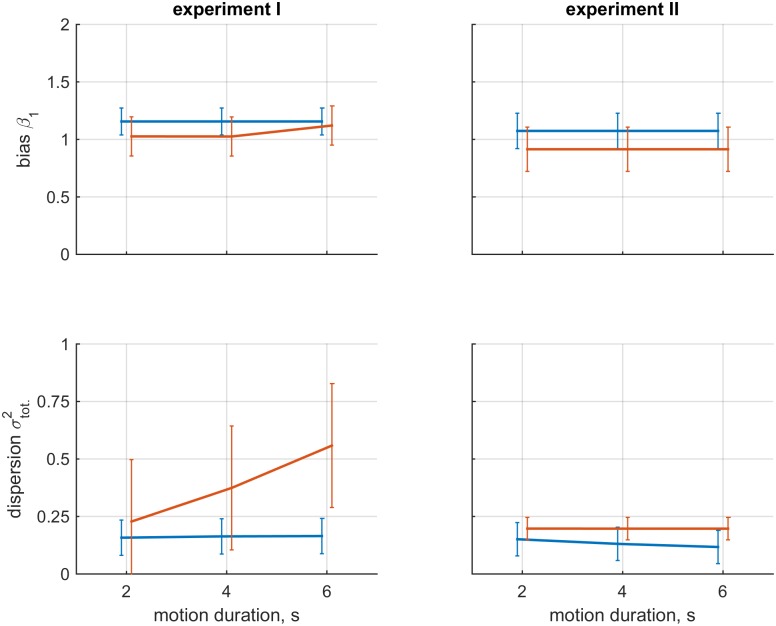
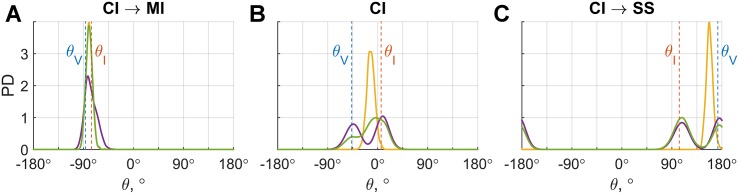
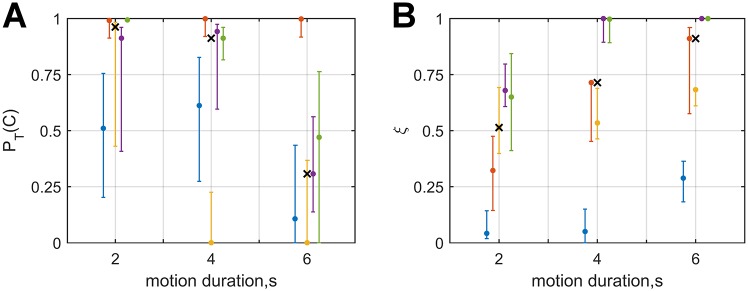
A large body of research shows that the Central Nervous System (CNS) integrates multisensory information. However, this strategy should only apply to multisensory signals that have a common cause; independent signals should be segregated. Causal Inference (CI) models account for this notion. Surprisingly, previous findings suggested that visual and inertial cues on heading of self-motion are integrated regardless of discrepancy. We hypothesized that CI does occur, but that characteristics of the motion profiles affect multisensory processing. Participants estimated heading of visual-inertial motion stimuli with several different motion profiles and a range of intersensory discrepancies. The results support the hypothesis that judgments of signal causality are included in the heading estimation process. Moreover, the data suggest a decreasing tolerance for discrepancies and an increasing reliance on visual cues for longer duration motions.
大量研究表明,中枢神经系统(CNS)会整合多感官信息。然而,这种策略应该只适用于具有共同原因的多感官信号;独立信号应该被区分开来。因果推理(CI)模型解释了这一概念。令人惊讶的是,先前的研究结果表明,关于自我运动方向的视觉和惯性线索会被整合,而不管它们之间的差异如何。我们假设因果推理确实会发生,但运动轮廓的特征会影响多感官处理。参与者估计了具有几种不同运动轮廓和一系列感官间差异的视觉-惯性运动刺激的方向。结果支持了这样一种假设,即信号因果关系的判断包含在方向估计过程中。此外,数据表明,对于持续时间较长的运动,对差异的容忍度在降低,对视觉线索的依赖在增加。