Rajfur Joanna, Pasternok Małgorzata, Rajfur Katarzyna, Walewicz Karolina, Fras Beata, Bolach Bartosz, Dymarek Robert, Rosinczuk Joanna, Halski Tomasz, Taradaj Jakub
Institute of Physiotherapy, Public Higher Medical Professional School in Opole, Opole, Poland.
Department of Sports Training, Academy School of Physical Education in Wrocław, Wrocław, Poland.
Med Sci Monit. 2017 Jan 7;23:85-100. doi: 10.12659/msm.899461.
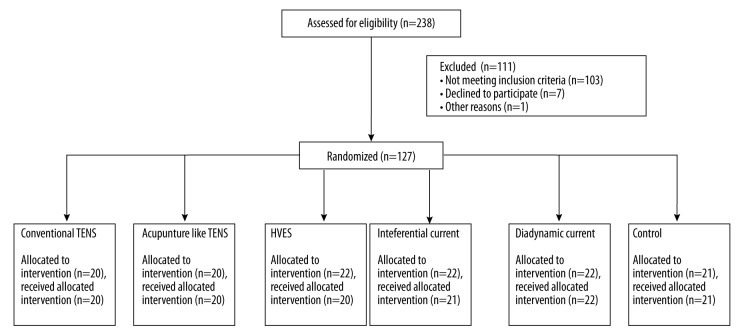
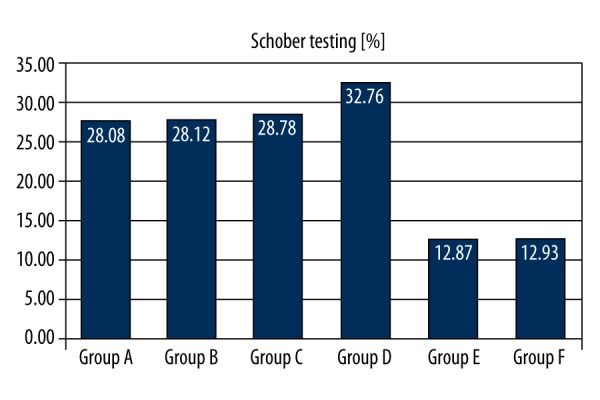
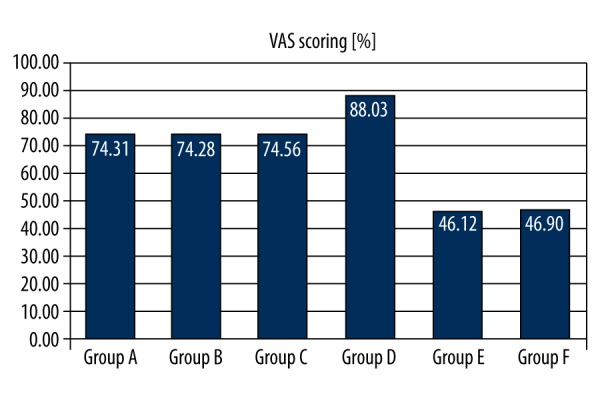
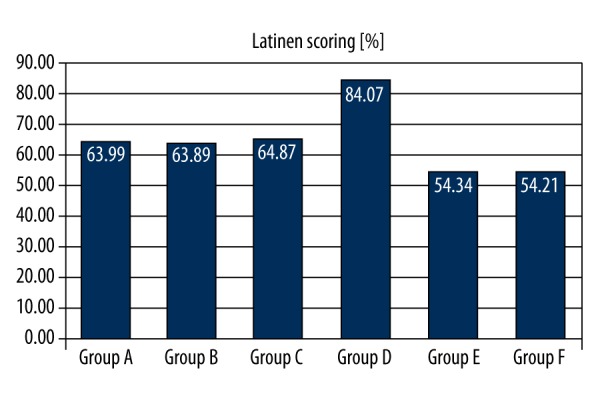
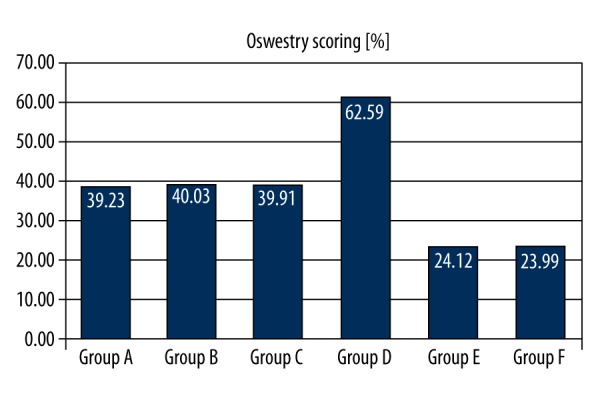
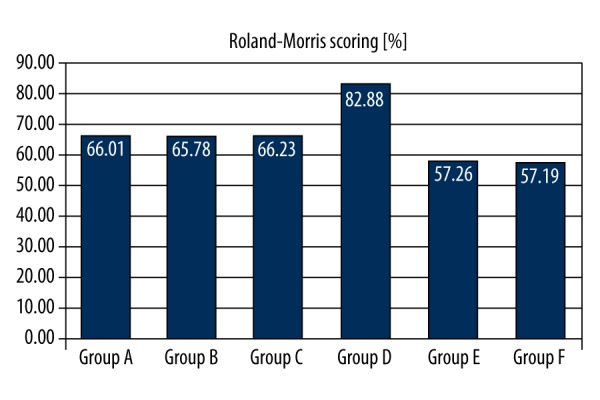
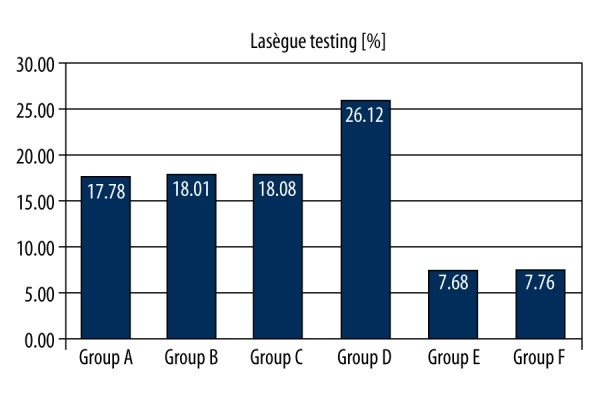
BACKGROUND In the currently available research publications on electrical therapy of low back pain, generally no control groups or detailed randomization were used, and such studies were often conducted with relatively small groups of patients, based solely on subjective questionnaires and pain assessment scales (lacking measurement methods to objectify the therapeutic progress). The available literature also lacks a comprehensive and large-scale clinical study. The purpose of this study was to assess the effects of treating low back pain using selected electrotherapy methods. The study assesses the influence of individual electrotherapeutic treatments on reduction of pain, improvement of the range of movement in lower section of the spine, and improvement of motor functions and mobility. MATERIAL AND METHODS The 127 patients qualified for the therapy (ultimately, 123 patients completed the study) and assigned to 6 comparison groups: A - conventional TENS, B - acupuncture-like TENS, C - high-voltage electrical stimulation, D - interferential current stimulation, E - diadynamic current, and F - control group. RESULTS The research showed that using electrical stimulation with interferential current penetrating deeper into the tissues results in a significant and more efficient elimination of pain, and an improvement of functional ability of patients suffering from low back pain on the basis of an analysis of both subjective and objective parameters. The TENS currents and high voltage were helpful, but not as effective. The use of diadynamic currents appears to be useless. CONCLUSIONS Selected electrical therapies (interferential current, TENS, and high voltage) appear to be effective in treating chronic low back pain.
背景 在目前关于腰痛电疗法的研究出版物中,通常未设置对照组或进行详细随机分组,此类研究往往在相对较少的患者群体中开展,仅基于主观问卷和疼痛评估量表(缺乏客观衡量治疗进展的方法)。现有文献也缺乏全面且大规模的临床研究。本研究的目的是评估使用特定电疗方法治疗腰痛的效果。该研究评估了个体电疗对减轻疼痛、改善脊柱下段活动范围以及改善运动功能和活动能力的影响。材料与方法 127例符合治疗条件的患者(最终123例完成研究)被分为6个比较组:A组 - 传统经皮电刺激神经疗法(TENS),B组 - 针刺样TENS,C组 - 高压电刺激,D组 - 干扰电流刺激,E组 - 动态干扰电流,F组 - 对照组。结果 研究表明基于主观和客观参数分析,使用干扰电流进行电刺激且电流能更深入组织可显著且更有效地消除疼痛,并改善腰痛患者的功能能力。TENS电流和高压电刺激有帮助,但效果欠佳。使用动态干扰电流似乎无效。结论 选定的电疗法(干扰电流、TENS和高压电刺激)似乎对治疗慢性腰痛有效。