Siddiqui Jalal K, Tikunova Svetlana B, Walton Shane D, Liu Bin, Meyer Meredith, de Tombe Pieter P, Neilson Nathan, Kekenes-Huskey Peter M, Salhi Hussam E, Janssen Paul M L, Biesiadecki Brandon J, Davis Jonathan P
Department of Physiology and Cell Biology and the Davis Heart and Lung Research Institute, The Ohio State University Columbus, OH, USA.
Cell and Molecular Physiology, Loyola University Chicago Maywood, IL, USA.
Front Physiol. 2016 Dec 21;7:632. doi: 10.3389/fphys.2016.00632. eCollection 2016.
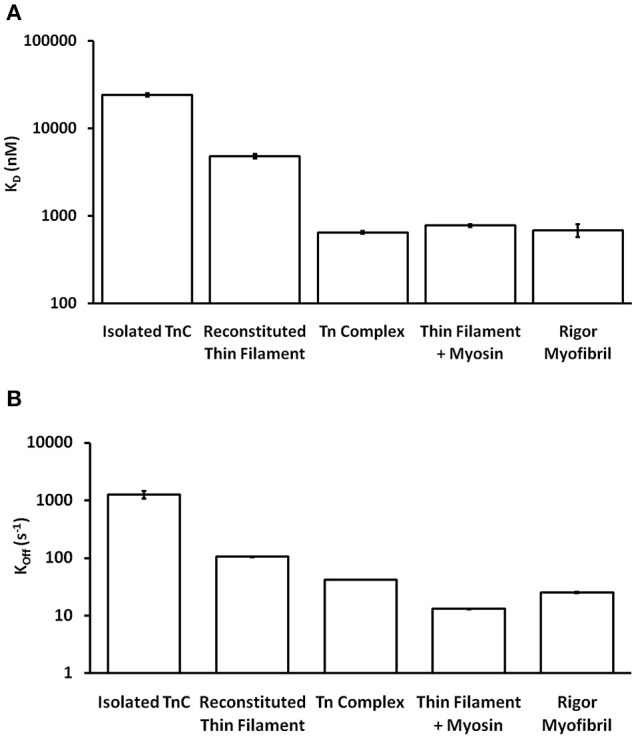
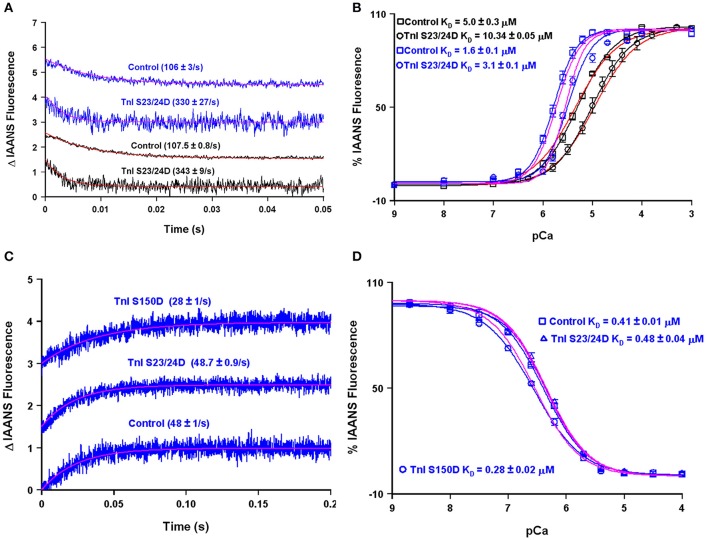
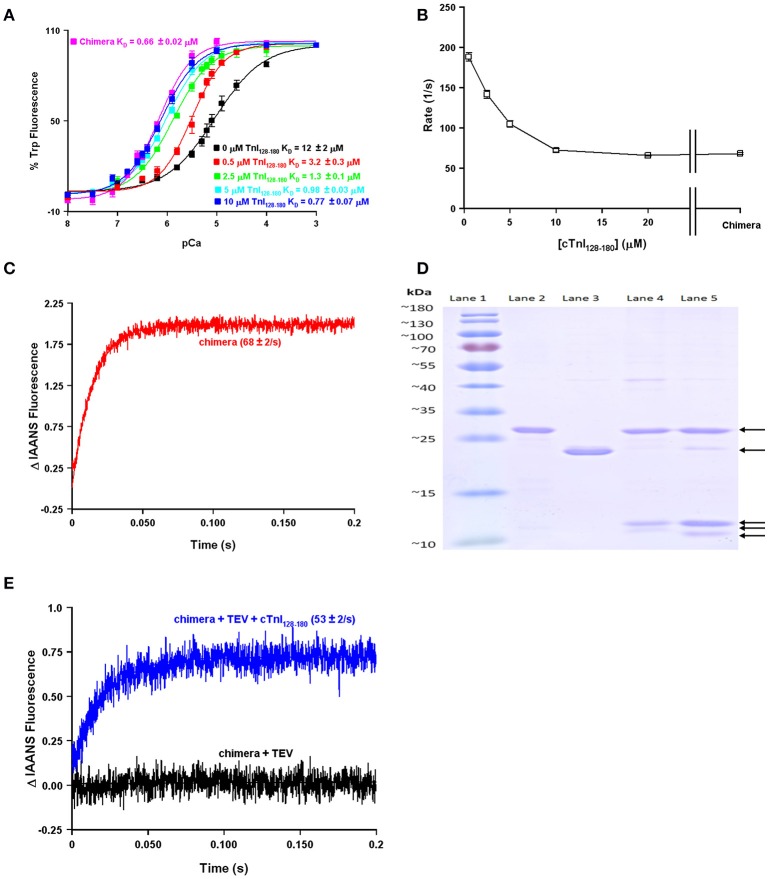
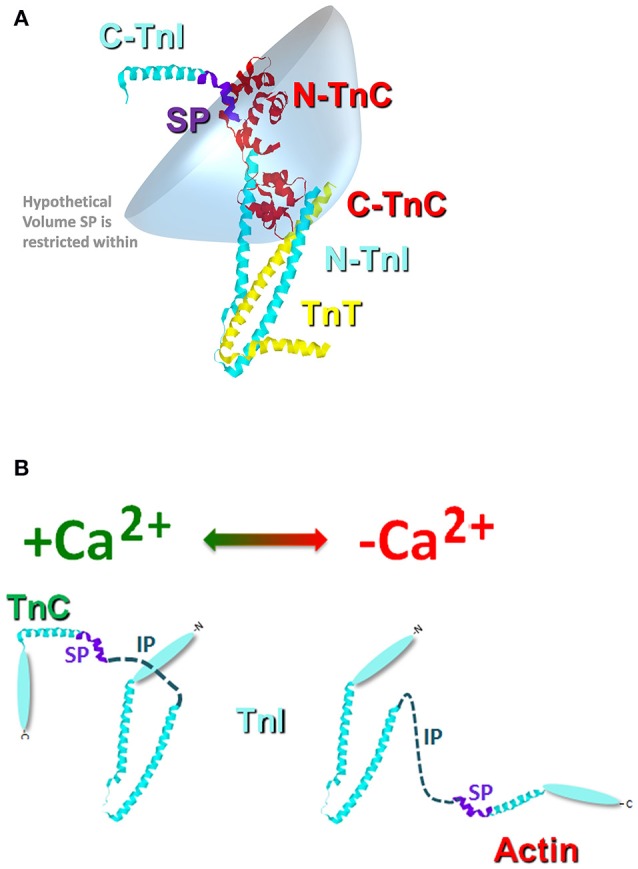
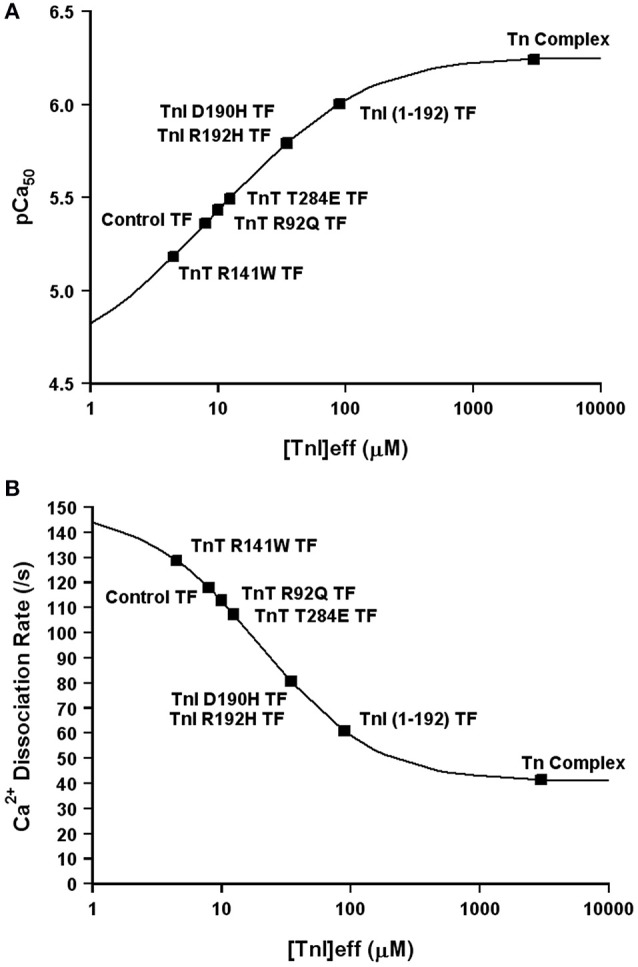
Control of calcium binding to and dissociation from cardiac troponin C (TnC) is essential to healthy cardiac muscle contraction/relaxation. There are numerous aberrant post-translational modifications and mutations within a plethora of contractile, and even non-contractile, proteins that appear to imbalance this delicate relationship. The direction and extent of the resulting change in calcium sensitivity is thought to drive the heart toward one type of disease or another. There are a number of molecular mechanisms that may be responsible for the altered calcium binding properties of TnC, potentially the most significant being the ability of the regulatory domain of TnC to bind the switch peptide region of TnI. Considering TnI is essentially tethered to TnC and cannot diffuse away in the absence of calcium, we suggest that the apparent calcium binding properties of TnC are highly dependent upon an "effective concentration" of TnI available to bind TnC. Based on our previous work, TnI peptide binding studies and the calcium binding properties of chimeric TnC-TnI fusion constructs, and building upon the concept of effective concentration, we have developed a mathematical model that can simulate the steady-state and kinetic calcium binding properties of a wide assortment of disease-related and post-translational protein modifications in the isolated troponin complex and reconstituted thin filament. We predict that several TnI and TnT modifications do not alter any of the intrinsic calcium or TnI binding constants of TnC, but rather alter the ability of TnC to "find" TnI in the presence of calcium. These studies demonstrate the apparent consequences of the effective TnI concentration in modulating the calcium binding properties of TnC.
控制钙与心肌肌钙蛋白C(TnC)的结合和解离对于健康的心肌收缩/舒张至关重要。众多收缩蛋白甚至非收缩蛋白中存在大量异常的翻译后修饰和突变,这些似乎破坏了这种微妙的关系。钙敏感性变化的方向和程度被认为会使心脏朝着某种疾病发展。有多种分子机制可能导致TnC钙结合特性的改变,其中最重要的可能是TnC的调节结构域与TnI的开关肽区域结合的能力。鉴于TnI基本上与TnC相连,在没有钙的情况下不能扩散离开,我们认为TnC的表观钙结合特性高度依赖于可用于结合TnC的TnI的“有效浓度”。基于我们之前的工作、TnI肽结合研究以及嵌合TnC - TnI融合构建体的钙结合特性,并基于有效浓度的概念,我们开发了一个数学模型,该模型可以模拟分离的肌钙蛋白复合物和重组细肌丝中各种与疾病相关的和翻译后蛋白质修饰的稳态和动力学钙结合特性。我们预测,几种TnI和TnT修饰不会改变TnC的任何内在钙或TnI结合常数,而是会改变TnC在钙存在下“找到”TnI的能力。这些研究证明了有效TnI浓度在调节TnC钙结合特性方面的表观后果。