Survila Mantas, Davidsson Pär R, Pennanen Ville, Kariola Tarja, Broberg Martin, Sipari Nina, Heino Pekka, Palva Erkki T
Division of Genetics, Viikki Plant Science Centre, Department of Biosciences, Faculty of Biological and Environmental Sciences, University of Helsinki Helsinki, Finland.
Front Plant Sci. 2016 Dec 23;7:1945. doi: 10.3389/fpls.2016.01945. eCollection 2016.
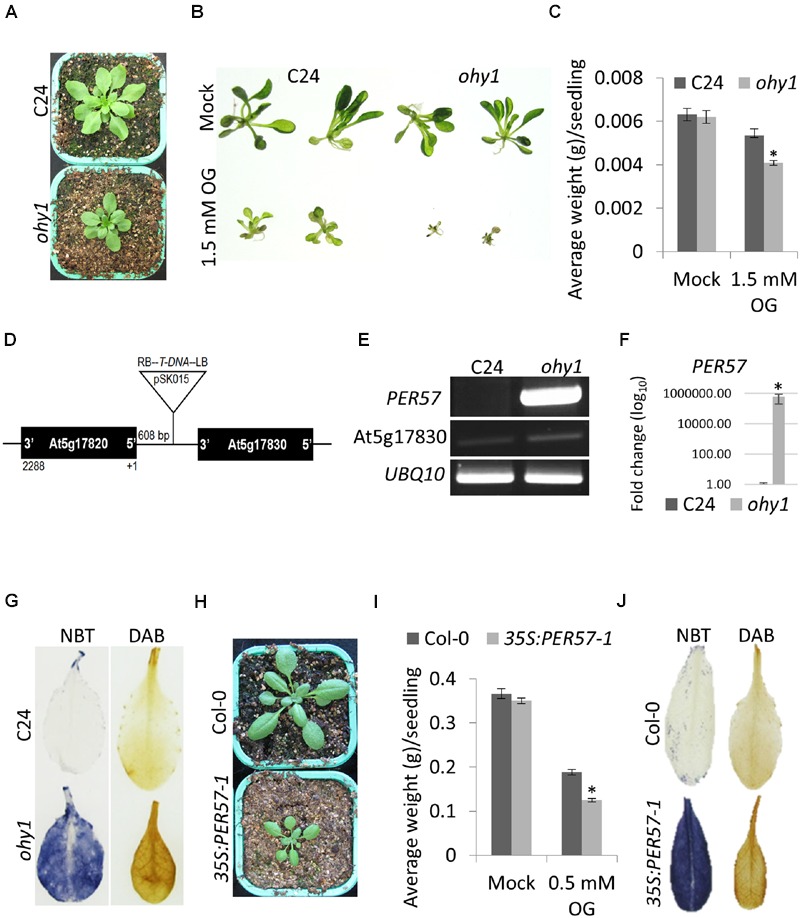
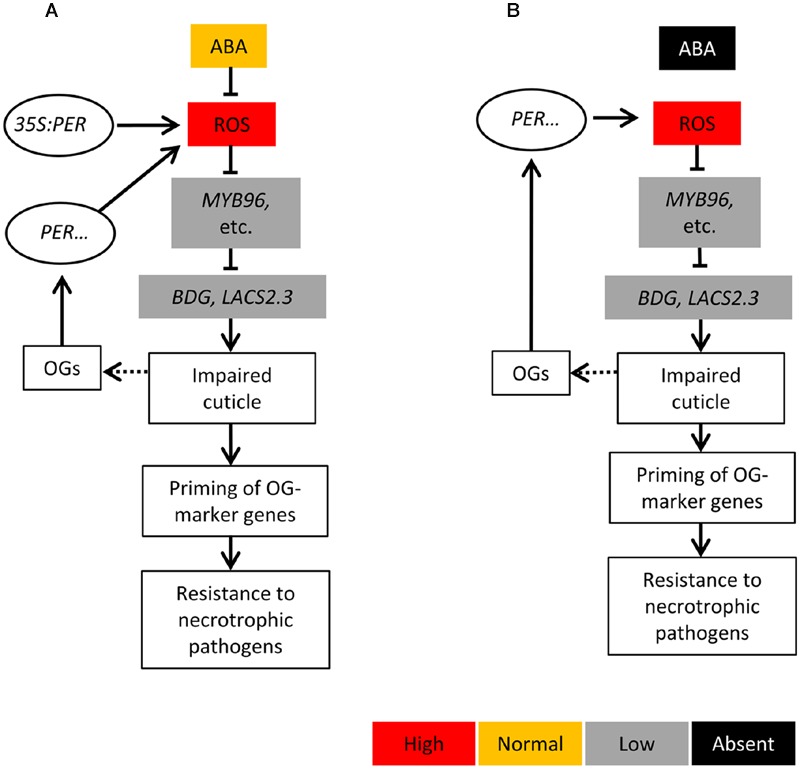
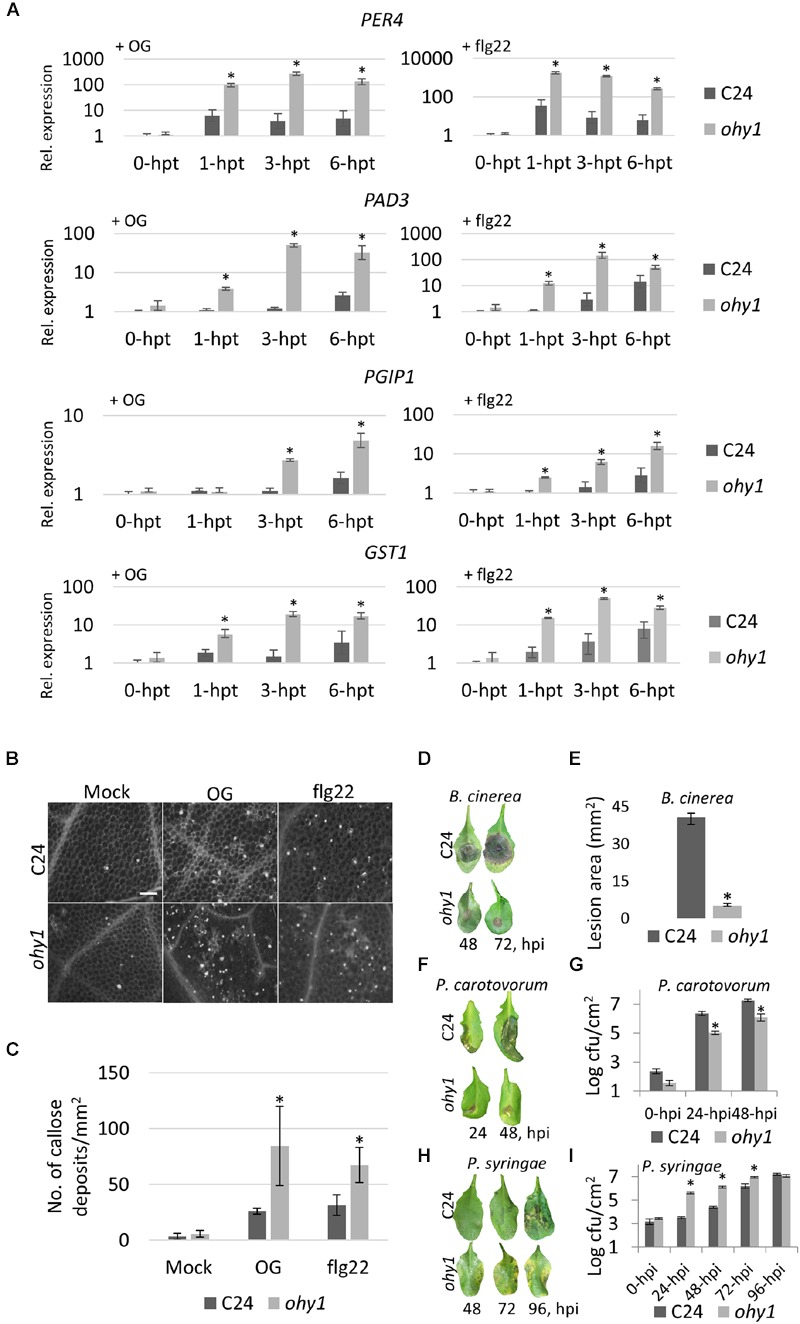
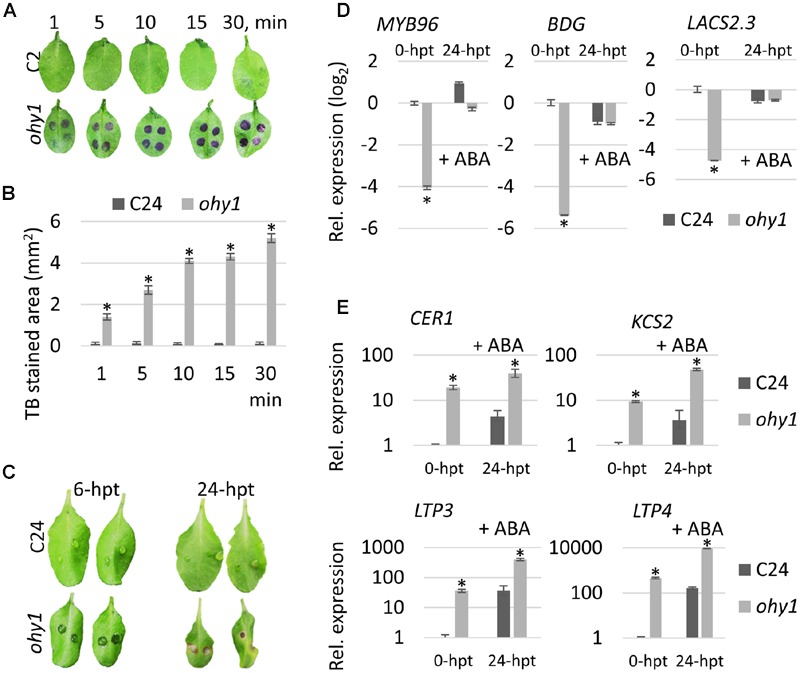
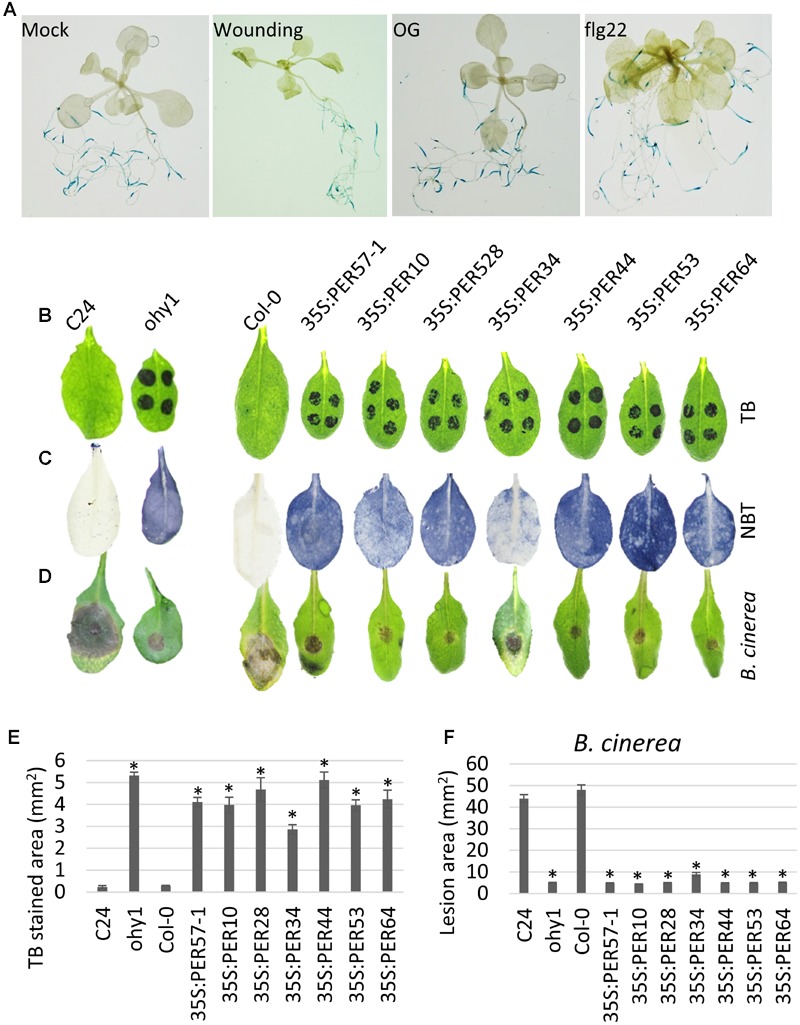
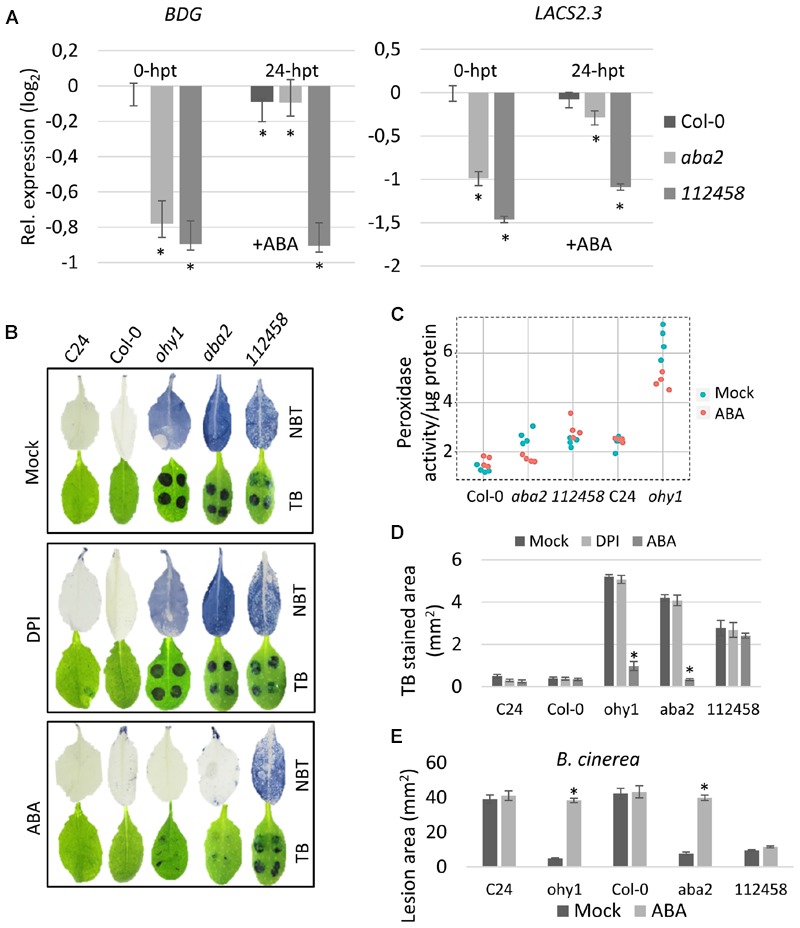
Cuticular defects trigger a battery of reactions including enhanced reactive oxygen species (ROS) production and resistance to necrotrophic pathogens. However, the source of ROS generated by such impaired cuticles has remained elusive. Here, we report the characterization of mutant, a () - overexpressing line that demonstrates enhanced defense responses that result both from increased accumulation of ROS and permeability of the leaf cuticle. The mutant was identified in a screen of seedlings for oligogalacturonides (OGs) insensitive/hypersensitive mutants that exhibit altered growth retardation in response to exogenous OGs. Mutants impaired in OG sensitivity were analyzed for disease resistance/susceptibility to the necrotrophic phytopathogens and . In the line, the hypersensitivity to OGs was associated with resistance to the tested pathogens. This overexpressing line exhibited a significantly more permeable leaf cuticle than wild-type plants and this phenotype could be recapitulated by overexpressing other class III peroxidases. Such peroxidase overexpression was accompanied by the suppressed expression of cutin biosynthesis genes and the enhanced expression of genes associated with OG-signaling. Application of ABA completely removed ROS, restored the expression of genes associated with cuticle biosynthesis and led to decreased permeability of the leaf cuticle, and finally, abolished immunity to . Our work demonstrates that increased peroxidase activity increases permeability of the leaf cuticle. The loss of cuticle integrity primes plant defenses to necrotrophic pathogens via the activation of DAMP-responses.
角质层缺陷引发一系列反应,包括活性氧(ROS)生成增强以及对坏死营养型病原体的抗性增强。然而,这种受损角质层产生的ROS来源一直难以捉摸。在此,我们报道了突变体的特征,该突变体是一个过表达()的株系,表现出增强的防御反应,这是由ROS积累增加和叶片角质层通透性增加共同导致的。该突变体是在对幼苗进行寡聚半乳糖醛酸(OGs)不敏感/超敏突变体筛选时鉴定出来的,这些突变体对外源OGs表现出改变的生长迟缓。分析了OG敏感性受损的突变体对坏死营养型植物病原体和的抗病性/易感性。在该株系中,对OGs的超敏反应与对测试病原体的抗性相关。这个过表达株系的叶片角质层比野生型植物的角质层通透性明显更高,并且通过过表达其他III类过氧化物酶可以重现这种表型。这种过氧化物酶的过表达伴随着角质生物合成基因表达的抑制以及与OG信号相关基因表达的增强。脱落酸(ABA)的应用完全消除了ROS,恢复了与角质层生物合成相关基因的表达,并导致叶片角质层通透性降低,最终消除了对的免疫性。我们的工作表明,过氧化物酶活性增加会增加叶片角质层的通透性。角质层完整性的丧失通过激活损伤相关分子模式(DAMP)反应引发植物对坏死营养型病原体的防御。