Xu Man, Tan Xiangliang, Zhang Xinyuan, Guo Yihao, Mei Yingjie, Feng Qianjin, Xu Yikai, Feng Yanqiu
Guangdong Provincial Key Laboratory of Medical Image Processing, School of Biomedical Engineering, Southern Medical University, Guangzhou, China.
Department of Medical Imaging Center, Nanfang Hospital, Southern Medical University, Guangzhou, China.
Neuroimage Clin. 2016 Dec 20;13:349-360. doi: 10.1016/j.nicl.2016.12.021. eCollection 2017.
Systemic lupus erythematosus (SLE) is a chronic inflammatory female-predominant autoimmune disease that can affect the central nervous system and exhibit neuropsychiatric symptoms. In SLE patients without neuropsychiatric symptoms (non-NPSLE), recent diffusion tensor imaging studies showed white matter abnormalities in their brains. The present study investigated the entire brain white matter structural connectivity in non-NPSLE patients by using probabilistic tractography and connectivity-based analyses.
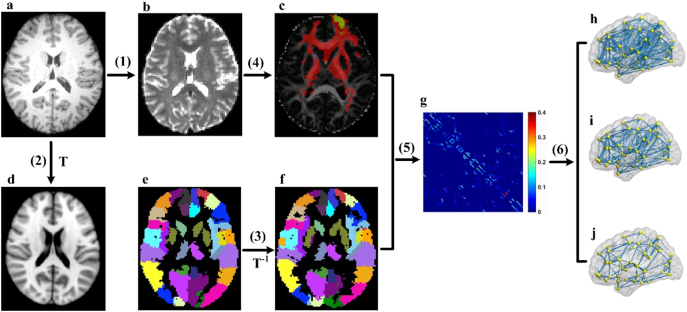
Whole-brain structural networks of 29 non-NPSLE patients and 29 healthy controls (HCs) were examined. The structural networks were constructed with interregional probabilistic connectivity. Graph theory analysis was performed to investigate the topological properties, and network-based statistic was employed to assess the alterations of the interregional connections among non-NPSLE patients and controls.
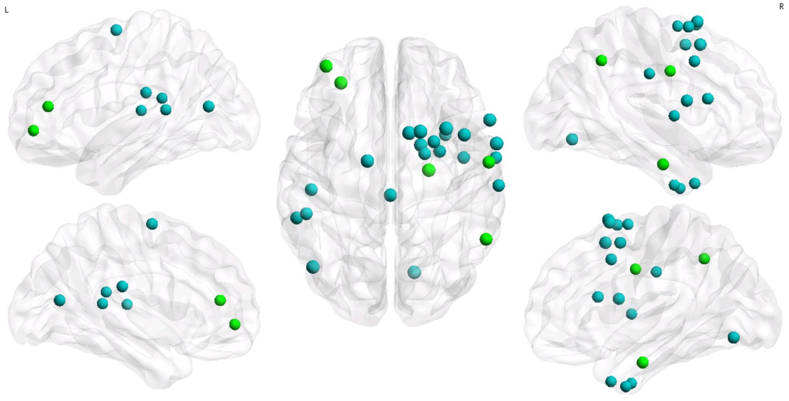
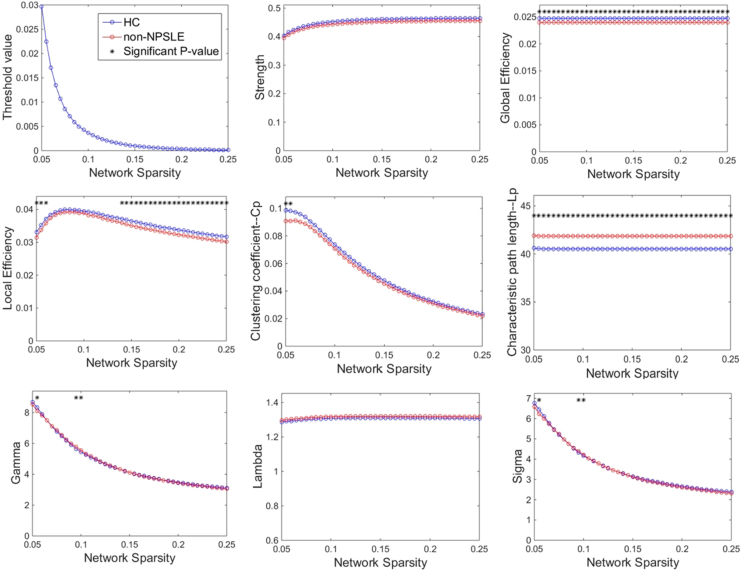
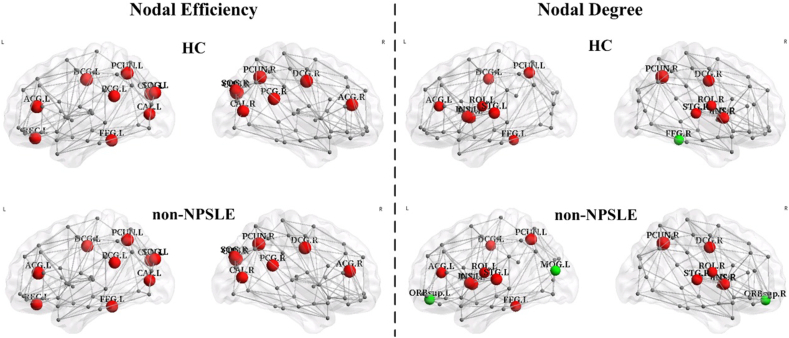
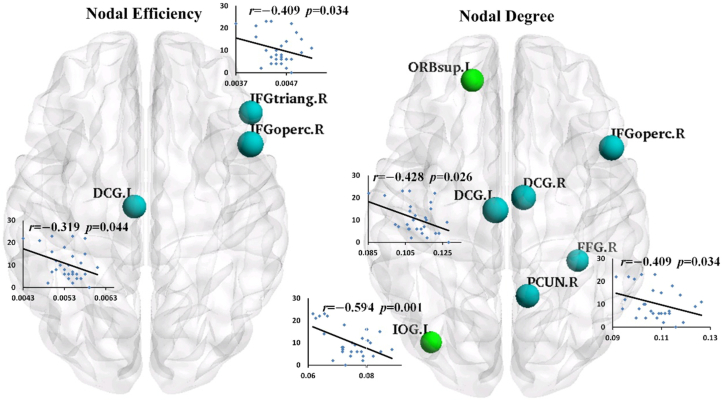
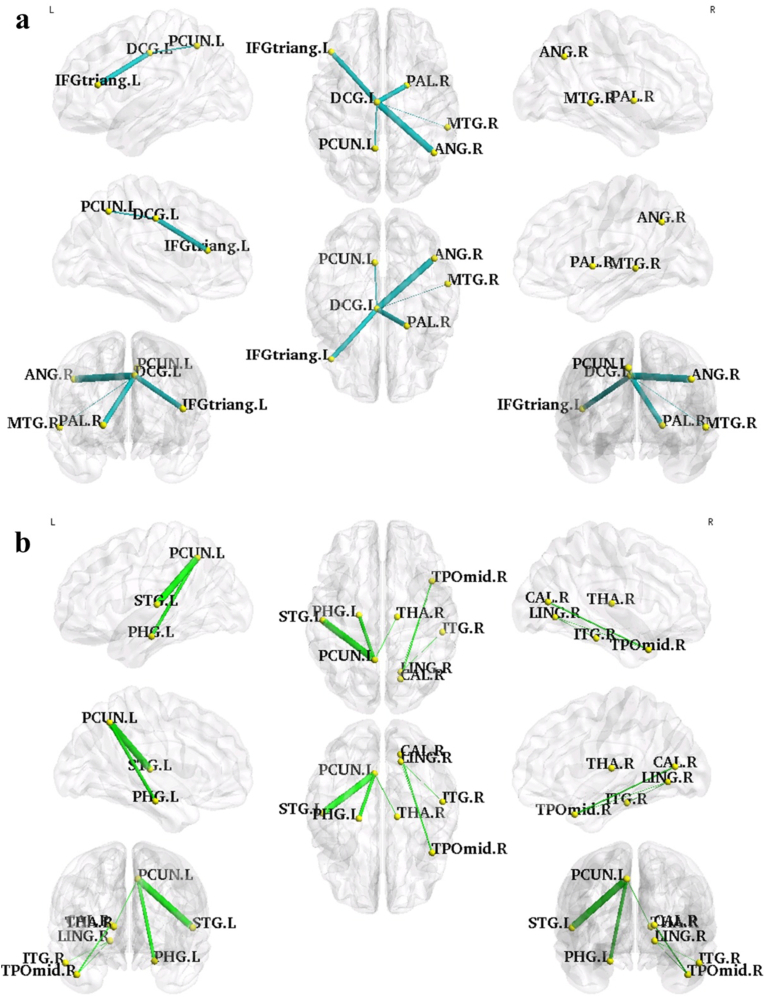
Compared with HCs, non-NPSLE patients demonstrated significantly decreased global and local network efficiencies and showed increased characteristic path length. This finding suggests that the global integration and local specialization were impaired. Moreover, the regional properties (nodal efficiency and degree) in the frontal, occipital, and cingulum regions of the non-NPSLE patients were significantly changed and negatively correlated with the disease activity index. The distribution pattern of the hubs measured by nodal degree was altered in the patient group. Finally, the non-NPSLE group exhibited decreased structural connectivity in the left median cingulate-centered component and increased connectivity in the left precuneus-centered component and right middle temporal lobe-centered component.
This study reveals an altered topological organization of white matter networks in non-NPSLE patients. Furthermore, this research provides new insights into the structural disruptions underlying the functional and neurocognitive deficits in non-NPSLE patients.
系统性红斑狼疮(SLE)是一种以女性为主的慢性炎症性自身免疫性疾病,可影响中枢神经系统并表现出神经精神症状。在无神经精神症状的SLE患者(非神经精神性SLE)中,最近的扩散张量成像研究显示其大脑存在白质异常。本研究通过使用概率纤维束成像和基于连接性的分析方法,对非神经精神性SLE患者的全脑白质结构连接性进行了研究。
对29例非神经精神性SLE患者和29名健康对照者(HCs)的全脑结构网络进行了检查。通过区域间概率连接构建结构网络。进行图论分析以研究拓扑特性,并采用基于网络的统计方法评估非神经精神性SLE患者与对照者之间区域间连接的改变。
与HCs相比,非神经精神性SLE患者的全局和局部网络效率显著降低,特征路径长度增加。这一发现表明全局整合和局部特化受损。此外,非神经精神性SLE患者额叶、枕叶和扣带区域的区域特性(节点效率和度)发生了显著变化,且与疾病活动指数呈负相关。患者组中通过节点度测量的枢纽分布模式发生了改变。最后,非神经精神性SLE组在以左侧中央扣带回为中心的成分中结构连接性降低,在以左侧楔前叶为中心的成分和右侧颞中叶为中心的成分中连接性增加。
本研究揭示了非神经精神性SLE患者白质网络拓扑组织的改变。此外,本研究为非神经精神性SLE患者功能和神经认知缺陷背后的结构破坏提供了新的见解。