Gao Xin, Sun Lvhui, Zhang Niya, Li Chong, Zhang Jiacai, Xiao Zhuohui, Qi Desheng
College of Animal Nutrition and Feed Science, Huazhong Agricultural University, Wuhan 430070, Hubei, China.
The Cooperative Innovation Center for Sustainable Pig Production, Wuhan 430070, Hubei, China.
Toxins (Basel). 2017 Jan 5;9(1):21. doi: 10.3390/toxins9010021.
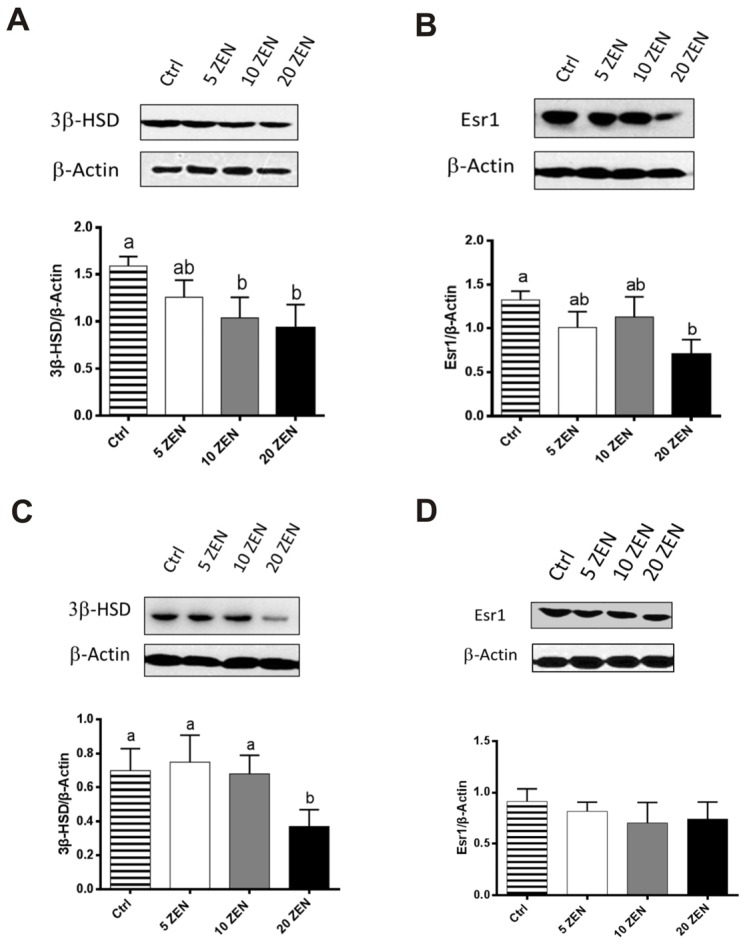
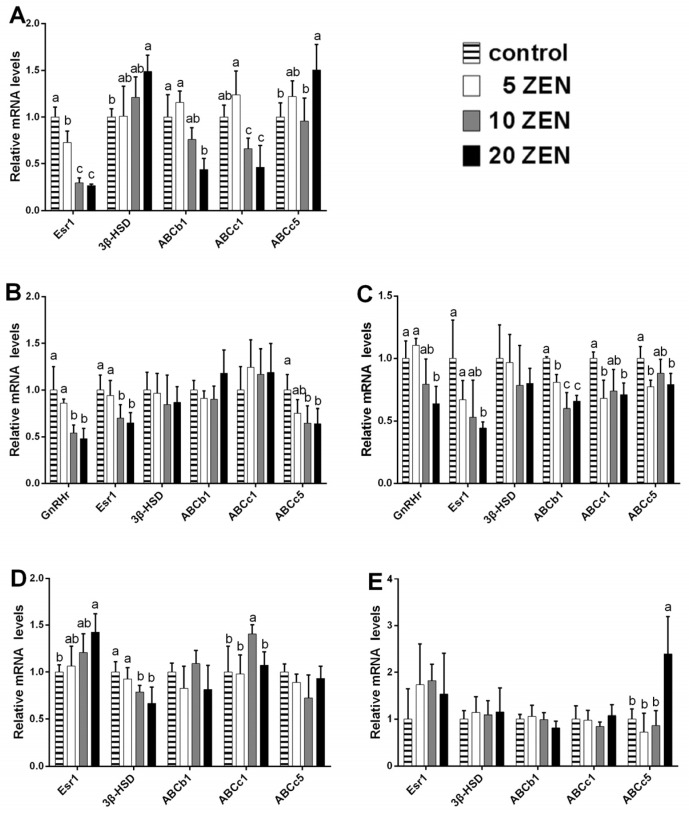
Zearalenone (ZEN) is an oestrogenic mycotoxin commonly found in food and feed products and can affect reproduction and development in both humans and animals. This study aimed to determine the toxic effects of ZEN on maternal SD rats and the F1 female offspring. Sixty-four pregnant rats were divided into 4 groups and exposed to feed contaminated with ZEN (0, 5, 10, and 20 mg/kg feed) on gestational days (GDs) 0-21. Compared with the controls, the groups exposed to 10 and 20 mg/kg ZEN showed significantly decreased feed intake and body weight of pregnant rats and/or female offspring. Meanwhile, 20 mg/kg ZEN significantly decreased the birth weight and viability of F1 newborn rats. Moreover, 10 and 20 mg/kg ZEN diets increased follicle-stimulating hormone concentrations but decreased oestradiol in both maternal and F1 adult rats. In the F1 generation, ZEN caused no pathological changes in ovaries and uterus in weaned rats, but significant follicular atresia and a thinning uterine layer were found in F1 female adult rats in the 20 mg/kg ZEN group. These impairments concurred with the inhibited mRNA and protein levels of oestrogen receptor-alpha (Esr1) and 3β-hydroxysteroid dehydrogenase (HSD) in the adult uterus and/or ovaries. Furthermore, 10 and/or 20 mg/kg ZEN exposure significantly reduced Esr1, gonadotropin-releasing hormone receptor (GnRHr), and ATP binding cassette transporters b1 and c1 (ABCb1 and ABCc1) in the placenta and foetal and weaned F1 brains, and also produced a dose-dependent increase in 3β-HSD in the placenta. Additionally, 20 mg/kg ZEN significantly upregulated ABCc5 expression in the placenta and ovaries of weaned rats. These results suggested that prenatal ZEN exposure in rats affected maternal and foetal development and may lead to long-term reproductive impairment in F1 adult females.
玉米赤霉烯酮(ZEN)是一种常见于食品和饲料产品中的具有雌激素活性的霉菌毒素,可影响人类和动物的生殖与发育。本研究旨在确定ZEN对母本SD大鼠及其F1代雌性后代的毒性作用。64只怀孕大鼠被分为4组,并在妊娠第0至21天暴露于被ZEN污染的饲料(0、5、10和20毫克/千克饲料)中。与对照组相比,暴露于10和20毫克/千克ZEN的组中,怀孕大鼠和/或雌性后代的采食量和体重显著下降。同时,20毫克/千克ZEN显著降低了F1代新生大鼠的出生体重和存活率。此外,10和20毫克/千克ZEN饮食增加了母本和F1代成年大鼠的促卵泡生成素浓度,但降低了雌二醇水平。在F1代中,ZEN对断奶大鼠的卵巢和子宫未造成病理变化,但在20毫克/千克ZEN组的F1代成年雌性大鼠中发现了明显的卵泡闭锁和子宫层变薄。这些损伤与成年子宫和/或卵巢中雌激素受体α(Esr1)和3β-羟基类固醇脱氢酶(HSD)的mRNA和蛋白质水平受到抑制一致。此外,10和/或20毫克/千克ZEN暴露显著降低了胎盘、胎儿和断奶F1代大脑中的Esr1、促性腺激素释放激素受体(GnRHr)以及ATP结合盒转运蛋白b1和c1(ABCb1和ABCc1),并且在胎盘内使3β-HSD呈剂量依赖性增加。此外,20毫克/千克ZEN显著上调了断奶大鼠胎盘和卵巢中ABCc5的表达。这些结果表明,大鼠产前暴露于ZEN会影响母本和胎儿发育,并可能导致F1代成年雌性大鼠出现长期生殖功能障碍。