Harasstani Omar A, Tham Chau Ling, Israf Daud A
Department of Biomedical Science, Faculty of Medicine and Health Sciences, Universiti Putra Malaysia, Serdang, 43400 Selangor, Malaysia.
Molecules. 2017 Jan 6;22(1):92. doi: 10.3390/molecules22010092.
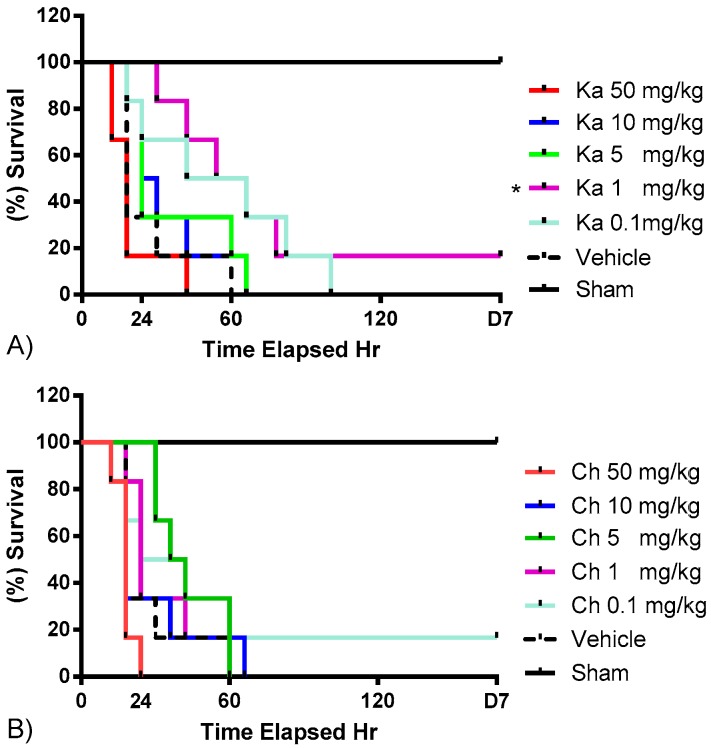
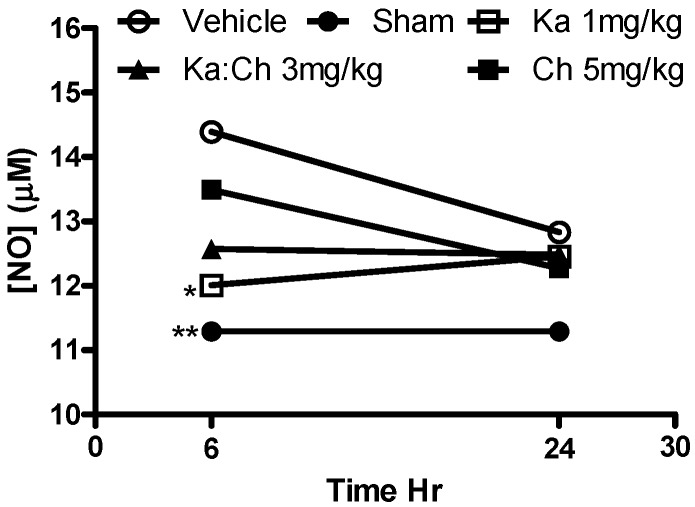
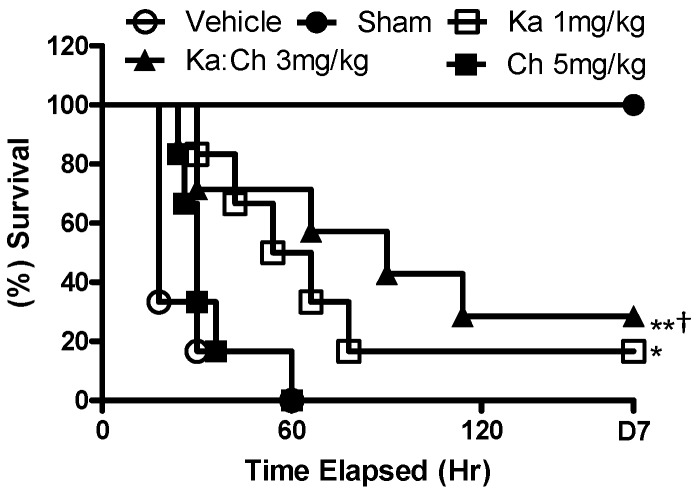
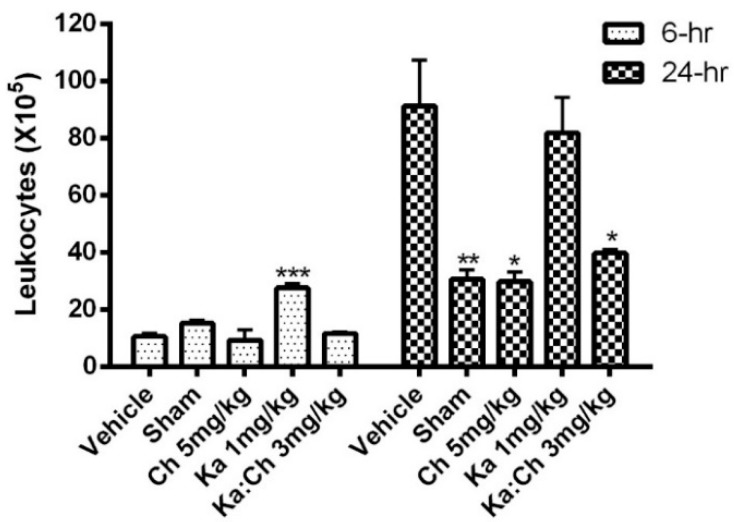
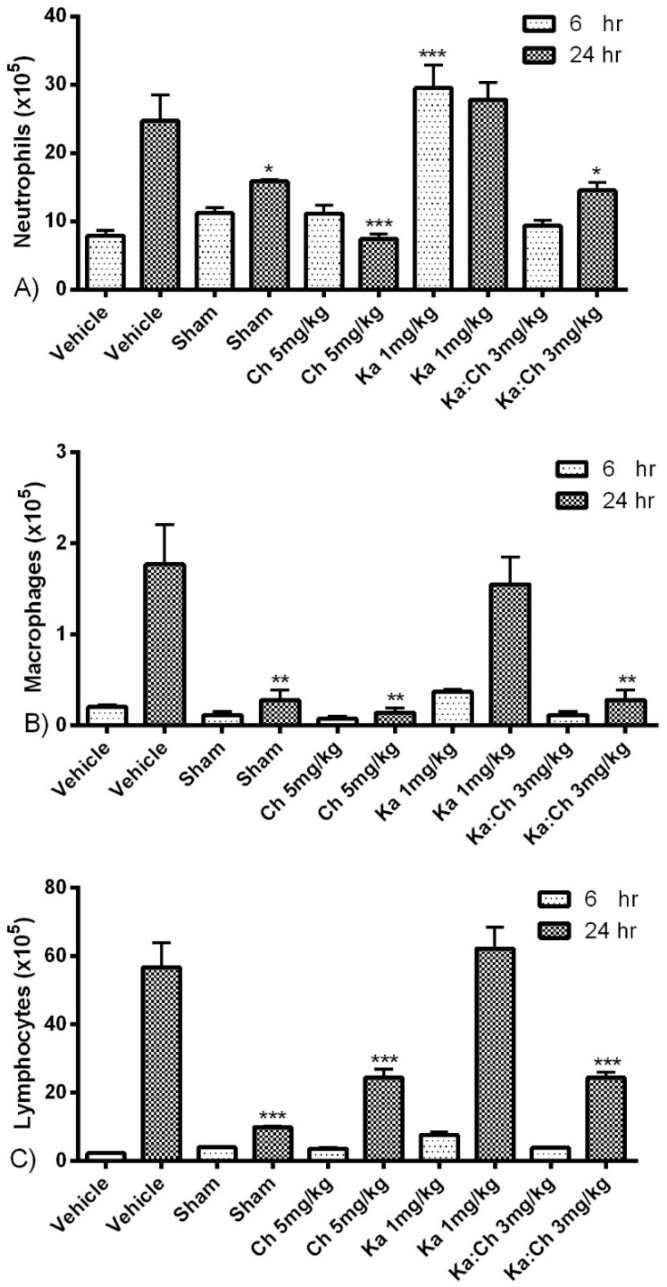
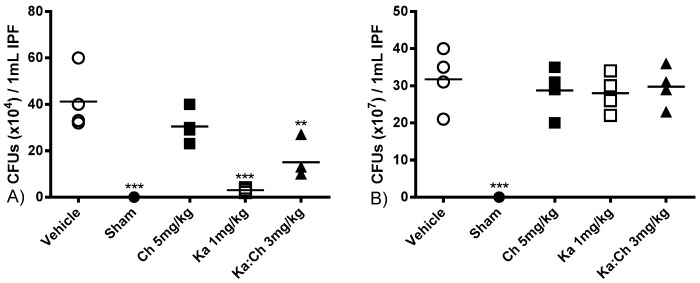
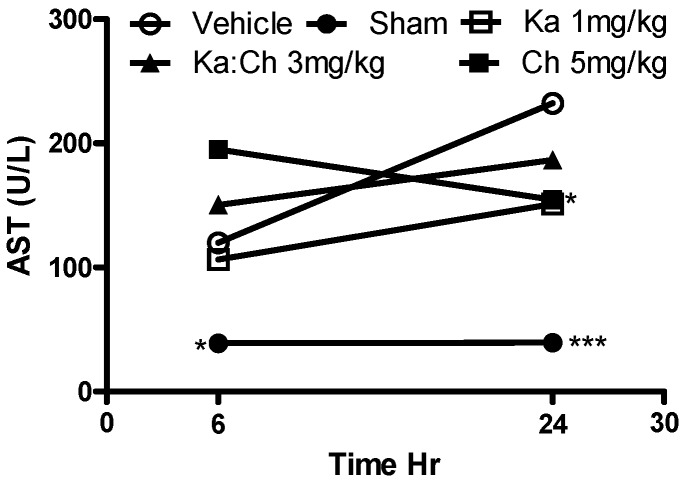
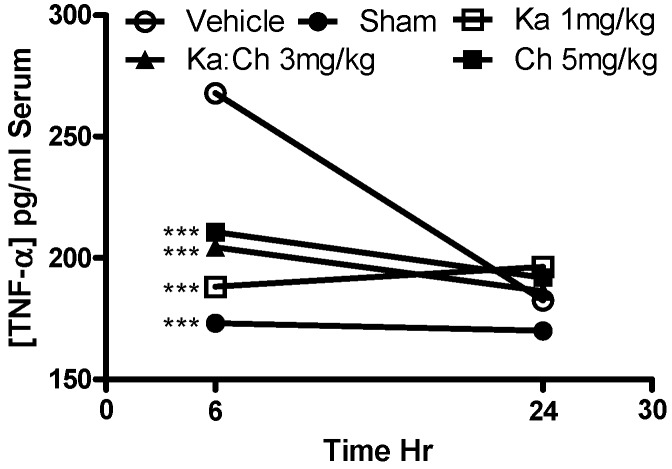
Previously, we reported the role of synergy between two flavonoids-namely, chrysin and kaempferol-in inhibiting the secretion of a few major proinflammatory mediators such as -alpha (TNF-α), , and nitric oxide (NO) from lipopolysaccharide (LPS)-induced RAW 264.7 cells. The present study aims to evaluate the effects of this combination on a murine model of polymicrobial sepsis induced by cecal ligation and puncture (CLP). Severe sepsis was induced in male ICR mice ( = 7) via the CLP procedure. The effects of chrysin and kaempferol combination treatment on septic mice were investigated using a 7-day survival study. The levels of key proinflammatory mediators and markers-such as (AST), TNF-α, and NO-in the sera samples of the septic mice were determined via ELISA and fluorescence determination at different time point intervals post-CLP challenge. Liver tissue samples from septic mice were harvested to measure myeloperoxidase (MPO) levels using a spectrophotometer. Moreover, intraperitoneal fluid (IPF) bacterial clearance and total leukocyte count were also assessed to detect any antibacterial effects exerted by chrysin and kaempferol, individually and in combination. Kaempferol treatment improved the survival rate of CLP-challenged mice by up to 16%. During this treatment, kaempferol expressed antibacterial, antiapoptotic and antioxidant activities through the attenuation of bacterial forming units, AST and NO levels, and increased polymorphonuclear leukocyte (PMN) count in the IPF. On the other hand, the chrysin treatment significantly reduced serum TNF-α levels. However, it failed to significantly improve the survival rate of the CLP-challenged mice. Subsequently, the kaempferol/chrysin combination treatment significantly improved the overall 7-day survival rate by 2-fold-up to 29%. Kaempferol and chrysin revealed some synergistic effects by acting individually upon multiple pathophysiological factors involved during sepsis. Although the kaempferol/chrysin combination did not exhibit significant antibacterial effects, it did exhibit anti-inflammatory and antioxidant activities, which translate to significant improvement in the survival rate of septic animals. These findings suggest the potential application of this combination treatment as a beneficial adjuvant supplement strategy in sepsis control.
此前,我们报道了两种黄酮类化合物(白杨素和山奈酚)之间的协同作用在抑制脂多糖(LPS)诱导的RAW 264.7细胞分泌几种主要促炎介质(如肿瘤坏死因子-α(TNF-α)、白细胞介素-6(IL-6)和一氧化氮(NO))方面的作用。本研究旨在评估该组合对盲肠结扎穿孔(CLP)诱导的小鼠多微生物败血症模型的影响。通过CLP程序在雄性ICR小鼠(n = 7)中诱导严重败血症。使用为期7天的生存研究来研究白杨素和山奈酚联合治疗对败血症小鼠的影响。在CLP攻击后的不同时间点间隔,通过酶联免疫吸附测定(ELISA)和荧光测定法测定败血症小鼠血清样本中关键促炎介质和标志物(如天冬氨酸转氨酶(AST)、TNF-α和NO)的水平。采集败血症小鼠的肝脏组织样本,使用分光光度计测量髓过氧化物酶(MPO)水平。此外,还评估了腹腔液(IPF)细菌清除率和总白细胞计数,以检测白杨素和山奈酚单独及联合使用时发挥的任何抗菌作用。山奈酚治疗使CLP攻击小鼠的存活率提高了16%。在此治疗期间,山奈酚通过降低细菌形成单位、AST和NO水平以及增加IPF中的多形核白细胞(PMN)计数,表现出抗菌、抗凋亡和抗氧化活性。另一方面,白杨素治疗显著降低了血清TNF-α水平。然而,它未能显著提高CLP攻击小鼠的存活率。随后,山奈酚/白杨素联合治疗使总体7天存活率显著提高了2倍,达到29%。山奈酚和白杨素通过分别作用于败血症期间涉及的多种病理生理因素,显示出一些协同作用。虽然山奈酚/白杨素组合未表现出显著的抗菌作用,但它确实表现出抗炎和抗氧化活性,这转化为败血症动物存活率的显著提高。这些发现表明,这种联合治疗作为败血症控制中一种有益的辅助补充策略具有潜在的应用价值。