Toffoli Barbara, Fabris Bruno, Bartelloni Giacomo, Bossi Fleur, Bernardi Stella
Department of Medical Sciences, University of Trieste, Cattinara Teaching Hospital, Strada di Fiume 447, 34149 Trieste, Italy.
Mediators Inflamm. 2016;2016:6529728. doi: 10.1155/2016/6529728. Epub 2016 Dec 14.
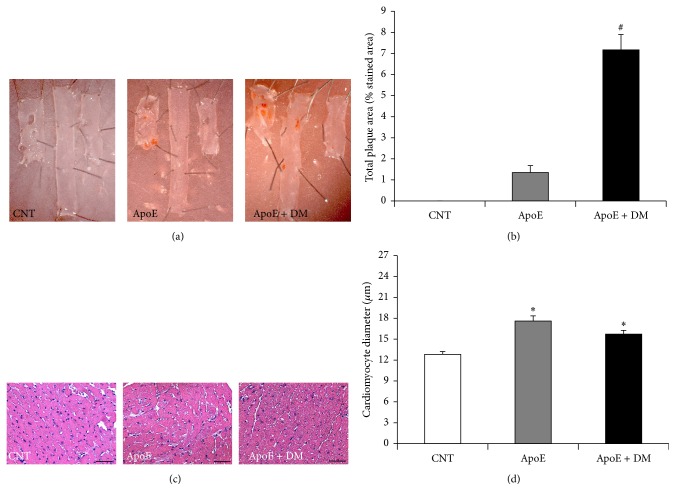
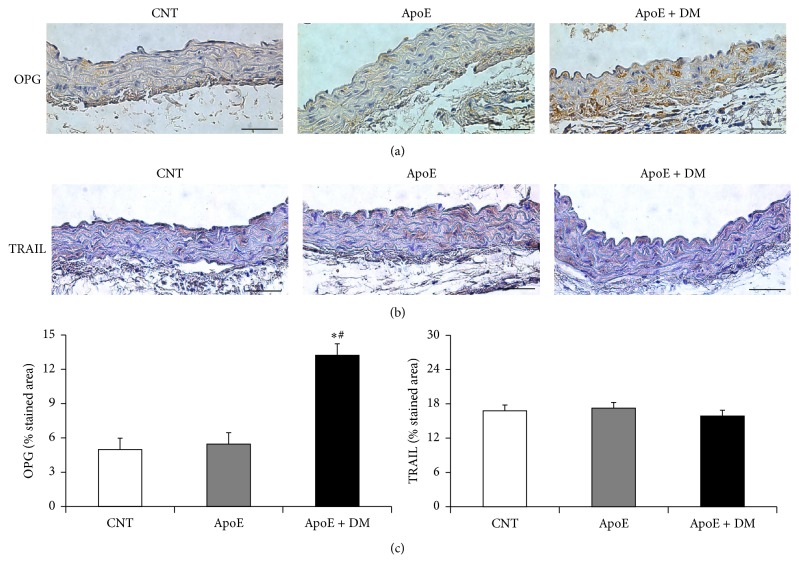
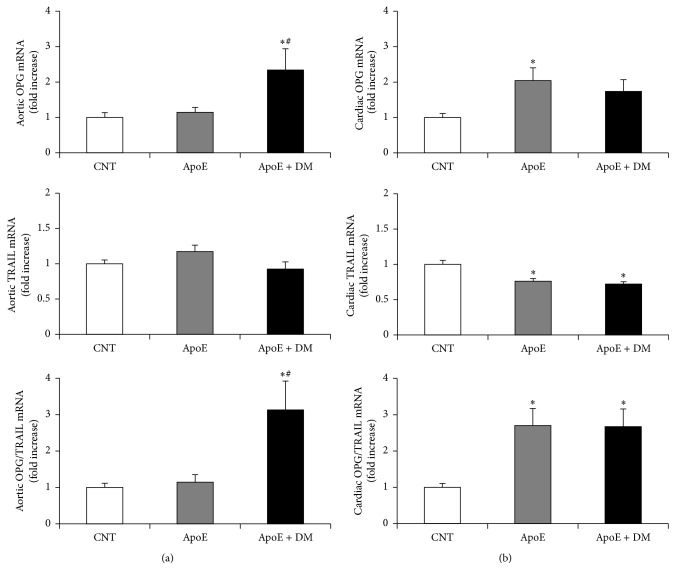
. Dyslipidemia and diabetes are two of the most well established risk factors for the development of cardiovascular disease (CVD). Both of them usually activate a complex range of pathogenic pathways leading to organ damage. Here we hypothesized that dyslipidemia and diabetes could affect osteoprotegerin (OPG) and TNF-related apoptosis-inducing ligand (TRAIL) expression in the vessels and the heart. . Gene and protein expression of OPG, TRAIL, and OPG/TRAIL ratio were quantified in the aorta and the hearts of control mice, dyslipidemic mice, and diabetic mice. . Diabetes significantly increased OPG and the OPG/TRAIL ratio expression in the aorta, while dyslipidemia was the major determinant of the changes observed in the heart, where it significantly increased OPG and reduced TRAIL expression, thus increasing cardiac OPG/TRAIL ratio. . This work shows that both dyslipidemia and diabetes affect OPG/TRAIL ratio in the cardiovascular system. This could contribute to the changes in circulating OPG/TRAIL which are observed in patients with diabetes and CVD. Most importantly, these changes could mediate/contribute to atherosclerosis development and cardiac remodeling.
血脂异常和糖尿病是心血管疾病(CVD)发生发展中两个最明确的危险因素。它们通常都会激活一系列复杂的致病途径,导致器官损伤。在此,我们假设血脂异常和糖尿病会影响血管和心脏中骨保护素(OPG)及肿瘤坏死因子相关凋亡诱导配体(TRAIL)的表达。对正常小鼠、血脂异常小鼠和糖尿病小鼠的主动脉及心脏中OPG、TRAIL的基因和蛋白表达以及OPG/TRAIL比值进行了定量分析。糖尿病显著增加了主动脉中OPG及OPG/TRAIL比值的表达,而血脂异常是心脏中观察到变化(显著增加OPG并降低TRAIL表达,从而增加心脏OPG/TRAIL比值)的主要决定因素。这项研究表明,血脂异常和糖尿病均会影响心血管系统中的OPG/TRAIL比值。这可能导致糖尿病和心血管疾病患者循环中OPG/TRAIL的变化。最重要的是,这些变化可能介导/促成动脉粥样硬化的发展和心脏重塑。