Russo Eleonora, Durstewitz Daniel
Department of Theoretical Neuroscience, Bernstein Center for Computational Neuroscience, Central Institute for Mental Health, Medical Faculty Mannheim, Heidelberg University, Mannheim, Germany.
Elife. 2017 Jan 11;6:e19428. doi: 10.7554/eLife.19428.
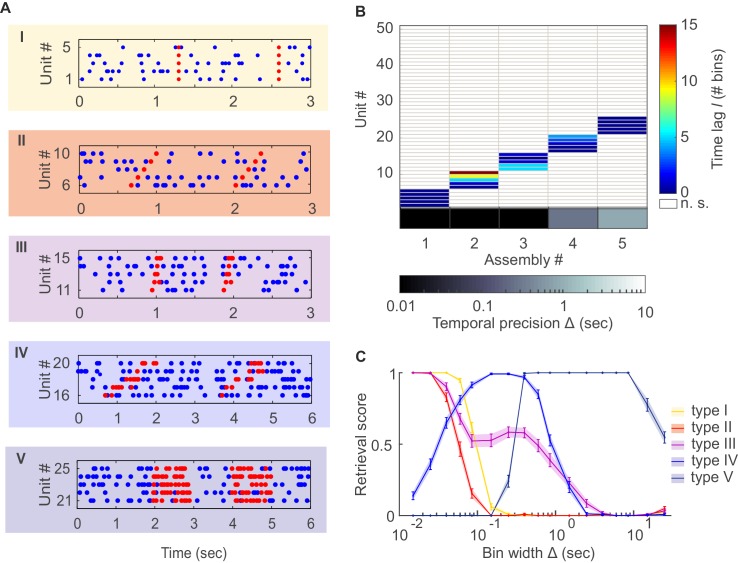
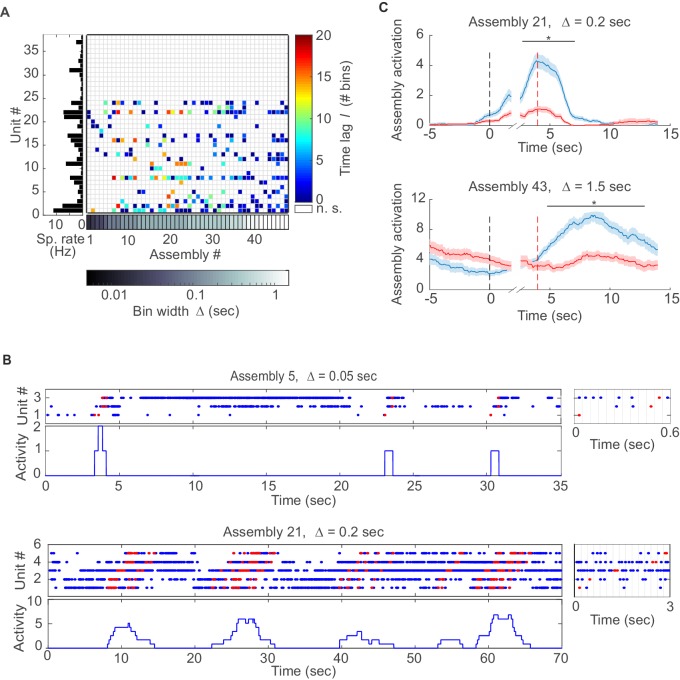
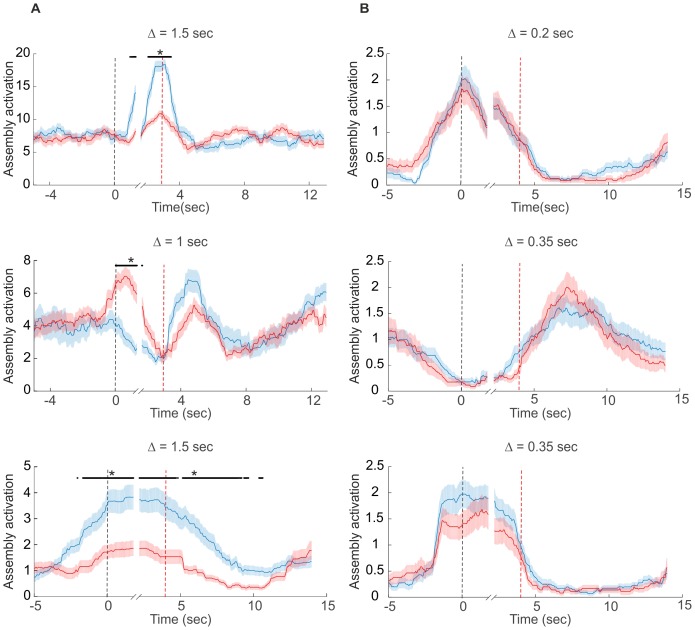
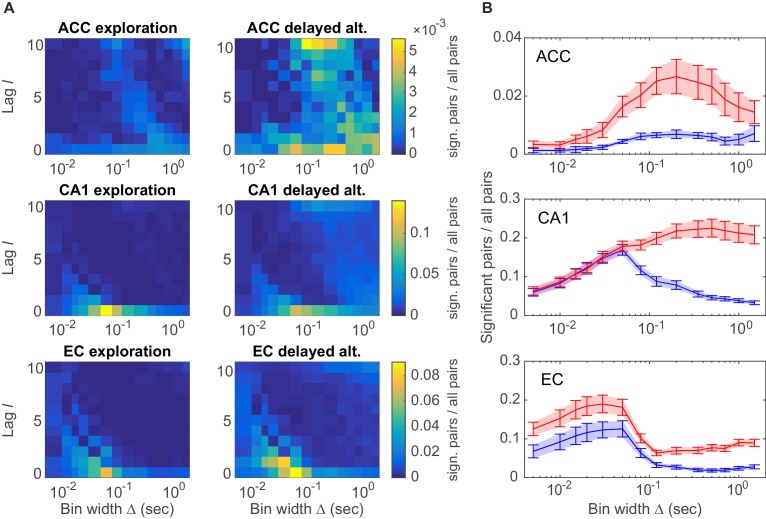
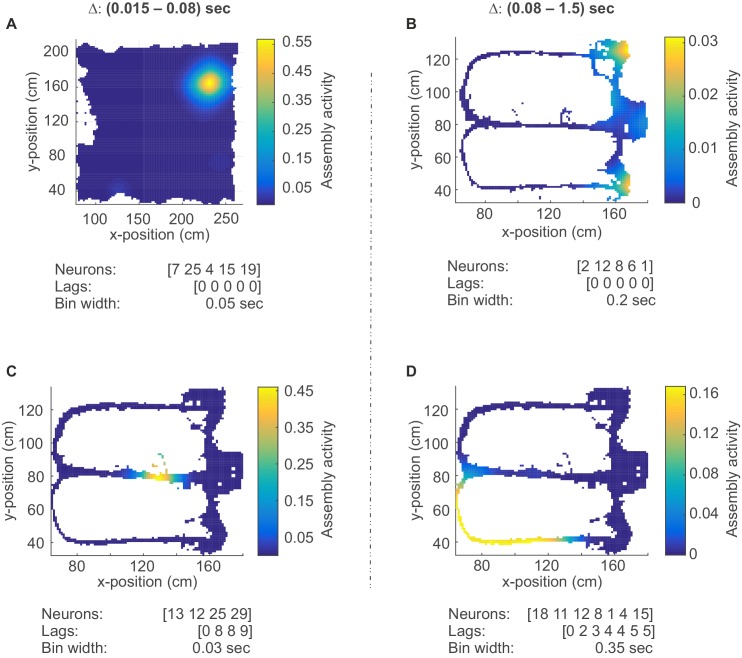
Hebb's idea of a cell assembly as the fundamental unit of neural information processing has dominated neuroscience like no other theoretical concept within the past 60 years. A range of different physiological phenomena, from precisely synchronized spiking to broadly simultaneous rate increases, has been subsumed under this term. Yet progress in this area is hampered by the lack of statistical tools that would enable to extract assemblies with arbitrary constellations of time lags, and at multiple temporal scales, partly due to the severe computational burden. Here we present such a unifying methodological and conceptual framework which detects assembly structure at many different time scales, levels of precision, and with arbitrary internal organization. Applying this methodology to multiple single unit recordings from various cortical areas, we find that there is no universal cortical coding scheme, but that assembly structure and precision significantly depends on the brain area recorded and ongoing task demands.
在过去60年里,赫布提出的细胞集合作为神经信息处理基本单元的观点,在神经科学领域占据主导地位,没有其他理论概念能与之相比。从精确同步的尖峰放电到大致同时的速率增加等一系列不同的生理现象,都被归入了这个术语之下。然而,这一领域的进展受到缺乏统计工具的阻碍,这些工具能够在多个时间尺度上提取具有任意时间滞后组合的集合,部分原因是计算负担过重。在此,我们提出了这样一个统一的方法和概念框架,它能在许多不同的时间尺度、精度水平以及具有任意内部组织的情况下检测集合结构。将这种方法应用于来自不同皮层区域的多个单单元记录,我们发现不存在通用的皮层编码方案,而是集合结构和精度显著取决于所记录的脑区以及正在进行的任务需求。