Tasaki Eisuke, Kobayashi Kazuya, Matsuura Kenji, Iuchi Yoshihito
Department of Applied Bioresources Chemistry, The United Graduate School of Agriculture, Tottori University, Tottori, Japan.
Department of Biological Chemistry, Faculty of Agriculture, Yamaguchi University, Yamaguchi, Japan.
PLoS One. 2017 Jan 11;12(1):e0167412. doi: 10.1371/journal.pone.0167412. eCollection 2017.
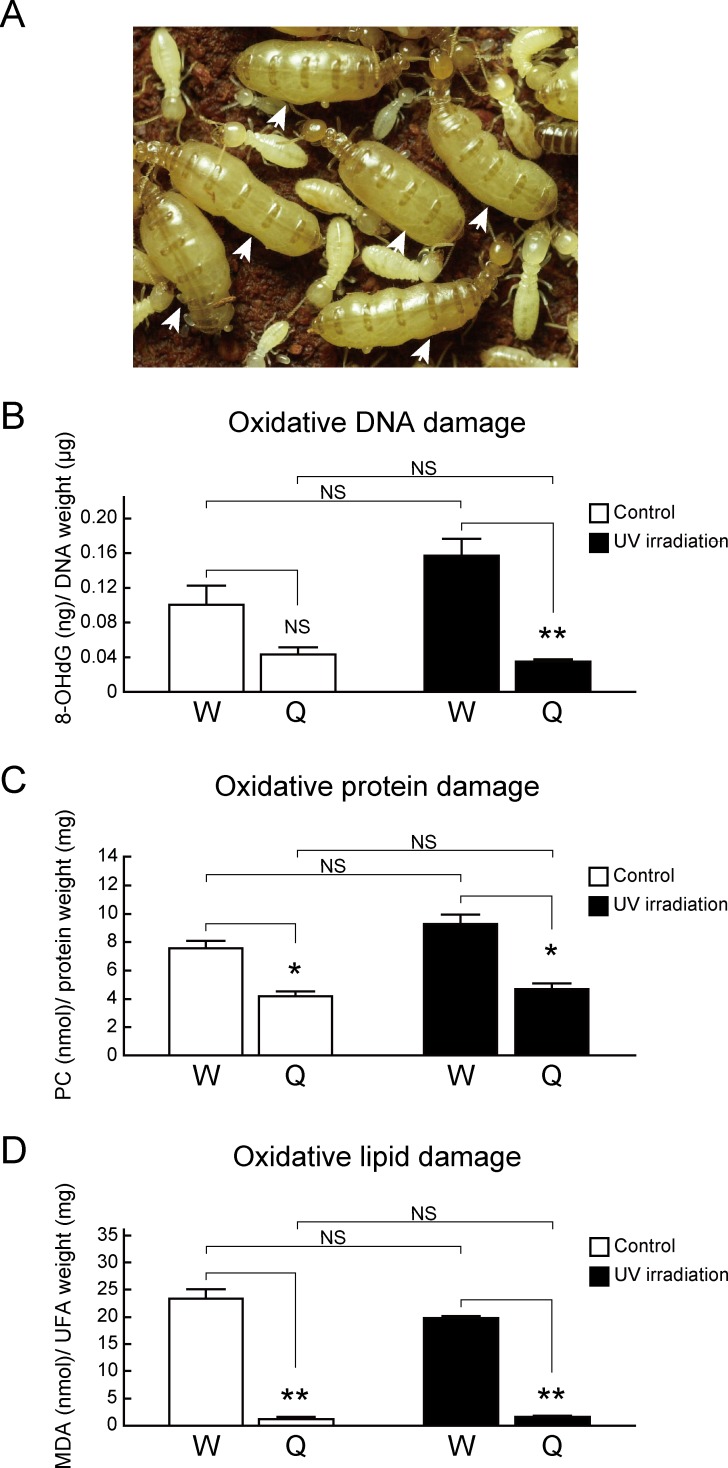
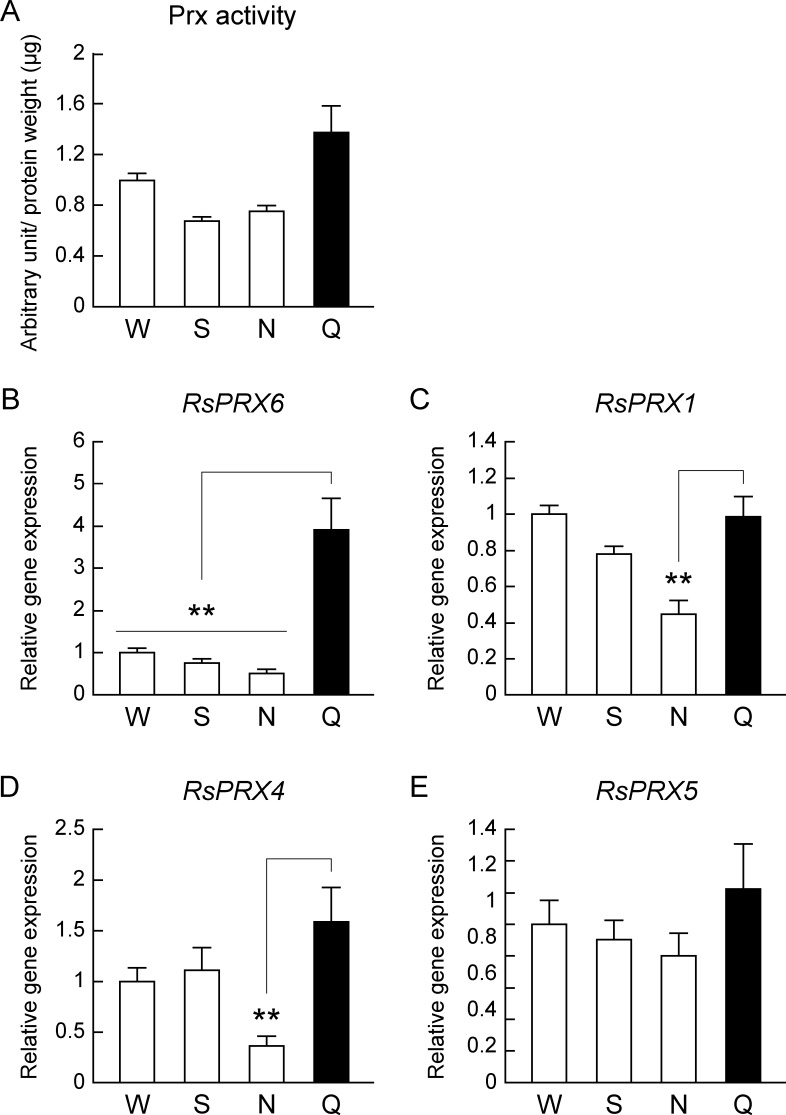
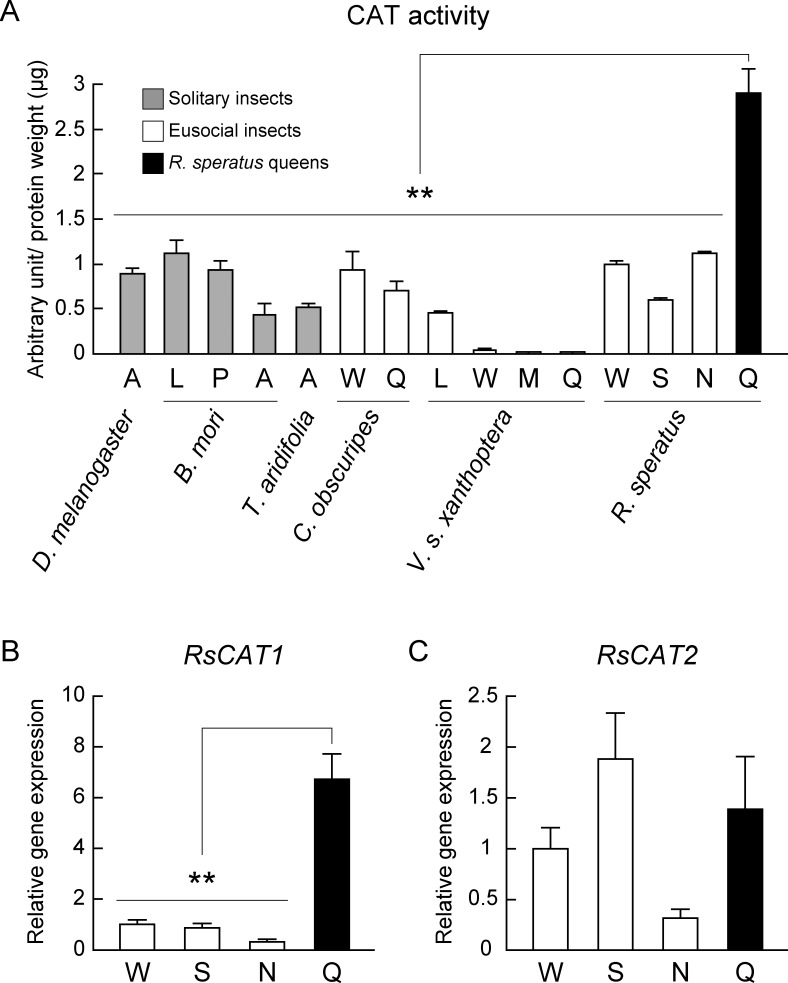
The trade-off between reproduction and longevity is known in wide variety of animals. Social insect queens are rare organisms that can achieve a long lifespan without sacrificing fecundity. The extended longevity of social insect queens, which contradicts the trade-off, has attracted much attention because it implies the existence of an extraordinary anti-aging mechanism. Here, we show that queens of the termite Reticulitermes speratus incur significantly lower oxidative damage to DNA, protein and lipid and have higher activity of antioxidant enzymes than non-reproductive individuals (workers and soldiers). The levels of 8-hydroxy-2'-deoxyguanosine (oxidative damage marker of DNA) were lower in queens than in workers after UV irradiation. Queens also showed lower levels of protein carbonyls and malondialdehyde (oxidative damage markers of protein and lipid, respectively). The antioxidant enzymes of insects are generally composed of catalase (CAT) and peroxiredoxin (Prx). Queens showed more than two times higher CAT activity and more than seven times higher expression levels of the CAT gene RsCAT1 than workers. The CAT activity of termite queens was also markedly higher in comparison with other solitary insects and the queens of eusocial Hymenoptera. In addition, queens showed higher expression levels of the Prx gene RsPRX6. These results suggested that this efficient antioxidant system can partly explain why termite queens achieve long life. This study provides important insights into the evolutionary linkage of reproductive division of labor and the development of queens' oxidative stress resistance in social insects.
繁殖与寿命之间的权衡在多种动物中都存在。社会性昆虫蚁后是罕见的一类生物,它们能够在不牺牲繁殖力的情况下实现长寿。社会性昆虫蚁后的超长寿命与这种权衡相矛盾,这引发了人们的广泛关注,因为这意味着存在一种非凡的抗衰老机制。在此,我们表明,日本白蚁(Reticulitermes speratus)的蚁后相较于非生殖个体(工蚁和兵蚁),DNA、蛋白质和脂质受到的氧化损伤显著更低,且抗氧化酶的活性更高。紫外线照射后,蚁后体内8-羟基-2'-脱氧鸟苷(DNA的氧化损伤标志物)的水平低于工蚁。蚁后的蛋白质羰基化水平和丙二醛(分别为蛋白质和脂质的氧化损伤标志物)水平也较低。昆虫的抗氧化酶通常由过氧化氢酶(CAT)和过氧化物酶(Prx)组成。蚁后的CAT活性比工蚁高出两倍多,CAT基因RsCAT1的表达水平比工蚁高出七倍多。与其他独居昆虫以及社会性膜翅目昆虫的蚁后相比,白蚁蚁后的CAT活性也显著更高。此外,蚁后的Prx基因RsPRX6表达水平更高。这些结果表明,这种高效的抗氧化系统可以部分解释白蚁蚁后为何能长寿。本研究为社会性昆虫中生殖分工的进化联系以及蚁后氧化应激抗性的发展提供了重要见解。