Romero Vanessa, Hosomichi Kazuyoshi, Nakaoka Hirofumi, Shibata Hiroki, Inoue Ituro
Department of Genetics, School of Life Sciences, Graduate University for Advanced Studies (SOKENDAI), Mishima, 411-8540, Japan.
Division of Human Genetics, National Institute of Genetics, Mishima, 411-8540, Japan.
BMC Evol Biol. 2017 Jan 11;17(1):10. doi: 10.1186/s12862-016-0851-5.
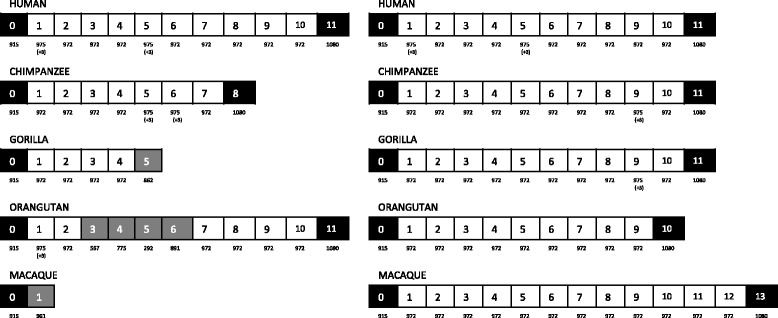
The evolutionary dynamics of repeat sequences is quite complex, with some duplicates never having differentiated from each other. Two models can explain the complex evolutionary process for repeated genes-concerted and birth-and-death, of which the latter is driven by duplications maintained by selection. Copy number variations caused by random duplications and losses in repeat regions may modulate molecular pathways and therefore affect phenotypic characteristics in a population, resulting in individuals that are able to adapt to new environments. In this study, we investigated the filaggrin gene (FLG), which codes for filaggrin-an important component of the outer layers of mammalian skin-and contains tandem repeats that exhibit copy number variation between and within species. To examine which model best fits the evolutionary pathway for the complete tandem repeats within a single exon of FLG, we determined the repeat sequences in crab-eating macaque (Macaca fascicularis), orangutan (Pongo abelii), gorilla (Gorilla gorilla), and chimpanzee (Pan troglodytes) and compared these with the sequence in human (Homo sapiens).
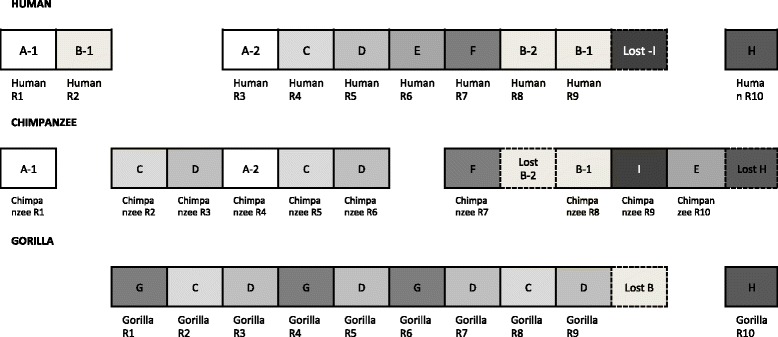
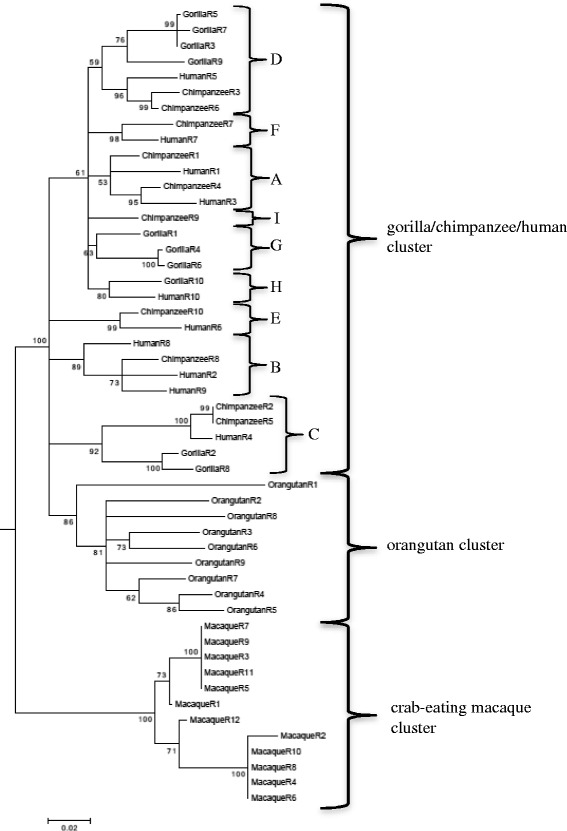
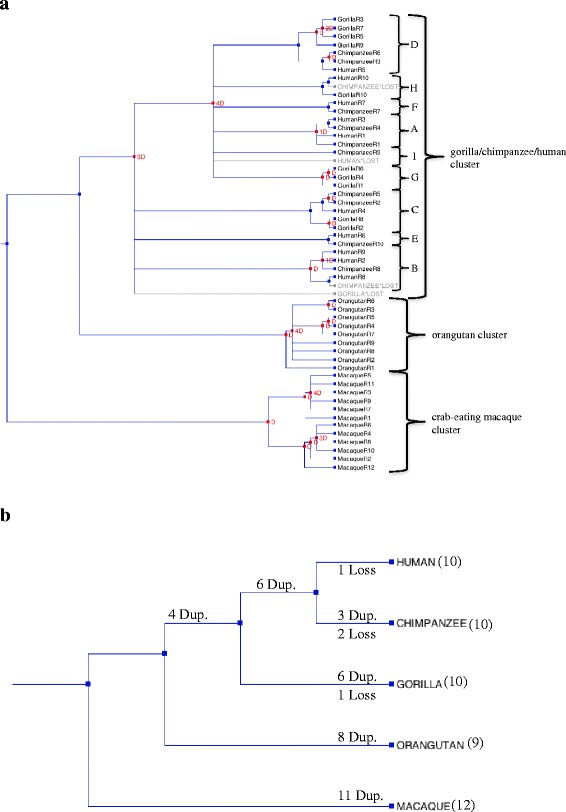
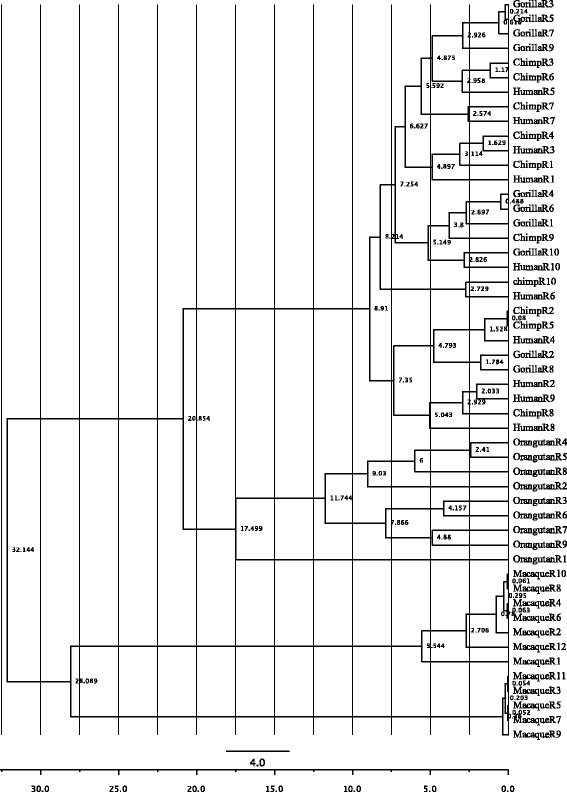
In this study we compared concerted and birth-and-death evolution models, commonly used for gene copies. We found that there is high nucleotide diversity between filaggrin repeat regions, which fits the birth-and-death model. Phylogenetic analyses also suggested that independent duplication events created the repeat sequences in crab-eating macaques and orangutans, while different duplication and loss events created the repeats in gorillas, chimpanzees, and humans. Comparison of the repeat sequences detected purifying selection within species and lineage-specific duplications across species. We also found variation in the length of the repeated region within species such as chimpanzee and crab-eating macaque.
We conclude that the copy number variation in the repeat sequences of FLG between primates may be a consequence of species-specific divergence and expansion.
重复序列的进化动态相当复杂,一些重复序列彼此从未分化。有两种模型可以解释重复基因的复杂进化过程——协同进化模型和生死进化模型,其中后者由选择维持的重复驱动。重复区域中随机重复和缺失引起的拷贝数变异可能会调节分子途径,从而影响种群中的表型特征,导致个体能够适应新环境。在本研究中,我们调查了丝聚合蛋白基因(FLG),它编码丝聚合蛋白——哺乳动物皮肤外层的一个重要组成部分——并且包含串联重复序列,这些串联重复序列在物种间和物种内表现出拷贝数变异。为了检验哪种模型最适合FLG单个外显子内完整串联重复序列的进化途径,我们确定了食蟹猕猴(Macaca fascicularis)、猩猩(Pongo abelii)、大猩猩(Gorilla gorilla)和黑猩猩(Pan troglodytes)中的重复序列,并将这些与人类(Homo sapiens)的序列进行比较。
在本研究中,我们比较了常用于基因拷贝的协同进化和生死进化模型。我们发现丝聚合蛋白重复区域之间存在高度的核苷酸多样性,这符合生死进化模型。系统发育分析还表明,独立的重复事件在食蟹猕猴和猩猩中产生了重复序列,而不同的重复和缺失事件在大猩猩、黑猩猩和人类中产生了重复序列。对重复序列的比较检测到物种内的纯化选择和跨物种的谱系特异性重复。我们还发现了物种内重复区域长度的变异,如黑猩猩和食蟹猕猴。
我们得出结论,灵长类动物之间FLG重复序列的拷贝数变异可能是物种特异性分化和扩张的结果。