Xu Can, Hu Shuo, Chen Xiaoyuan
Department of PET Center, Xiangya Hospital, Central South University, Changsha 410008, China; Laboratory of Molecular Imaging and Nanomedicine, National Institute of Biomedical Imaging and Bioengineering, National Institutes of Health, USA.
Department of PET Center, Xiangya Hospital, Central South University, Changsha 410008, China.
Mater Today (Kidlington). 2016 Nov;19(9):516-532. doi: 10.1016/j.mattod.2016.02.020.
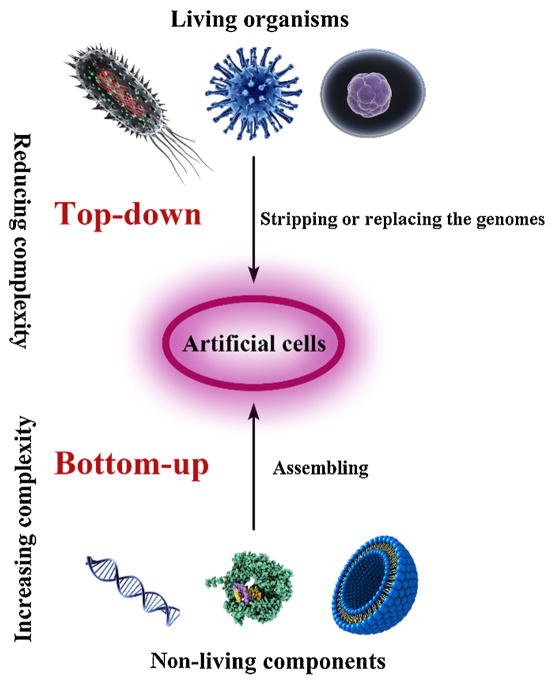
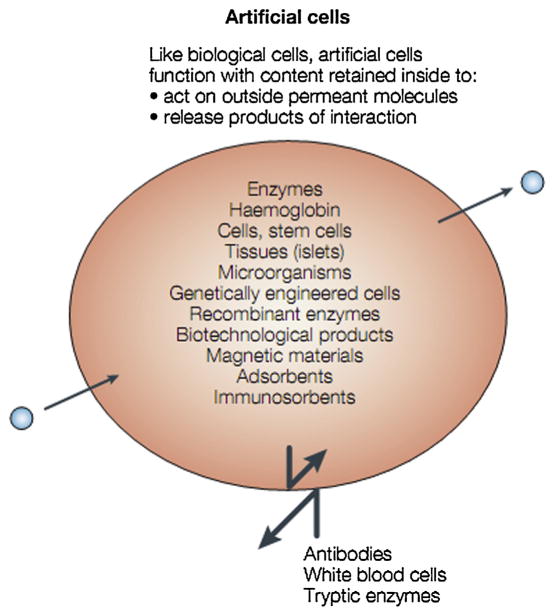
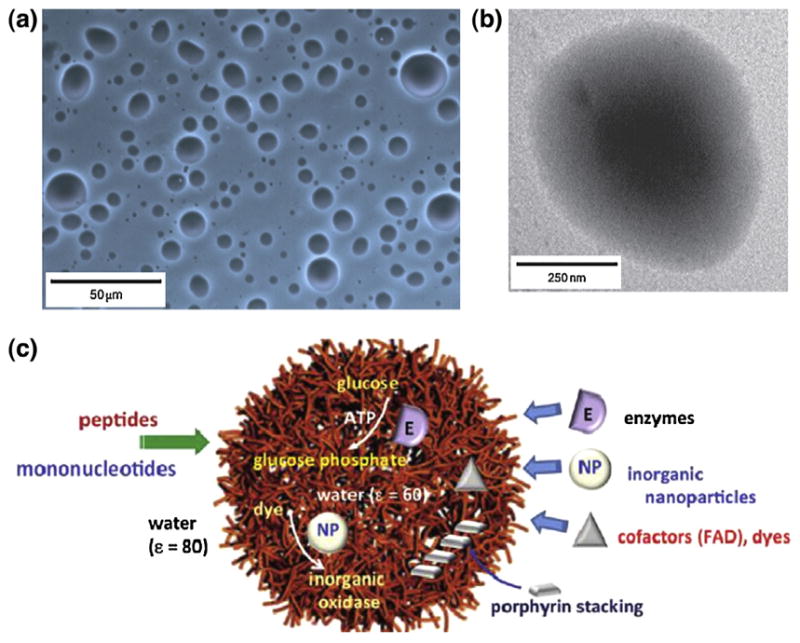
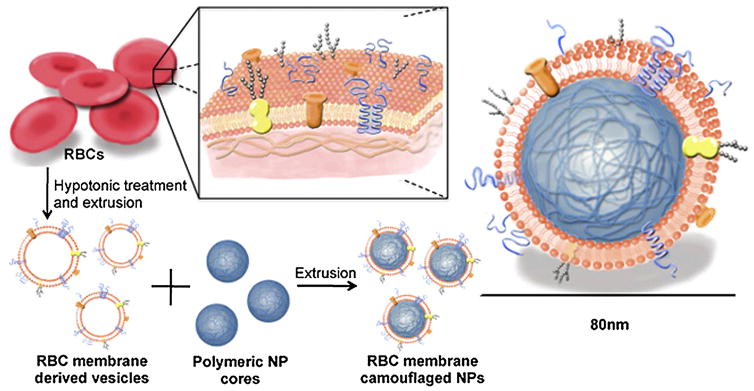
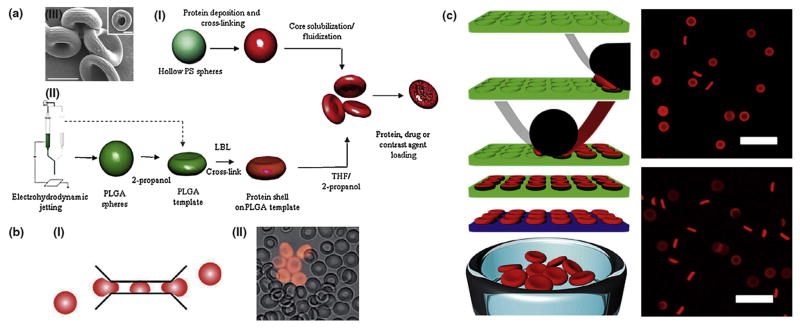
Artificial cells have attracted much attention as substitutes for natural cells. There are many different forms of artificial cells with many different definitions. They can be integral biological cell imitators with cell-like structures and exhibit some of the key characteristics of living cells. Alternatively, they can be engineered materials that only mimic some of the properties of cells, such as surface characteristics, shapes, morphology, or a few specific functions. These artificial cells can have applications in many fields from medicine to environment, and may be useful in constructing the theory of the origin of life. However, even the simplest unicellular organisms are extremely complex and synthesis of living artificial cells from inanimate components seems very daunting. Nevertheless, recent progress in the formulation of artificial cells ranging from simple protocells and synthetic cells to cell-mimic particles, suggests that the construction of living life is now not an unrealistic goal. This review aims to provide a comprehensive summary of the latest developments in the construction and application of artificial cells, as well as highlight the current problems, limitations, challenges and opportunities in this field.
人工细胞作为天然细胞的替代品已备受关注。人工细胞有多种不同形式,定义也各不相同。它们可以是具有细胞样结构的完整生物细胞模仿物,并展现出活细胞的一些关键特征。或者,它们也可以是仅模仿细胞某些特性的工程材料,如表面特征、形状、形态或一些特定功能。这些人工细胞在从医学到环境的许多领域都有应用,并且可能有助于构建生命起源理论。然而,即使是最简单的单细胞生物也极其复杂,从无生命成分合成有生命的人工细胞似乎非常艰巨。尽管如此,从简单的原始细胞、合成细胞到细胞模拟颗粒等人工细胞制备方面的最新进展表明,构建有生命的生物体现在已不是一个不切实际的目标。本综述旨在全面总结人工细胞构建与应用的最新进展,并突出该领域当前存在的问题、局限性、挑战和机遇。