State Key Laboratory of Agricultural Microbiology, College of Veterinary Medicine, Huazhong Agricultural University, Wuhan, 430070, P.R. China.
College of Animal Husbandry &Veterinary Science, Henan Agricultural University, Zhengzhou, 450002, P.R. China.
Sci Rep. 2017 Jan 12;7:40698. doi: 10.1038/srep40698.
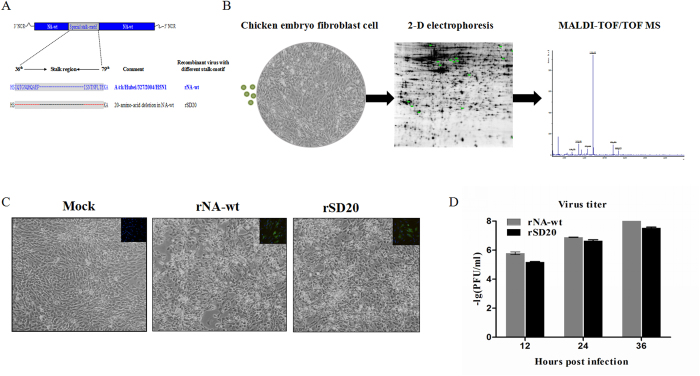
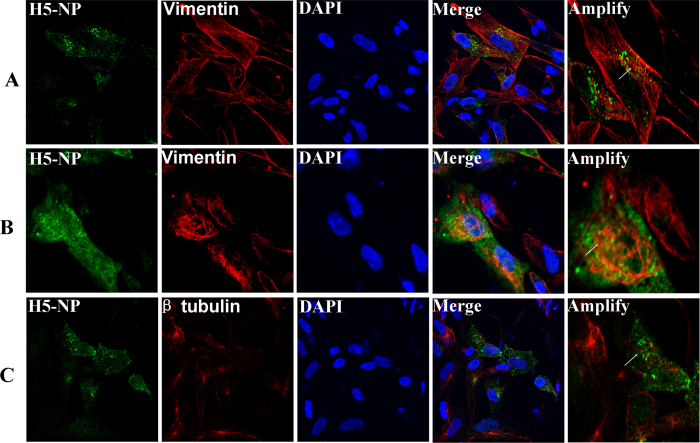
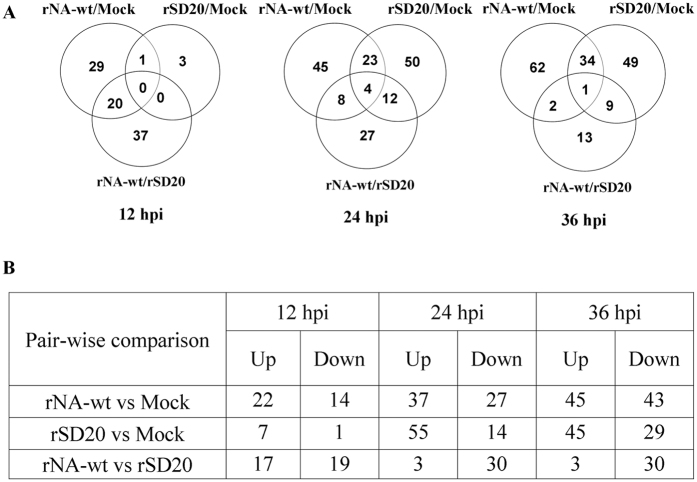
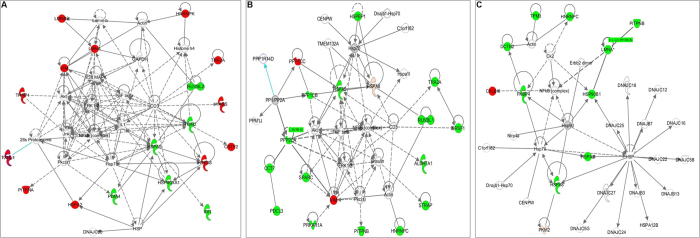
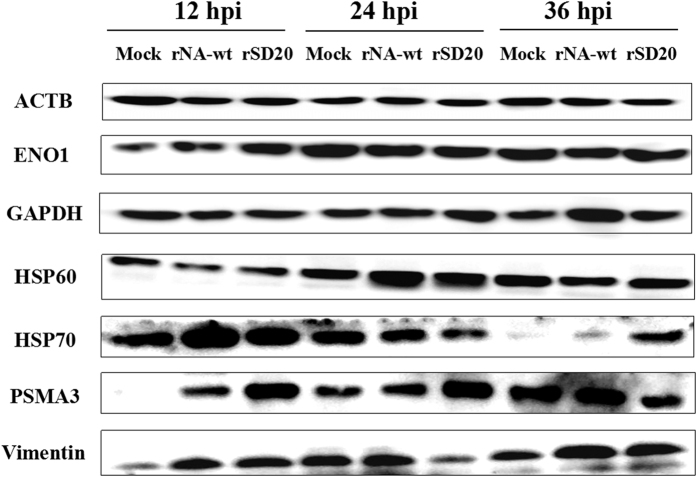
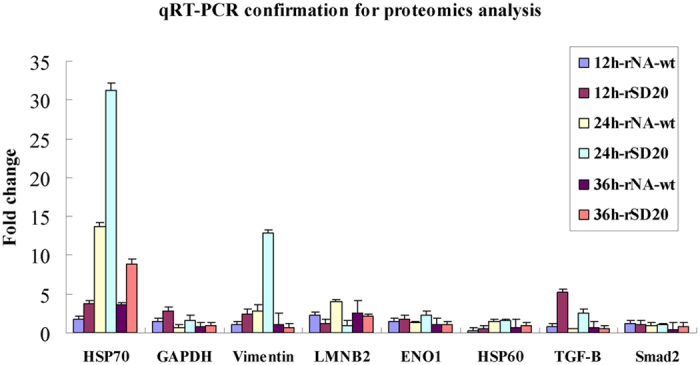
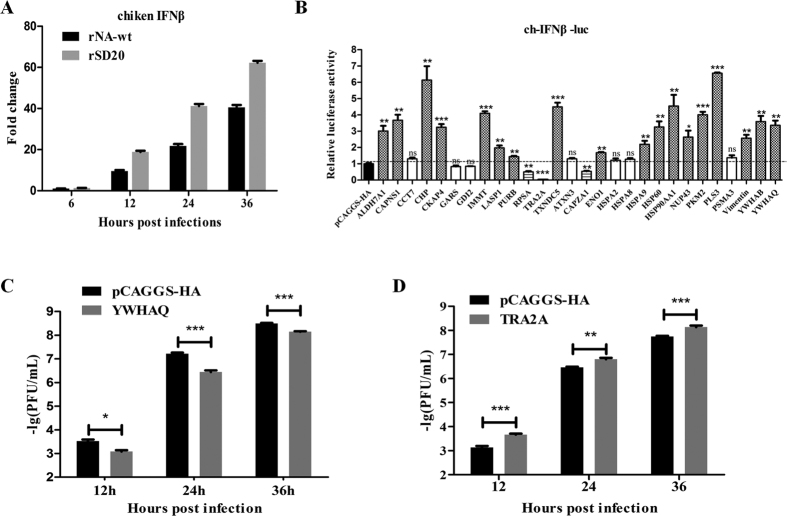
The variation on neuraminidase (NA) stalk region of highly pathogenic avian influenza H5N1 virus results in virulence change in animals. In our previous studies, the special NA stalk-motif of H5N1 viruses has been demonstrated to play a significant role in the high virulence and pathogenicity in chickens. However, the molecular mechanisms underlying the pathogenicity of viruses with different NA stalk remain poorly understood. This study presents a comprehensive characterization of the proteome response of chicken cells to recombinant H5N1 virus with stalk-short NA (rNA-wt) and the stalkless NA mutant virus (rSD20). 208 proteins with differential abundance profiles were identified differentially expressed (DE), and these proteins were mainly related to stress response, transcription regulation, transport, metabolic process, cellular component and cytoskeleton. Through Ingenuity Pathways Analysis (IPA), the significant biological functions of DE proteins represented included Post-Translational Modification, Protein Folding, DNA Replication, Recombination and Repair. It was interesting to find that most DE proteins were involved in the TGF-β mediated functional network. Moreover, the specific DE proteins may play important roles in the innate immune responses and H5N1 virus replication. Our data provide important information regarding the comparable host response to H5N1 influenza virus infection with different NA stalk lengths.
高致病性禽流感 H5N1 病毒神经氨酸酶(NA)茎区的变异导致其在动物中的毒力变化。在我们之前的研究中,已经证明 H5N1 病毒的特殊 NA 茎基序在鸡中的高毒力和致病性中起重要作用。然而,不同 NA 茎病毒的致病性的分子机制仍知之甚少。本研究全面描述了鸡细胞对具有短茎 NA 的重组 H5N1 病毒(rNA-wt)和无茎 NA 突变病毒(rSD20)的蛋白质组反应。鉴定出 208 种具有差异丰度谱的差异表达蛋白(DE),这些蛋白主要与应激反应、转录调控、运输、代谢过程、细胞成分和细胞骨架有关。通过 IPA 分析,DE 蛋白的显著生物学功能包括翻译后修饰、蛋白折叠、DNA 复制、重组和修复。有趣的是,发现大多数 DE 蛋白都参与 TGF-β 介导的功能网络。此外,特定的 DE 蛋白可能在先天免疫反应和 H5N1 病毒复制中发挥重要作用。我们的数据提供了有关具有不同 NA 茎长度的 H5N1 流感病毒感染的宿主反应的重要信息。