Bullock Ann, Burrows Nilka Ríos, Narva Andrew S, Sheff Karen, Hora Israel, Lekiachvili Akaki, Cain Hannah, Espey David
MMWR Morb Mortal Wkly Rep. 2017 Jan 13;66(1):26-32. doi: 10.15585/mmwr.mm6601e1.
American Indians and Alaska Natives (AI/AN) have the highest diabetes prevalence among any racial/ethnic group in the United States. Among AI/AN, diabetes accounts for 69% of new cases of end-stage renal disease (ESRD), defined as kidney failure treated with dialysis or transplantation. During 1982-1996, diabetes-related ESRD (ESRD-D) in AI/AN increased substantially and disproportionately compared with other racial/ethnic groups.
Data from the U.S. Renal Data System, the Indian Health Service (IHS), the National Health Interview Survey, and the U.S. Census were used to calculate ESRD-D incidence rates by race/ethnicity among U.S. adults aged ≥18 years during 1996-2013 and in the diabetic population during 2006-2013. Rates were age-adjusted based on the 2000 U.S. standard population. IHS clinical data from the Diabetes Cares and Outcomes Audit were analyzed for diabetes management measures in AI/AN.
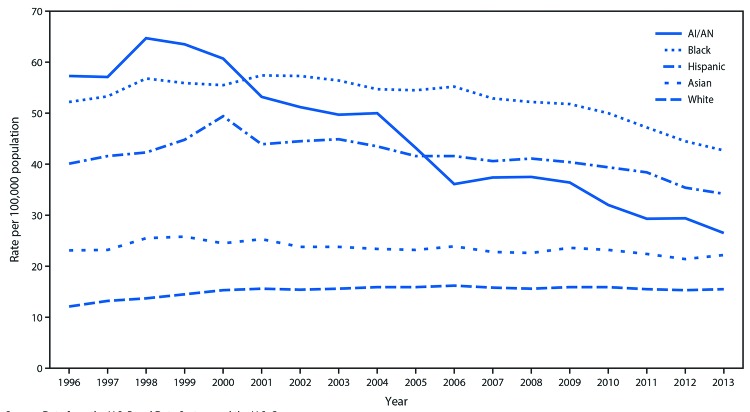
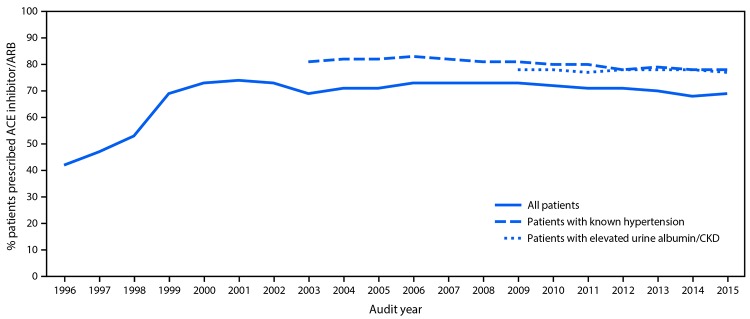
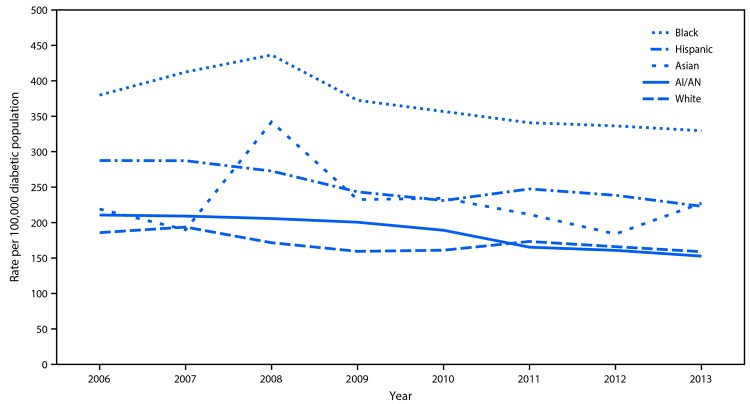
Among AI/AN adults, age-adjusted ESRD-D rates per 100,000 population decreased 54%, from 57.3 in 1996 to 26.5 in 2013. Although rates for adults in other racial/ethnic groups also decreased during this period, AI/AN had the steepest decline. Among AI/AN with diabetes, ESRD-D incidence decreased during 2006-2013 and, by 2013, was the same as that for whites. Measures related to the assessment and treatment of ESRD-D risk factors also showed more improvement during this period in AI/AN than in the general population.
Despite well-documented health and socioeconomic disparities among AI/AN, ESRD-D incidence rates among this population have decreased substantially since 1996. This decline followed implementation by the IHS of public health and population management approaches to diabetes accompanied by improvements in clinical care beginning in the mid-1980s. These approaches might be a useful model for diabetes management in other health care systems, especially those serving populations at high risk.
在美国,美国印第安人和阿拉斯加原住民(AI/AN)在所有种族/族裔群体中糖尿病患病率最高。在AI/AN群体中,糖尿病占终末期肾病(ESRD,定义为通过透析或移植治疗的肾衰竭)新发病例的69%。1982年至1996年期间,与其他种族/族裔群体相比,AI/AN中与糖尿病相关的ESRD(ESRD-D)大幅且不成比例地增加。
利用美国肾脏数据系统、印第安卫生服务局(IHS)、国家健康访谈调查和美国人口普查的数据,计算1996年至2013年期间美国≥18岁成年人以及2006年至2013年糖尿病患者中按种族/族裔划分的ESRD-D发病率。发病率根据2000年美国标准人口进行年龄调整。对IHS糖尿病护理与结局审计的临床数据进行分析,以了解AI/AN中的糖尿病管理措施。
在AI/AN成年人中,经年龄调整的每10万人口ESRD-D发病率下降了54%,从1996年的57.3降至2013年的26.5。尽管在此期间其他种族/族裔群体的成年人发病率也有所下降,但AI/AN群体的下降幅度最大。在患有糖尿病的AI/AN群体中,2006年至2013年期间ESRD-D发病率下降,到2013年,与白人的发病率相同。在此期间,与ESRD-D危险因素评估和治疗相关的措施在AI/AN群体中比在一般人群中改善得更多。
尽管AI/AN群体中存在充分记录的健康和社会经济差异,但自1996年以来,该群体中的ESRD-D发病率已大幅下降。这种下降是在IHS自20世纪80年代中期开始实施糖尿病公共卫生和人群管理方法并伴有临床护理改善之后出现的。这些方法可能是其他医疗保健系统中糖尿病管理的有用模式,尤其是那些为高危人群服务的系统。