Andreasson Anders S I, Karamanou Danai M, Gillespie Colin S, Özalp Faruk, Butt Tanveer, Hill Paul, Jiwa Kasim, Walden Hannah R, Green Nicola J, Borthwick Lee A, Clark Stephen C, Pauli Henning, Gould Kate F, Corris Paul A, Ali Simi, Dark John H, Fisher Andrew J
Institute of Cellular Medicine, Newcastle University, Newcastle upon Tyne, UK.
Cardiopulmonary Transplantation, Institute of Transplantation, Freeman Hospital, Newcastle upon Tyne, UK.
Eur J Cardiothorac Surg. 2017 Mar 1;51(3):577-586. doi: 10.1093/ejcts/ezw358.
Availability of donor lungs suitable for transplant falls short of current demand and contributes to waiting list mortality. Ex vivo lung perfusion (EVLP) offers the opportunity to objectively assess and recondition organs unsuitable for immediate transplant. Identifying robust biomarkers that can stratify donor lungs during EVLP to use or non-use or for specific interventions could further improve its clinical impact.
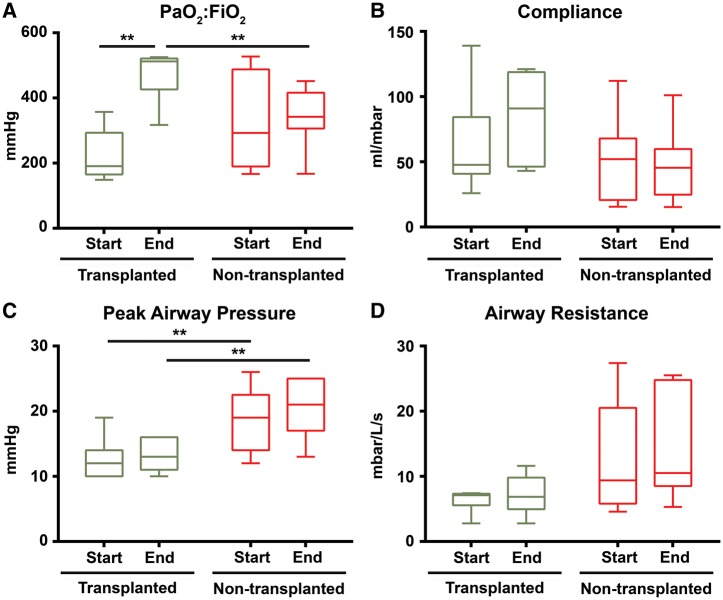
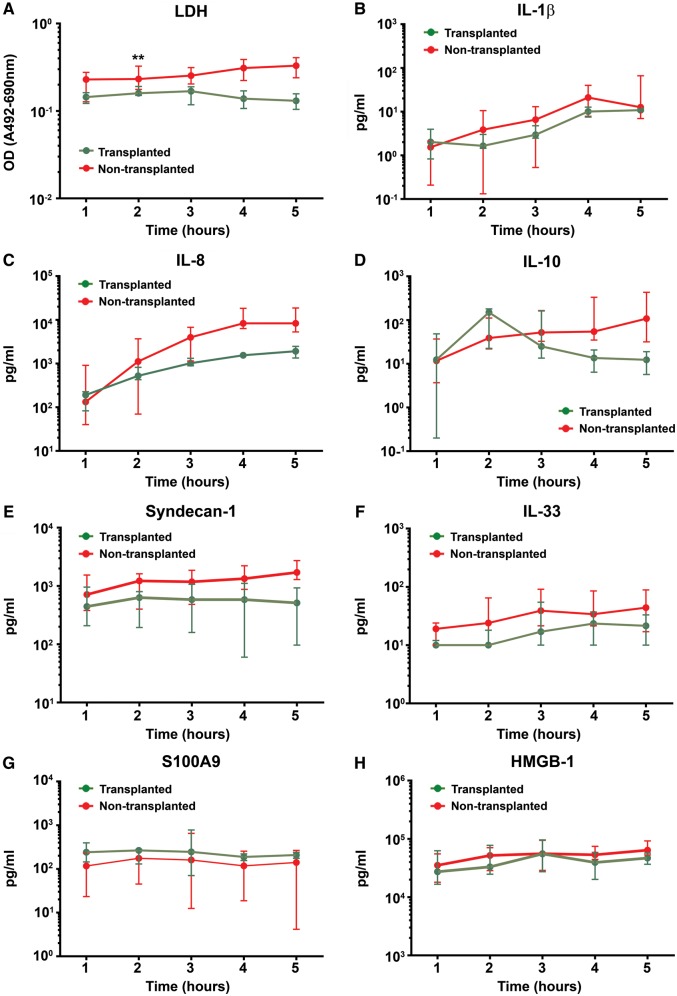
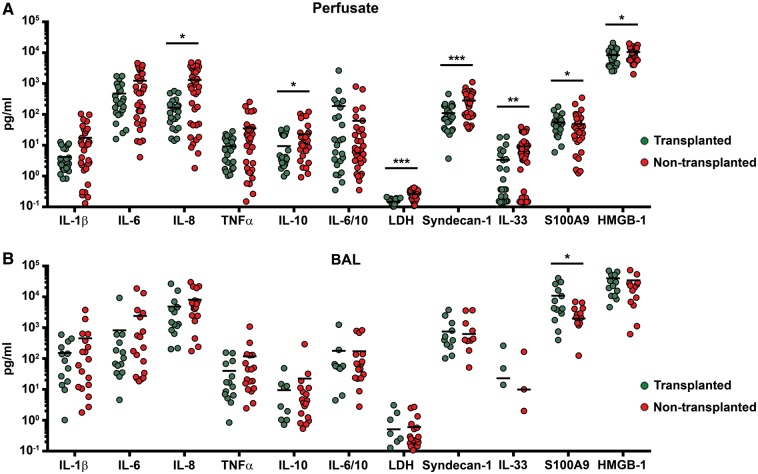
In this pilot study, 16 consecutive donor lungs unsuitable for immediate transplant were assessed by EVLP. Key inflammatory mediators and tissue injury markers were measured in serial perfusate samples collected hourly and in bronchoalveolar lavage fluid (BALF) collected before and after EVLP. Levels were compared between donor lungs that met criteria for transplant and those that did not.
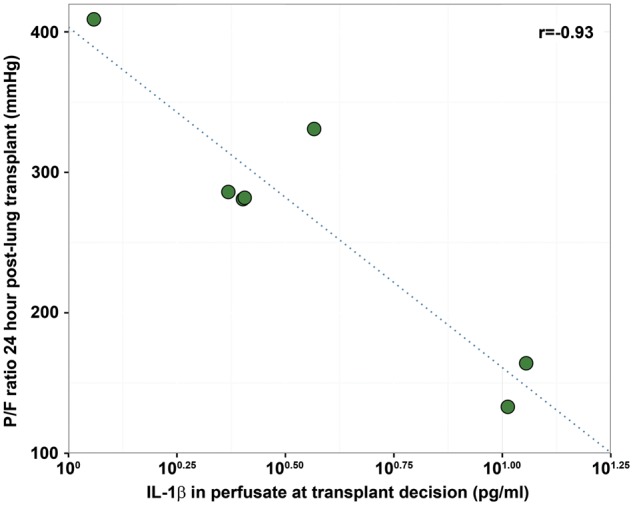
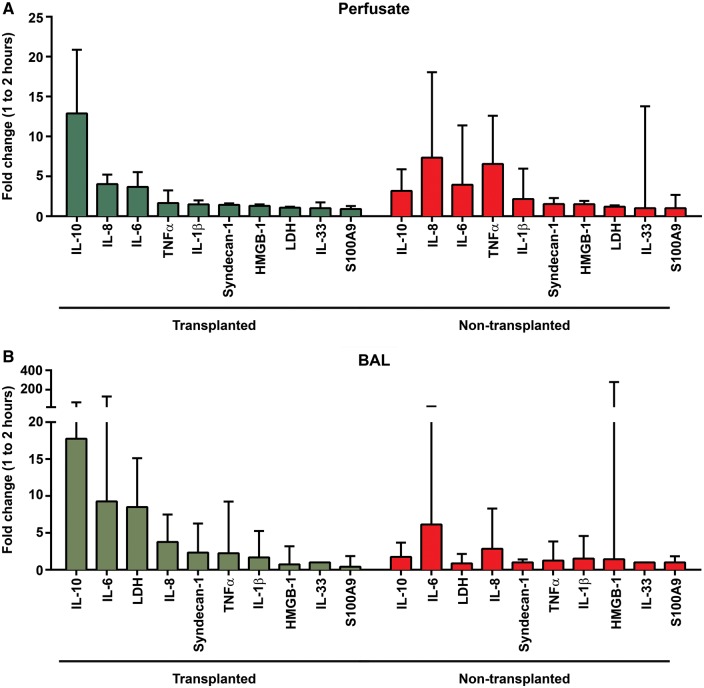
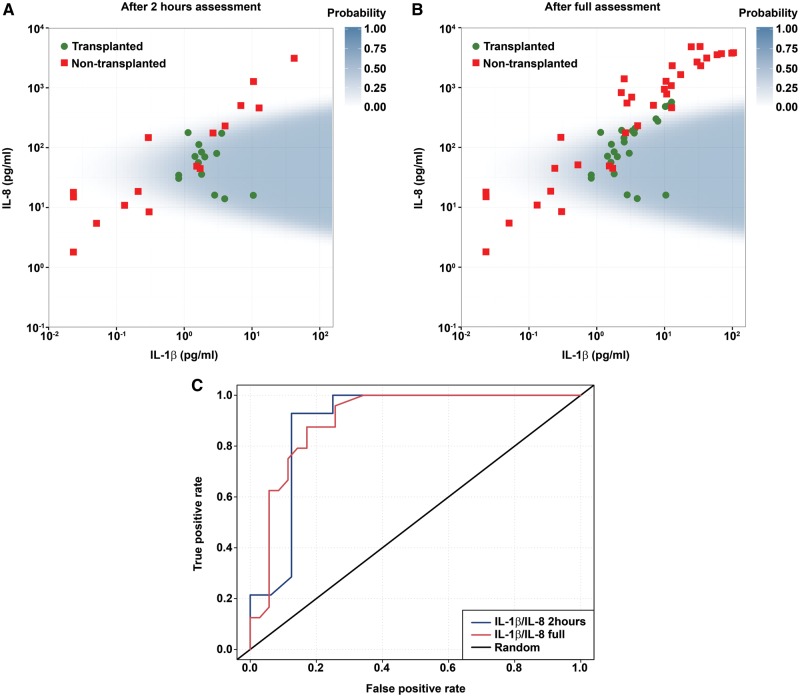
Seven of the 16 donor lungs (44%) improved during EVLP and were transplanted with uniformly good outcomes. Tissue and vascular injury markers lactate dehydrogenase, HMGB-1 and Syndecan-1 were significantly lower in perfusate from transplanted lungs. A model combining IL-1β and IL-8 concentrations in perfusate could predict final EVLP outcome after 2 h assessment. In addition, perfusate IL-1β concentrations showed an inverse correlation to recipient oxygenation 24 h post-transplant.
This study confirms the feasibility of using inflammation and tissue injury markers in perfusate and BALF to identify donor lungs most likely to improve for successful transplant during clinical EVLP. These results support examining this issue in a larger study.
适合移植的供体肺数量无法满足当前需求,这导致了等待名单上的患者死亡。体外肺灌注(EVLP)为客观评估和修复不适合立即移植的器官提供了机会。识别能够在EVLP期间对供体肺进行分层以确定是否使用或进行特定干预的强大生物标志物,可能会进一步提高其临床效果。
在这项初步研究中,通过EVLP对16例连续的不适合立即移植的供体肺进行了评估。每小时收集的系列灌注液样本以及EVLP前后收集的支气管肺泡灌洗液(BALF)中,测量关键炎症介质和组织损伤标志物。比较符合移植标准的供体肺和不符合标准的供体肺之间的水平。
16例供体肺中有7例(44%)在EVLP期间得到改善并进行了移植,移植结果均良好。移植肺灌注液中的组织和血管损伤标志物乳酸脱氢酶、高迁移率族蛋白B1(HMGB-1)和多配体蛋白聚糖-1(Syndecan-1)显著较低。一个结合灌注液中白细胞介素-1β(IL-1β)和白细胞介素-8(IL-8)浓度的模型可以在2小时评估后预测最终的EVLP结果。此外,灌注液中IL-1β浓度与移植后24小时受体的氧合呈负相关。
本研究证实了在灌注液和BALF中使用炎症和组织损伤标志物来识别在临床EVLP期间最有可能改善以成功移植的供体肺的可行性。这些结果支持在更大规模的研究中探讨这个问题。