Cheng Yao, Xiong Xian-Ze, Zhou Rong-Xing, Deng Yi-Lei, Jin Yan-Wen, Lu Jiong, Li Fu-Yu, Cheng Nan-Sheng
Yao Cheng, Xian-Ze Xiong, Rong-Xing Zhou, Yi-Lei Deng, Yan-Wen Jin, Jiong Lu, Fu-Yu Li, Nan-Sheng Cheng, Department of Bile Duct Surgery, West China Hospital, Sichuan University, Chengdu 610041, Sichuan Province, China.
World J Gastroenterol. 2016 Dec 28;22(48):10575-10583. doi: 10.3748/wjg.v22.i48.10575.
To evaluate the feasibility of repairing a common bile duct defect with a decellularized ureteral graft in a porcine model.
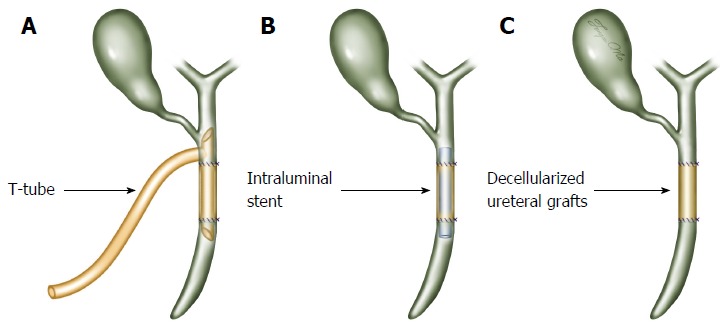
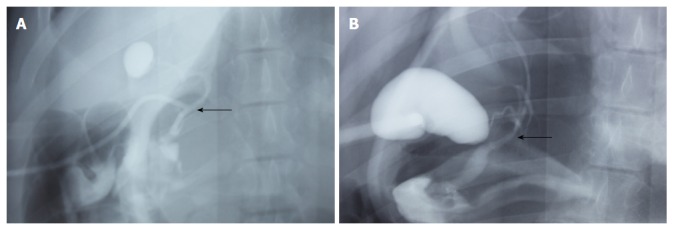
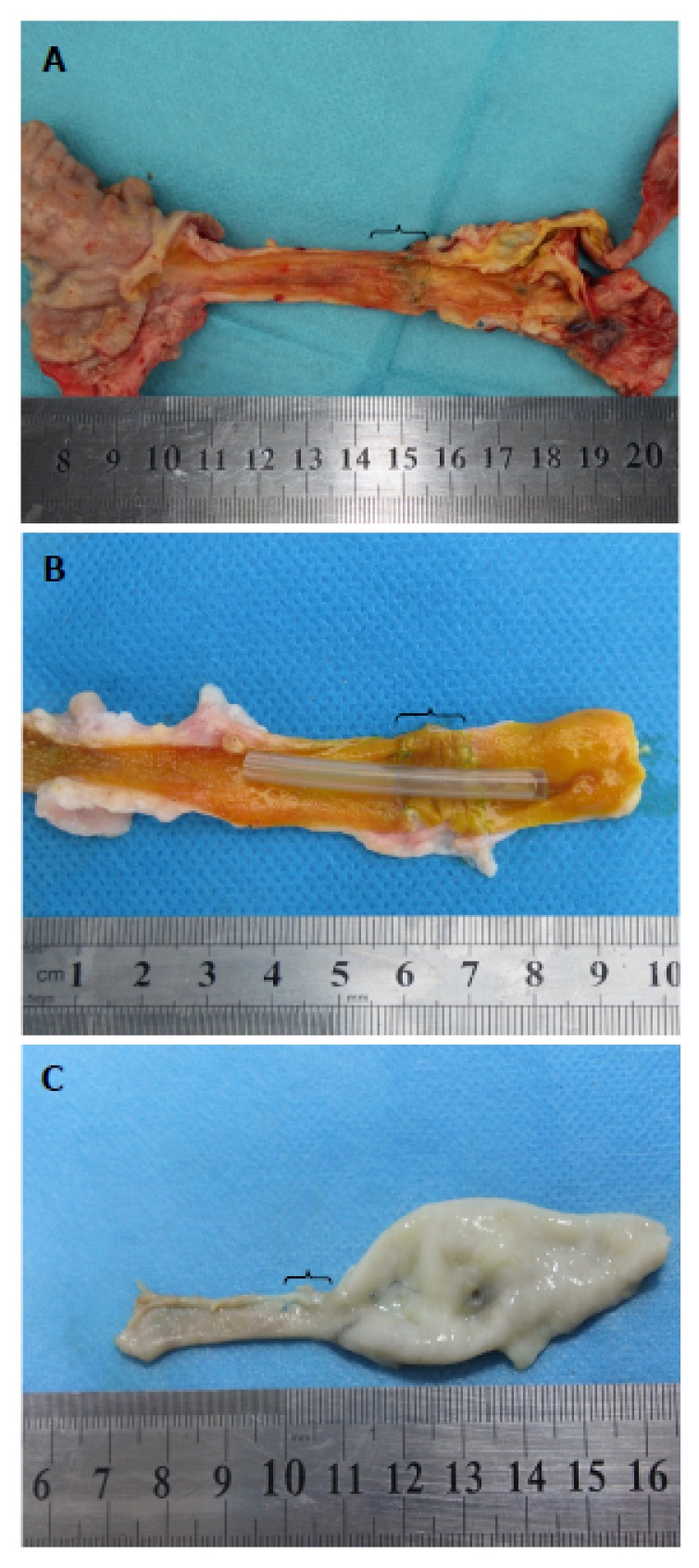
Eighteen pigs were randomly divided into three groups. An approximately 1 cm segment of the common bile duct was excised from all the pigs. The defect was repaired using a 2 cm long decellularized ureteral graft over a T-tube (T-tube group, = 6) or a silicone stent (stent group, = 6). Six pigs underwent bile duct reconstruction with a graft alone (stentless group). The surviving animals were euthanized at 3 mo. Specimens of the common bile ducts were obtained for histological analysis.
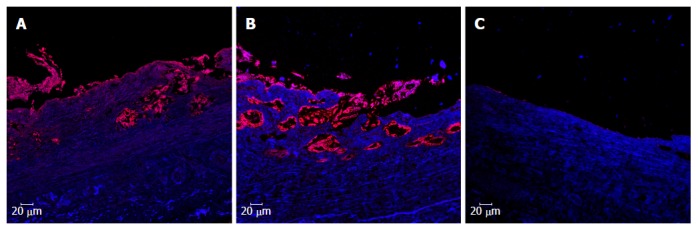
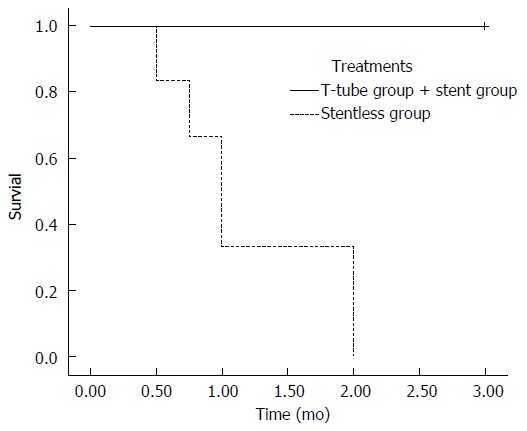
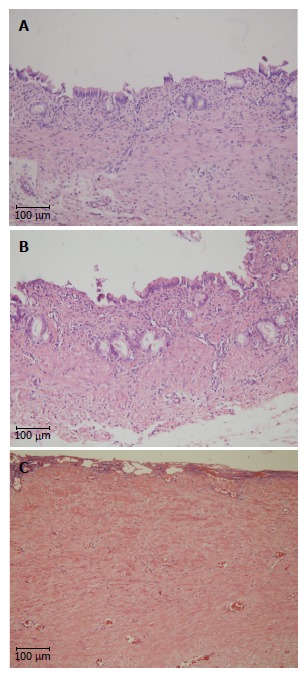
The animals in the T-tube and stent groups survived until sacrifice. The blood test results were normal in both groups. The histology results showed a biliary epithelial layer covering the neo-bile duct. In contrast, all the animals in the stentless group died due to biliary peritonitis and cholangitis within two months post-surgery. Neither biliary epithelial cells nor accessory glands were observed at the graft sites in the stentless group.
Repair of a common bile duct defect with a decellularized ureteral graft appears to be feasible. A T-tube or intraluminal stent was necessary to reduce postoperative complications.
在猪模型中评估使用脱细胞输尿管移植物修复胆总管缺损的可行性。
18只猪被随机分为三组。从所有猪身上切除约1cm长的胆总管节段。使用2cm长的脱细胞输尿管移植物覆盖T形管(T形管组,n = 6)或硅胶支架(支架组,n = 6)修复缺损。6只猪仅用移植物进行胆管重建(无支架组)。存活的动物在3个月时实施安乐死。获取胆总管标本进行组织学分析。
T形管组和支架组的动物存活至处死。两组的血液检测结果均正常。组织学结果显示新胆管有胆管上皮层覆盖。相比之下,无支架组的所有动物在术后两个月内均因胆汁性腹膜炎和胆管炎死亡。在无支架组的移植物部位未观察到胆管上皮细胞和附属腺体。
使用脱细胞输尿管移植物修复胆总管缺损似乎是可行的。需要T形管或腔内支架以减少术后并发症。