Biddle Stuart J H, Edwardson Charlotte L, Gorely Trish, Wilmot Emma G, Yates Thomas, Nimmo Myra A, Khunti Kamlesh, Davies Melanie J
School of Sport, Exercise and Health Sciences, Loughborough University, Loughborough, UK.
The NIHR Leicester-Loughborough Diet, Lifestyle and Physical Activity Biomedical Research Unit, Leicester, UK.
BMC Public Health. 2017 Jan 14;17(1):80. doi: 10.1186/s12889-016-3941-9.
Reducing sedentary behaviour may have important health implications. This study evaluated the potential enablers and barriers for outcomes of a randomised controlled trial (RCT) designed to evaluate a pragmatic education based intervention designed to reduce sedentary (sitting) behaviour in young adults at high risk of type 2 diabetes.
Data were collected from participants in the intervention group immediately after an educational workshop addressing sedentary time and diabetes risk (n = 71), through phone interviews 6 weeks (n = 45) after the workshop, and at the conclusion of the 12-month trial (n = 10). The two education session facilitators were also interviewed about the intervention.
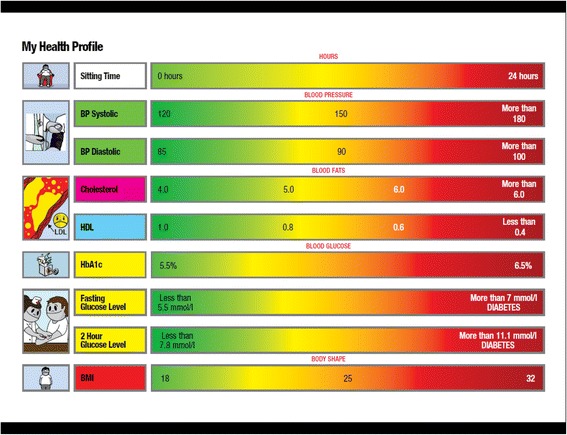
The RCT showed no difference in sedentary time at 12 months between intervention and control arms. The lack of behaviour change appeared not to be attributed to the workshops, which were well led and very favourably received according to feedback. However, factors contributing to this lack of behaviour change include lack of perceived health risk from baseline measures feedback; the preference to adopt physically active behaviours rather than to sit less; certain barriers to sitting less; motivational drift after the 3-month follow-up measurements where participants had no contact for a further 9 months; and, for some, unreliability of the self-monitoring tool.
The workshop was well led and well received by the attendees but future interventions need to consider more contact with participants, discuss any specific benefits around simply standing to reduce sitting time, address the barriers to sitting less, and provide a more user-friendly and reliable self-monitoring tool.
Current controlled trials ISRCTN08434554 , MRC project 91409. Registered retrospectively on 22 February 2011.
减少久坐行为可能对健康具有重要意义。本研究评估了一项随机对照试验(RCT)结果的潜在促进因素和障碍,该试验旨在评估一项基于实用教育的干预措施,该措施旨在减少2型糖尿病高危年轻成年人的久坐(坐姿)行为。
在一个针对久坐时间和糖尿病风险的教育工作坊结束后,立即从干预组的参与者中收集数据(n = 71),在工作坊结束6周后通过电话访谈收集数据(n = 45),并在12个月试验结束时收集数据(n = 10)。还就干预措施对两位教育课程主持人进行了访谈。
随机对照试验表明,干预组和对照组在12个月时的久坐时间没有差异。行为没有改变似乎并非归因于工作坊,根据反馈,工作坊的主持很好且受到好评。然而,导致这种行为缺乏改变的因素包括:从基线测量反馈中未察觉到健康风险;更倾向于采取体育活动行为而非减少久坐;减少久坐存在某些障碍;在3个月随访测量后出现动机漂移,参与者在接下来的9个月没有联系;以及对一些人来说,自我监测工具不可靠。
该工作坊主持良好且受到参与者好评,但未来的干预措施需要考虑与参与者有更多接触,讨论单纯站立以减少久坐时间的任何具体益处,解决减少久坐的障碍,并提供更用户友好和可靠的自我监测工具。
当前受控试验ISRCTN08434554,医学研究理事会项目91409。于2011年2月22日追溯注册。