Schröter Jenny, Schiller Jürgen
Institute for Medical Physics and Biophysics, Faculty of Medicine, Leipzig University, Leipzig, Germany.
Oxid Med Cell Longev. 2016;2016:8386362. doi: 10.1155/2016/8386362. Epub 2016 Dec 20.
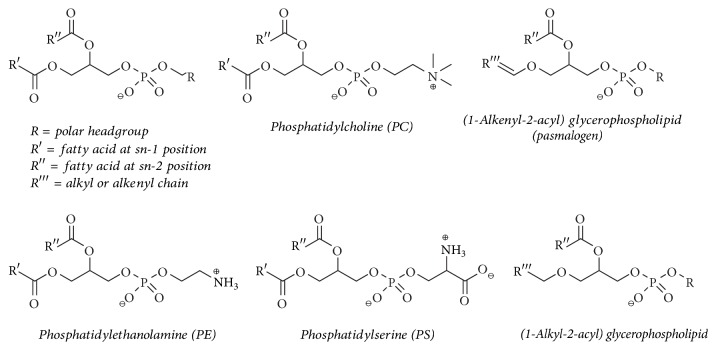
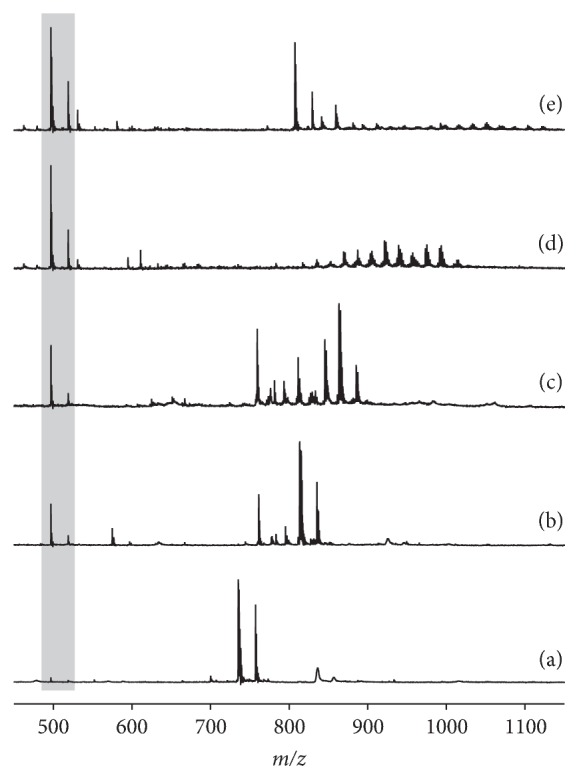
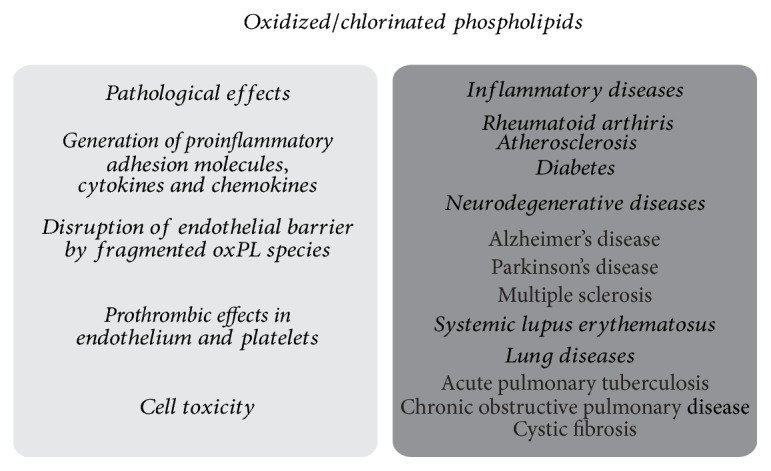
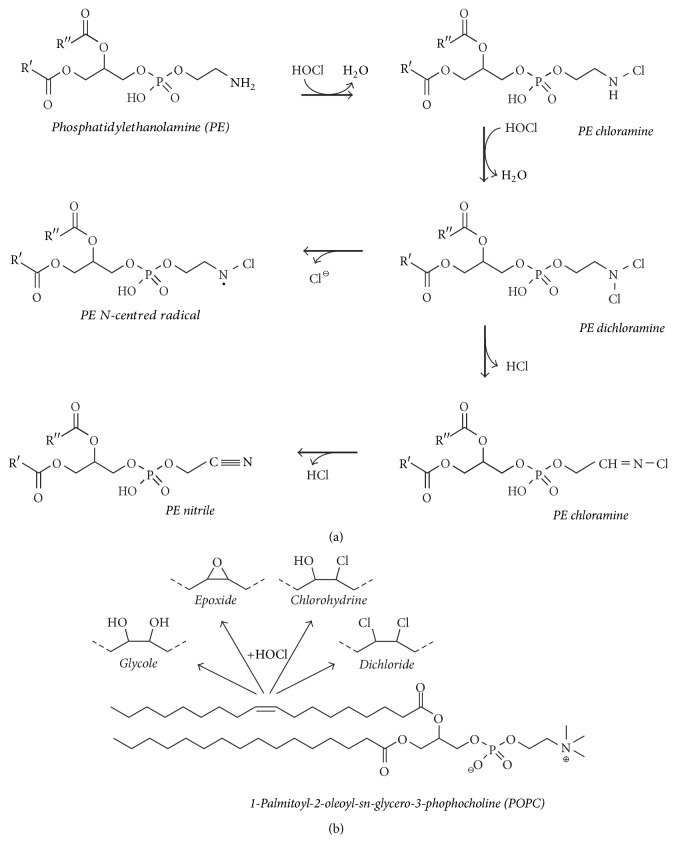
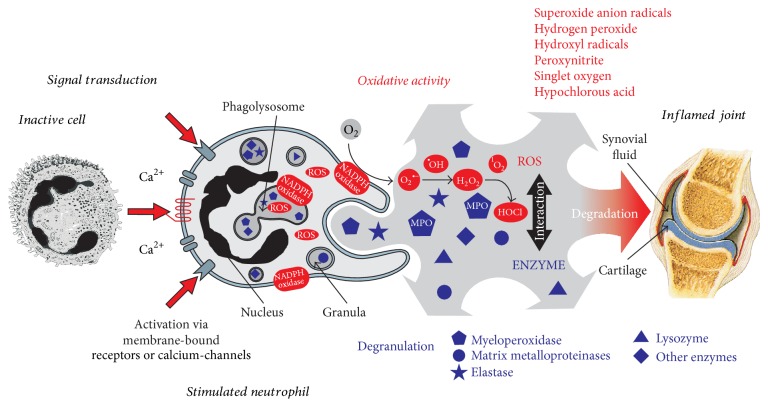
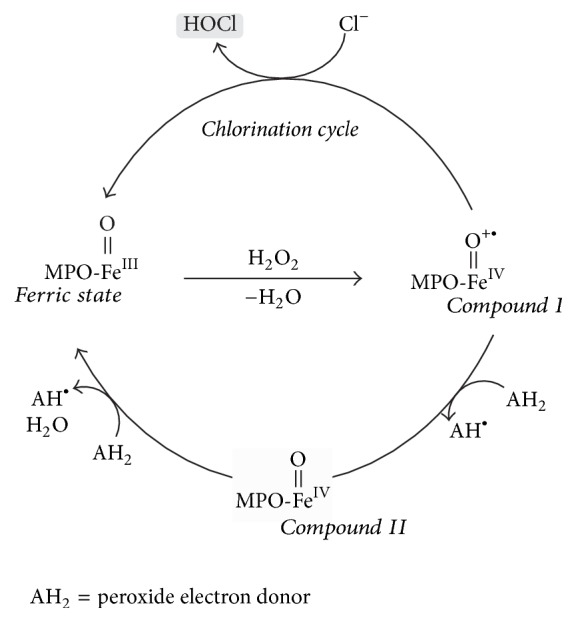
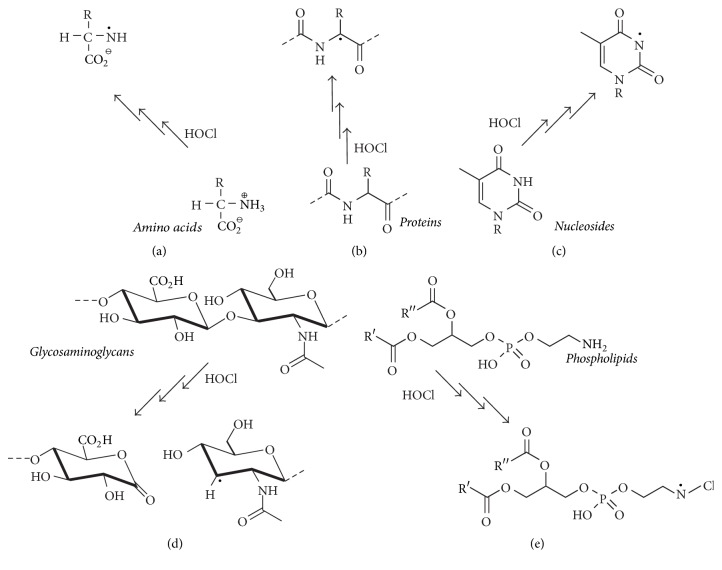
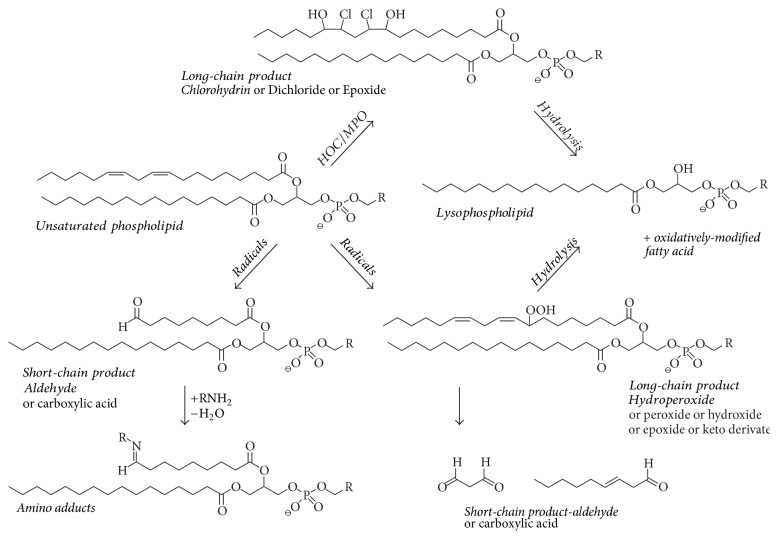
Chlorinated phospholipids are formed by the reaction of hypochlorous acid (HOCl), generated by the enzyme myeloperoxidase under inflammatory conditions, and the unsaturated fatty acyl residues or the head group. In the first case the generated chlorohydrins are both proinflammatory and cytotoxic, thus having a significant impact on the structures of biomembranes. The latter case leads to chloramines, the properties of which are by far less well understood. Since HOCl is also widely used as a disinfecting and antibacterial agent in medicinal, industrial, and domestic applications, it may represent an additional source of danger in the case of abuse or mishandling. This review discusses the reaction behavior of in vivo generated HOCl and biomolecules like DNA, proteins, and carbohydrates but will focus on phospholipids. Not only the beneficial and pathological (toxic) effects of chlorinated lipids but also the importance of these chlorinated species is discussed. Some selected cleavage products of (chlorinated) phospholipids and plasmalogens such as lysophospholipids, (chlorinated) free fatty acids and -chloro fatty aldehydes, which are all well known to massively contribute to inflammatory diseases associated with oxidative stress, will be also discussed. Finally, common analytical methods to study these compounds will be reviewed with focus on mass spectrometric techniques.
氯化磷脂是由炎症条件下髓过氧化物酶产生的次氯酸(HOCl)与不饱和脂肪酰基残基或头部基团反应形成的。在第一种情况下,生成的氯醇具有促炎和细胞毒性,因此对生物膜的结构有重大影响。后一种情况会导致生成氯胺,其性质目前还远未被充分了解。由于HOCl在医药、工业和家庭应用中也被广泛用作消毒剂和抗菌剂,在滥用或处理不当的情况下,它可能是另一个危险因素。本综述讨论了体内生成的HOCl与DNA、蛋白质和碳水化合物等生物分子的反应行为,但将重点关注磷脂。不仅讨论了氯化脂质的有益和病理(毒性)作用,还讨论了这些氯化物种的重要性。还将讨论一些选定的(氯化)磷脂和缩醛磷脂的裂解产物,如溶血磷脂、(氯化)游离脂肪酸和氯代脂肪醛,它们都被认为在与氧化应激相关的炎症疾病中起重要作用。最后,将重点回顾研究这些化合物的常用分析方法,特别是质谱技术。