Food Biosciences, Teagasc Food Research Centre, Fermoy, Co Cork, Ireland.
School of Microbiology, University College Cork, Cork, Ireland.
Sci Rep. 2017 Jan 17;7:40597. doi: 10.1038/srep40597.
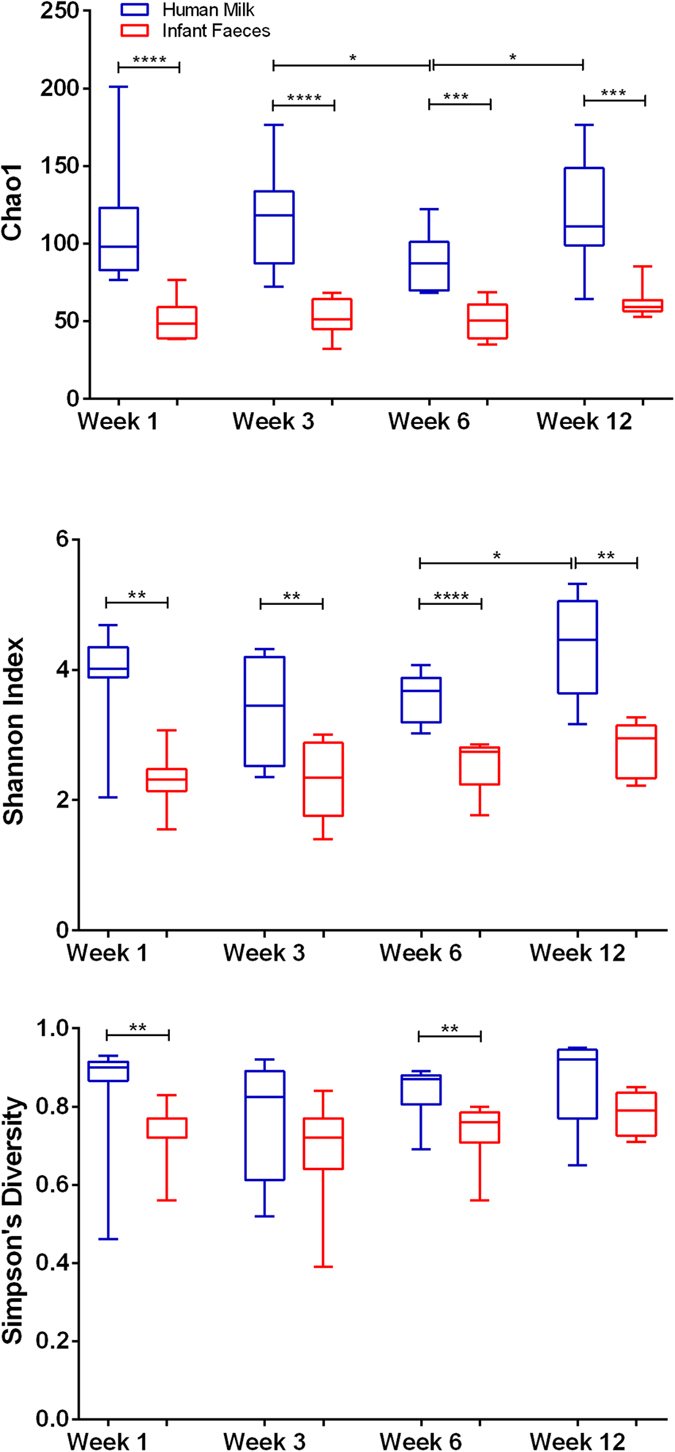
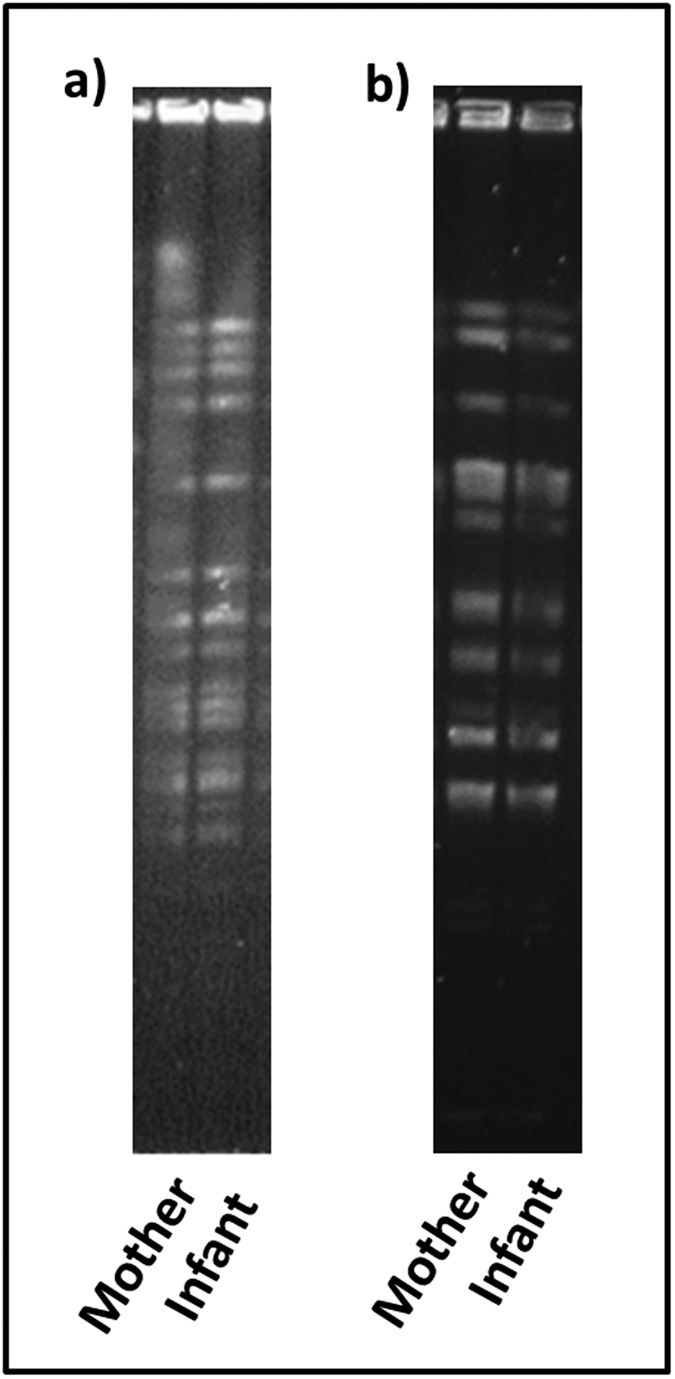
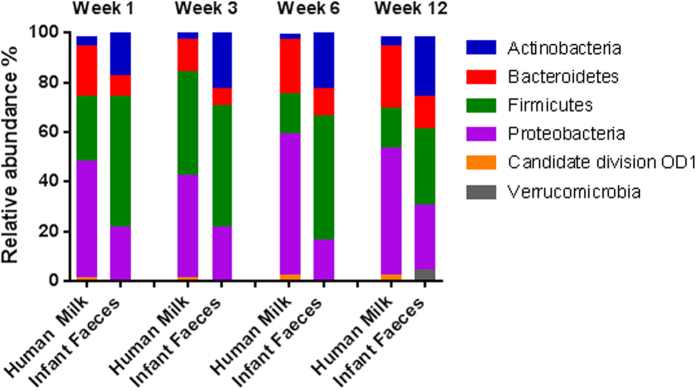
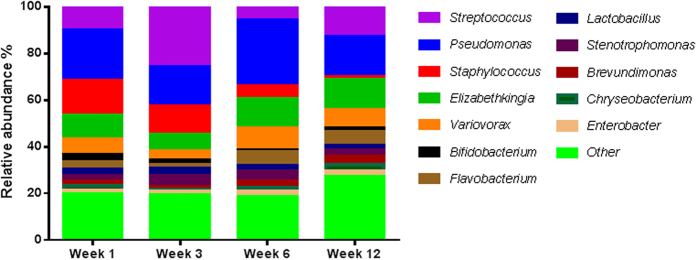
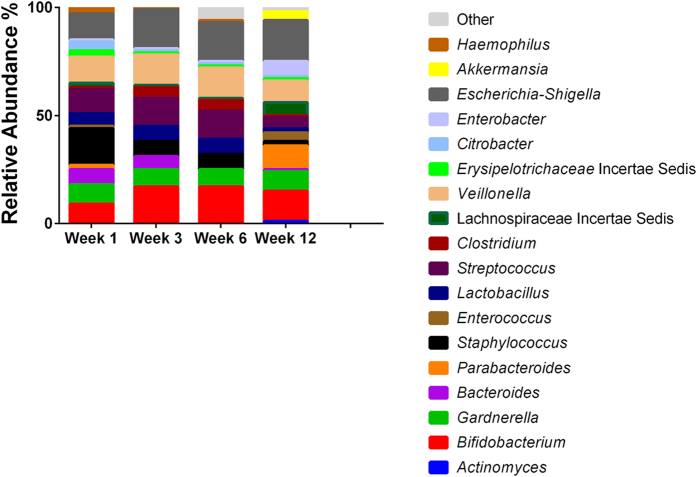
Human milk contains a diverse array of bioactives and is also a source of bacteria for the developing infant gut. The aim of this study was to characterize the bacterial communities in human milk and infant faeces over the first 3 months of life, in 10 mother-infant pairs. The presence of viable Bifidobacterium and Lactobacillus in human milk was also evaluated. MiSeq sequencing revealed a large diversity of the human milk microbiota, identifying over 207 bacterial genera in milk samples. The phyla Proteobacteria and Firmicutes and the genera Pseudomonas, Staphylococcus and Streptococcus were the predominant bacterial groups. A core of 12 genera represented 81% of the microbiota relative abundance in milk samples at week 1, 3 and 6, decreasing to 73% at week 12. Genera shared between infant faeces and human milk samples accounted for 70-88% of the total relative abundance in infant faecal samples, supporting the hypothesis of vertical transfer of bacteria from milk to the infant gut. In addition, identical strains of Bifidobacterium breve and Lactobacillus plantarum were isolated from the milk and faeces of one mother-infant pair. Vertical transfer of bacteria via breastfeeding may contribute to the initial establishment of the microbiota in the developing infant intestine.
人乳含有多种多样的生物活性物质,也是婴儿肠道发育中细菌的来源。本研究旨在描述 10 对母婴人乳和婴儿粪便中菌群在生命最初 3 个月的变化,同时评估人乳中双歧杆菌和乳杆菌的活菌数。MiSeq 测序揭示了人乳微生物群的高度多样性,在乳样本中鉴定出超过 207 个细菌属。乳样本中主要的细菌群体为变形菌门和厚壁菌门,以及假单胞菌属、葡萄球菌属和链球菌属。在第 1、3 和 6 周时,12 个核心属占乳样本中微生物群相对丰度的 81%,到第 12 周时下降至 73%。在婴儿粪便和人乳样本中共享的属占婴儿粪便样本总相对丰度的 70-88%,支持了细菌从乳垂直转移到婴儿肠道的假说。此外,从一对母婴的乳和粪便中分离出了相同的短双歧杆菌和植物乳杆菌菌株。通过母乳喂养进行的细菌垂直转移可能有助于婴儿肠道中微生物群的初始建立。