Yang Qin, Wang Shunhe, Ji Yunqi, Chen Haiqin, Zhang Hao, Chen Wei, Gu Zhennan, Chen Yong Q
State Key Laboratory of Food Science and Technology, School of Food Science and Technology, Jiangnan University, 1800 Lihu Avenue, Wuxi, 214122, People's Republic of China.
Synergistic Innovation Center for Food Safety and Nutrition, Wuxi, 214122, People's Republic of China.
Lipids Health Dis. 2017 Jan 17;16(1):10. doi: 10.1186/s12944-016-0399-9.
Dietary polyunsaturated fatty acids (PUFAs), especially n-3 PUFAs, are important for human health. The intestinal tract, a location that is heavily colonized by microorganisms, is the main organ for absorbing fatty acids.
The purpose of this study was to analyze the effects of dietary n-3 and n-6 PUFAs on the distribution of different types of fatty acids and their bioavailability along the gut. Mice were fed for a week with experimental diets containing high n-3 or high n-6 fatty acid levels. Blood was collected at different time points, and after 7 days the mice were euthanized and their digestive tract was divided into 17 segments for fatty acids analyses.
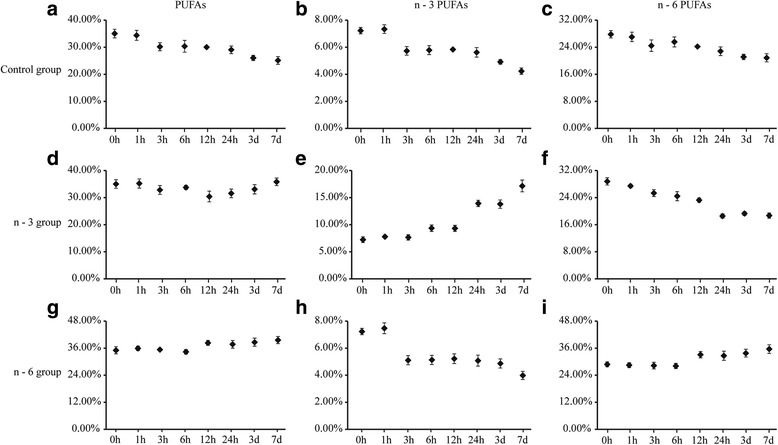
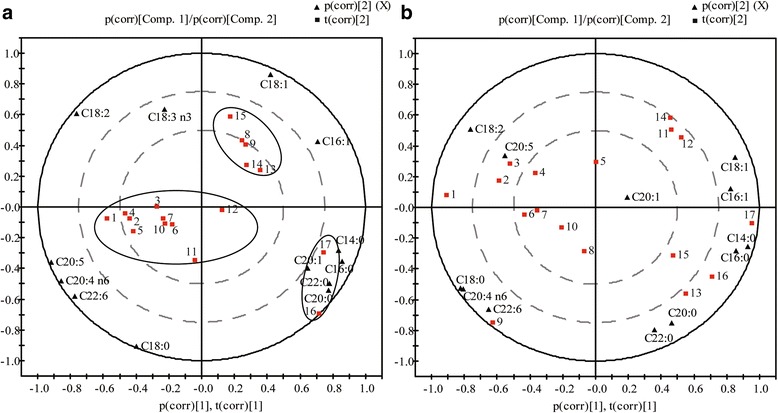
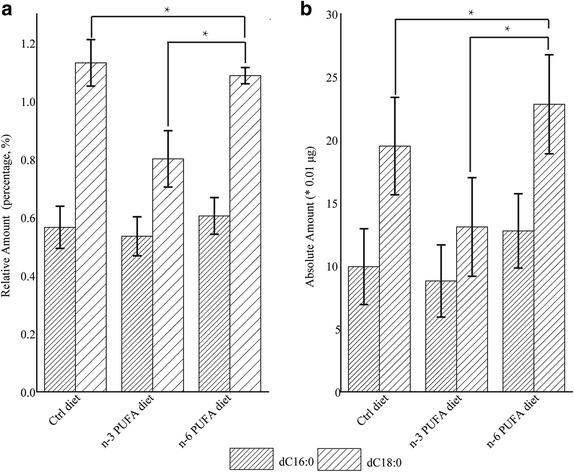
We found that supplementing n-3 fatty acids significantly changed the ratio of n-6/n-3 PUFAs, increased the bioavailability of n-3 PUFAs, and altered fatty acid distribution. In addition, in the n-3 diet group, the absorption of saturated fatty acids (SFAs) along the gut was found to be inhibited, which was confirmed by feeding the mice with a diet containing deuterium-labeled palmitic acid and stearic acid.
These results show that a diet rich in n-3 PUFAs can significantly modify the distribution and bioavailability of fatty acids, and particularly, may block the absorption of SFAs in the mouse gastrointestinal (GI) tract.
膳食多不饱和脂肪酸(PUFAs),尤其是n-3 PUFAs,对人体健康很重要。肠道是微生物大量定植的部位,是吸收脂肪酸的主要器官。
本研究的目的是分析膳食n-3和n-6 PUFAs对不同类型脂肪酸在肠道内分布及其生物利用度的影响。给小鼠喂食含高n-3或高n-6脂肪酸水平的实验性饮食一周。在不同时间点采集血液,7天后对小鼠实施安乐死,并将其消化道分成17段进行脂肪酸分析。
我们发现补充n-3脂肪酸显著改变了n-6/n-3 PUFAs的比例,提高了n-3 PUFAs的生物利用度,并改变了脂肪酸分布。此外,在n-3饮食组中,发现沿肠道的饱和脂肪酸(SFAs)吸收受到抑制,给小鼠喂食含氘标记的棕榈酸和硬脂酸的饮食证实了这一点。
这些结果表明,富含n-3 PUFAs的饮食可显著改变脂肪酸的分布和生物利用度,特别是可能会阻碍小鼠胃肠道(GI)中SFAs的吸收。