Bevan Jones W Richard, Cope Thomas E, Passamonti Luca, Fryer Tim D, Hong Young T, Aigbirhio Franklin, Kril Jillian J, Forrest Shelley L, Allinson Kieren, Coles Jonathan P, Simon Jones P, Spillantini Maria G, Hodges John R, O'Brien John T, Rowe James B
Department of Psychiatry University of Cambridge Cambridge UK.
Department of Clinical Neurosciences University of Cambridge Cambridge UK.
Ann Clin Transl Neurol. 2016 Oct 18;3(12):940-947. doi: 10.1002/acn3.366. eCollection 2016 Dec.
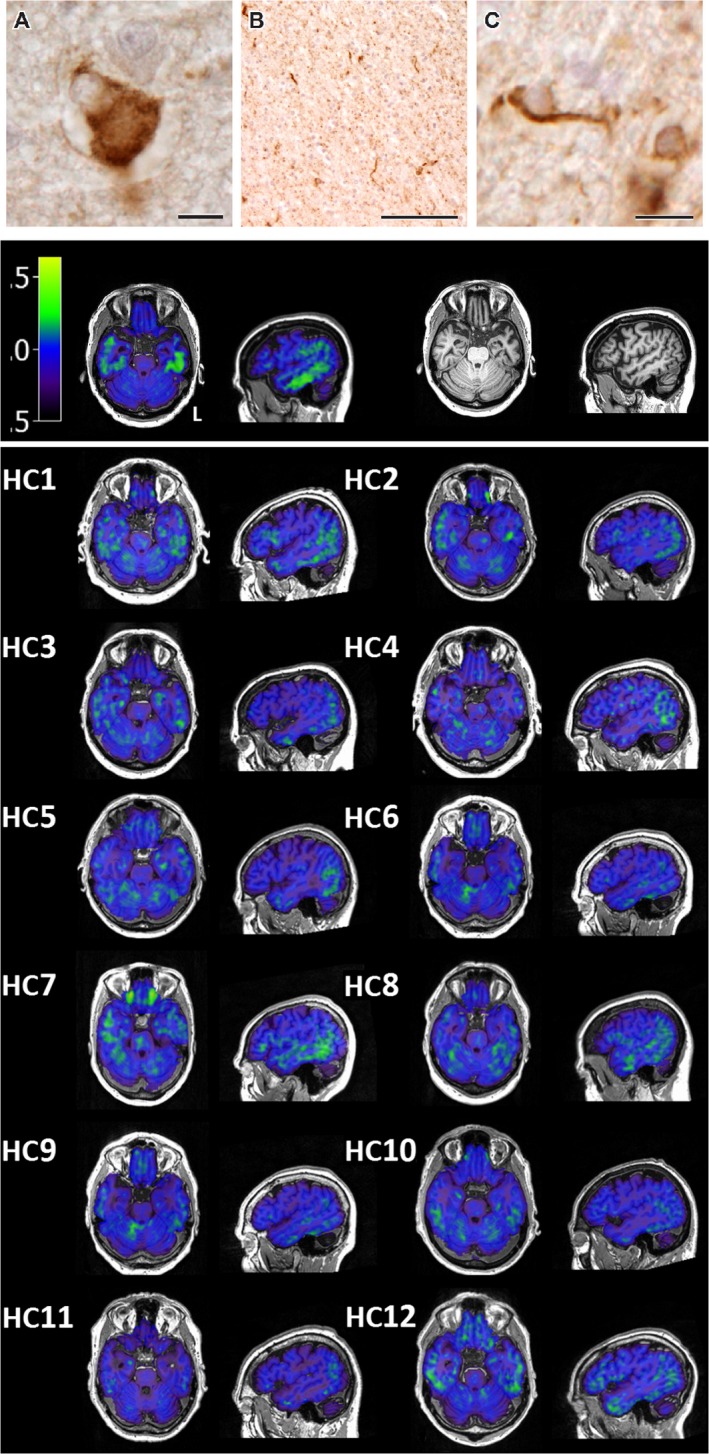
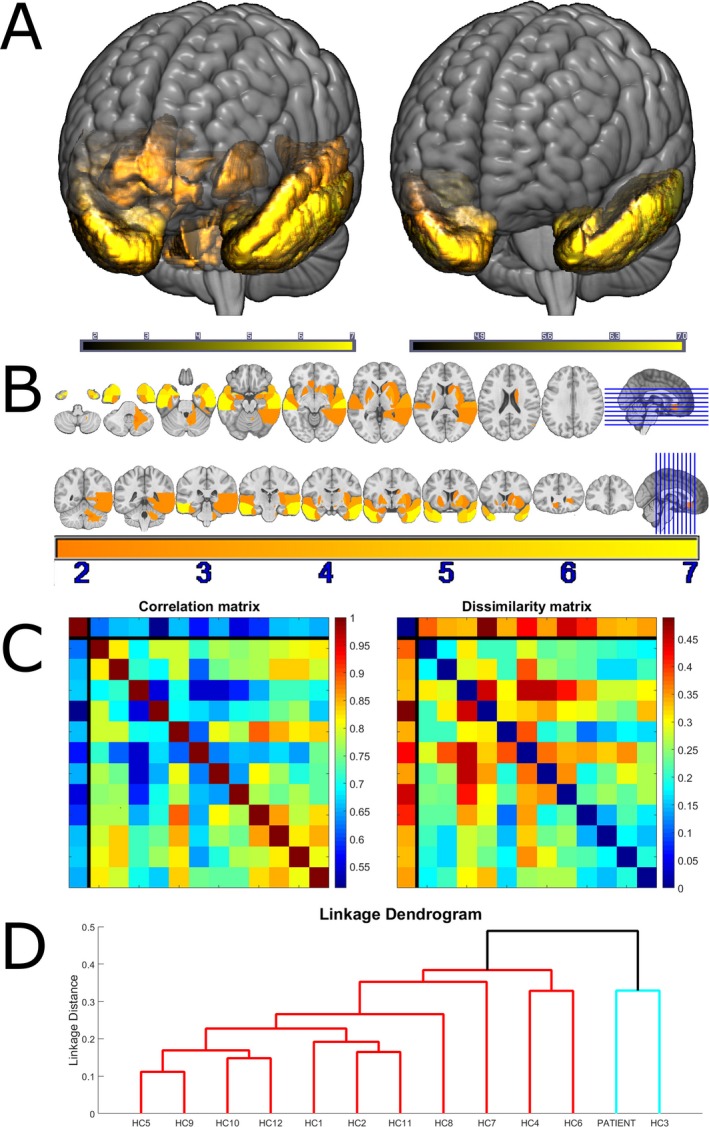
The validation of tau radioligands could improve the diagnosis of frontotemporal lobar degeneration and the assessment of disease-modifying therapies. Here, we demonstrate that binding of the tau radioligand [F]AV-1451 was significantly abnormal in both magnitude and distribution in a patient with familial frontotemporal dementia due to a MAPT 10 + 16C>T gene mutation, recapitulating the pattern of neuropathology seen in her father. Given the genetic diagnosis and the non-Alzheimer's pathology, these findings suggest that [F]AV-1451 might be a useful biomarker in primary tauopathies. Largerscale in vivo and studies will be needed to assess the technique's specificity.
tau放射性配体的验证可以改善额颞叶变性的诊断以及疾病修饰疗法的评估。在此,我们证明,由于MAPT 10 + 16C>T基因突变,一名家族性额颞叶痴呆患者体内tau放射性配体[F]AV-1451的结合在数量和分布上均显著异常,重现了在她父亲身上看到的神经病理学模式。鉴于基因诊断和非阿尔茨海默病病理学特征,这些发现表明,[F]AV-1451可能是原发性tau蛋白病的一种有用生物标志物。需要进行更大规模的体内研究来评估该技术的特异性。