Department of Materials Science and Engineering, Stanford University, CA 94305, USA.
Department of Chemical Engineering, Stanford University, CA 94305, USA.
Sci Adv. 2017 Jan 13;3(1):e1601978. doi: 10.1126/sciadv.1601978. eCollection 2017 Jan.
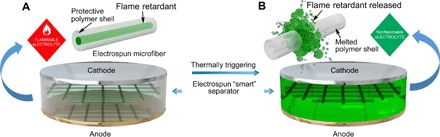
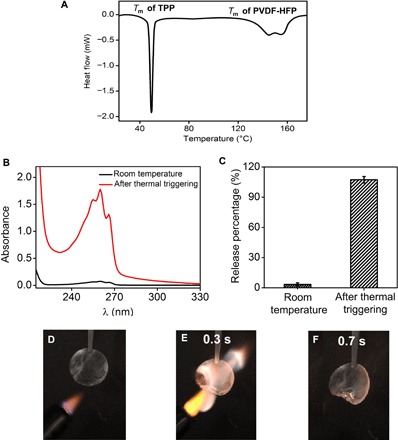
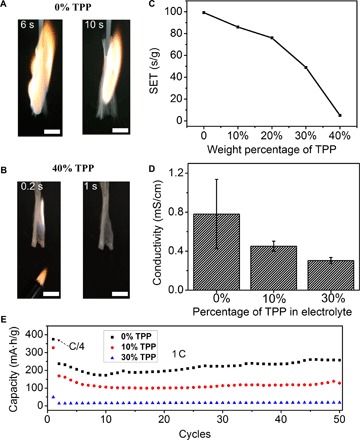
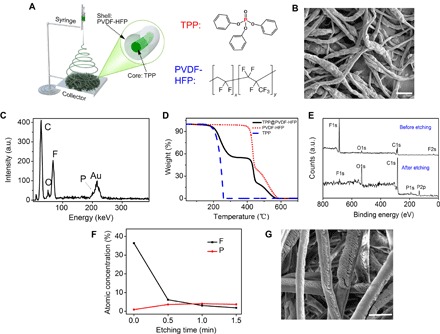
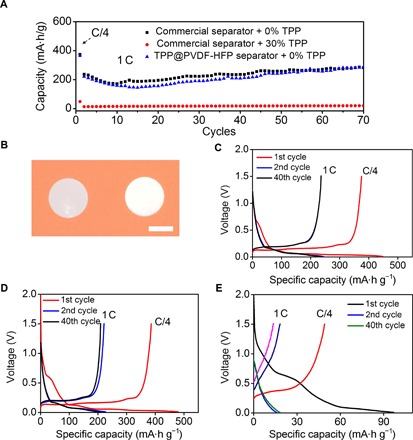
Although the energy densities of batteries continue to increase, safety problems (for example, fires and explosions) associated with the use of highly flammable liquid organic electrolytes remain a big issue, significantly hindering further practical applications of the next generation of high-energy batteries. We have fabricated a novel "smart" nonwoven electrospun separator with thermal-triggered flame-retardant properties for lithium-ion batteries. The encapsulation of a flame retardant inside a protective polymer shell has prevented direct dissolution of the retardant agent into the electrolyte, which would otherwise have negative effects on battery performance. During thermal runaway of the lithium-ion battery, the protective polymer shell would melt, triggered by the increased temperature, and the flame retardant would be released, thus effectively suppressing the combustion of the highly flammable electrolytes.
尽管电池的能量密度不断提高,但与使用高度易燃的液体有机电解质相关的安全问题(例如火灾和爆炸)仍然是一个大问题,这极大地阻碍了下一代高能电池的进一步实际应用。我们已经制造出一种新型的具有热触发阻燃性能的“智能”无纺电纺分离器,用于锂离子电池。将阻燃剂封装在保护性聚合物壳内,可防止阻燃剂直接溶解在电解质中,否则这会对电池性能产生负面影响。在锂离子电池发生热失控时,保护性聚合物壳会因温度升高而熔化,触发阻燃剂的释放,从而有效抑制高度易燃电解质的燃烧。