Wanda Elijah M M, Nyoni Hlengilizwe, Mamba Bhekie B, Msagati Titus A M
Nanotechnology and Water Sustainability Research Unit, College of Science Engineering and Technology, University of South Africa, P.O. Box 392, UNISA 003, Florida, Roodepoort 1709, Johannesburg, South Africa.
Int J Environ Res Public Health. 2017 Jan 13;14(1):79. doi: 10.3390/ijerph14010079.
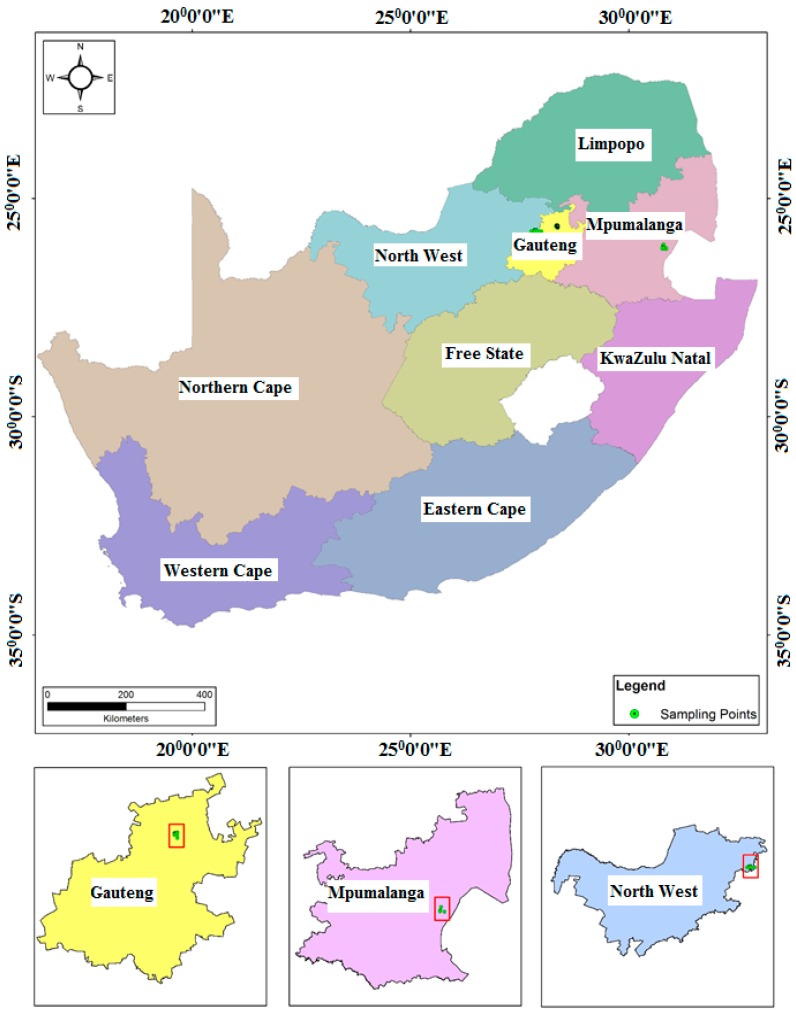
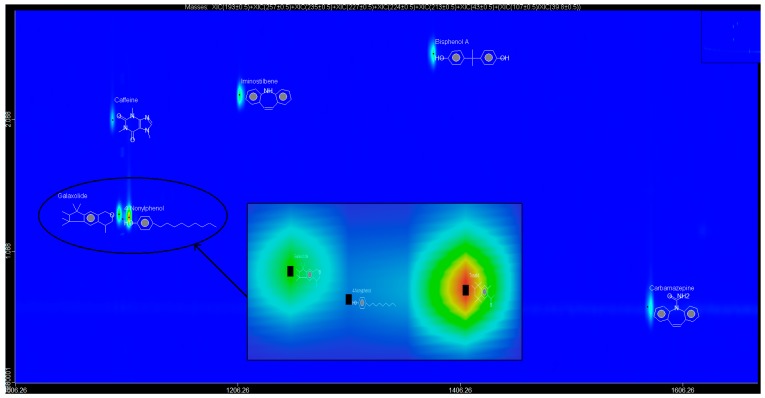
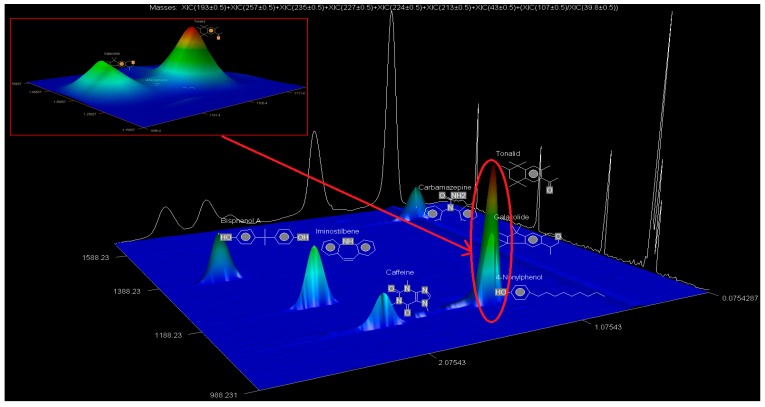
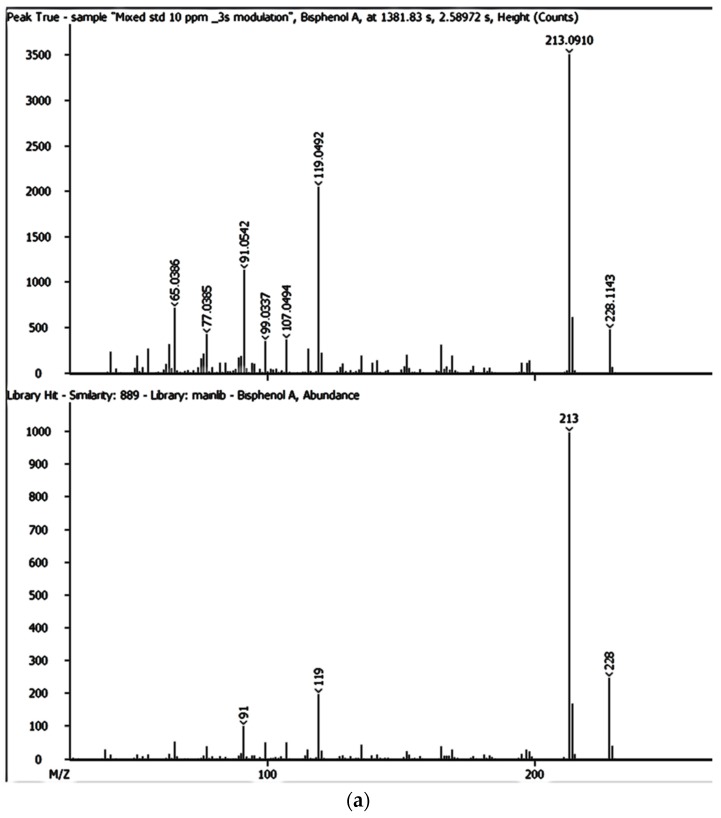
The ubiquitous occurrence of emerging micropollutants (EMPs) in water is an issue of growing environmental-health concern worldwide. However, there remains a paucity of data regarding their levels and occurrence in water. This study determined the occurrence of EMPs namely: carbamazepine (CBZ), galaxolide (HHCB), caffeine (CAF), tonalide (AHTN), 4-nonylphenol (NP), and bisphenol A (BPA) in water from Gauteng, Mpumalanga, and North West provinces, South Africa using comprehensive two-dimensional gas chromatography coupled to high resolution time-of-flight mass spectrometry (GCxGC-HRTOFMS). Kruskal-Wallis test and ANOVA were performed to determine temporal variations in occurrence of the EMPs. Principal component analysis (PCA) and Surfer Golden Graphics software for surface mapping were used to determine spatial variations in levels and occurrence of the EMPs. The mean levels ranged from 11.22 ± 18.8 ng/L for CAF to 158.49 ± 662 ng/L for HHCB. There was no evidence of statistically significant temporal variations in occurrence of EMPs in water. Nevertheless, their levels and occurrence vary spatially and are a function of two principal components (PCs, PC1 and PC2) which controlled 89.99% of the variance. BPA was the most widely distributed EMP, which was present in 62% of the water samples. The detected EMPs pose ecotoxicological risks in water samples, especially those from Mpumalanga province.
新兴微污染物(EMPs)在水体中普遍存在,这一问题在全球范围内引发了越来越多的环境与健康担忧。然而,关于它们在水体中的含量及存在情况的数据仍然匮乏。本研究采用全二维气相色谱-高分辨飞行时间质谱联用仪(GCxGC-HRTOFMS),测定了南非豪登省、姆普马兰加省和西北省水体中EMPs的存在情况,这些EMPs包括:卡马西平(CBZ)、佳乐麝香(HHCB)、咖啡因(CAF)、吐纳麝香(AHTN)、4-壬基酚(NP)和双酚A(BPA)。采用Kruskal-Wallis检验和方差分析来确定EMPs存在情况的时间变化。运用主成分分析(PCA)和用于表面制图的Surfer Golden Graphics软件来确定EMPs含量及存在情况的空间变化。平均含量范围从CAF的11.22±18.8纳克/升至HHCB的158.49±662纳克/升。没有证据表明水体中EMPs的存在情况存在统计学上显著的时间变化。然而,它们的含量及存在情况在空间上有所不同,并且是控制了89.99%方差的两个主成分(PC1和PC2)的函数。BPA是分布最广的EMPs,存在于62%的水样中。检测到的EMPs对水样构成生态毒理学风险,尤其是来自姆普马兰加省的水样。