Ferreira-Paim Kennio, Andrade-Silva Leonardo, Fonseca Fernanda M, Ferreira Thatiana B, Mora Delio J, Andrade-Silva Juliana, Khan Aziza, Dao Aiken, Reis Eduardo C, Almeida Margarete T G, Maltos Andre, Junior Virmondes R, Trilles Luciana, Rickerts Volker, Chindamporn Ariya, Sykes Jane E, Cogliati Massimo, Nielsen Kirsten, Boekhout Teun, Fisher Matthew, Kwon-Chung June, Engelthaler David M, Lazéra Marcia, Meyer Wieland, Silva-Vergara Mario L
Molecular Mycology Research Laboratory, Centre for Infectious Diseases and Microbiology, Marie Bashir Institute for Emerging Infectious Diseases and Biosecurity, Sydney Medical School-Westmead Hospital, The Westmead Institute for Medical Research, The University of Sydney, Sydney, Australia.
Infectious Disease Department, Triangulo Mineiro Federal University, Uberaba, Brazil.
PLoS Negl Trop Dis. 2017 Jan 18;11(1):e0005223. doi: 10.1371/journal.pntd.0005223. eCollection 2017 Jan.
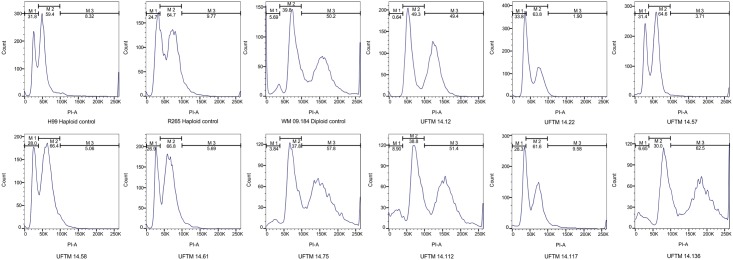
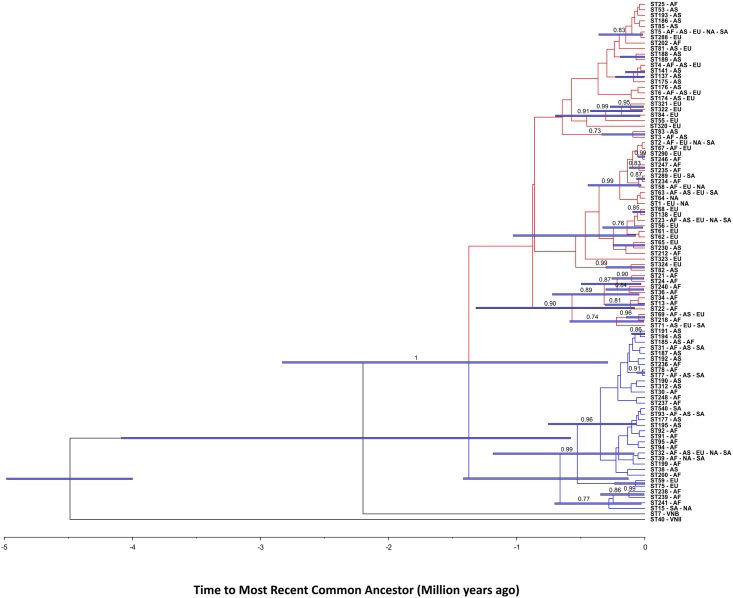
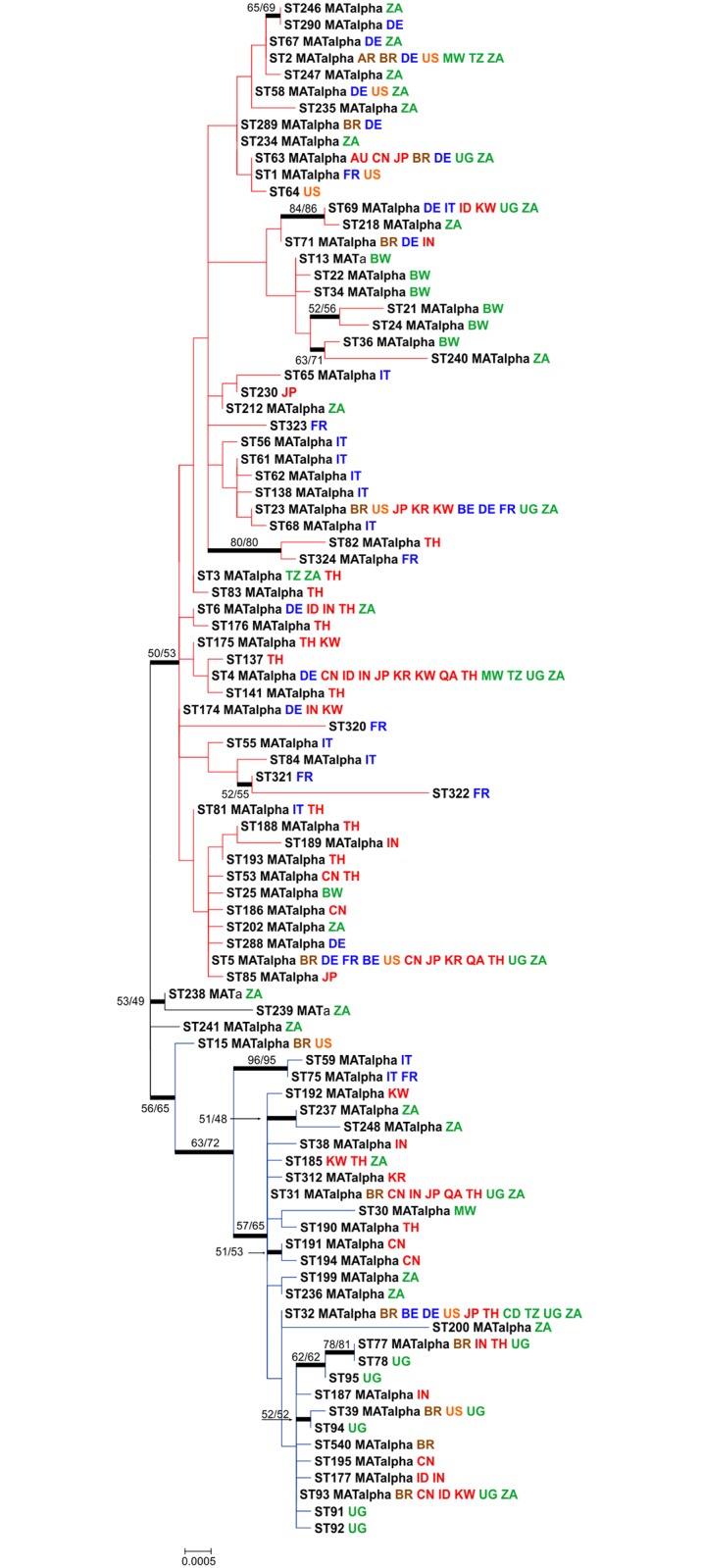
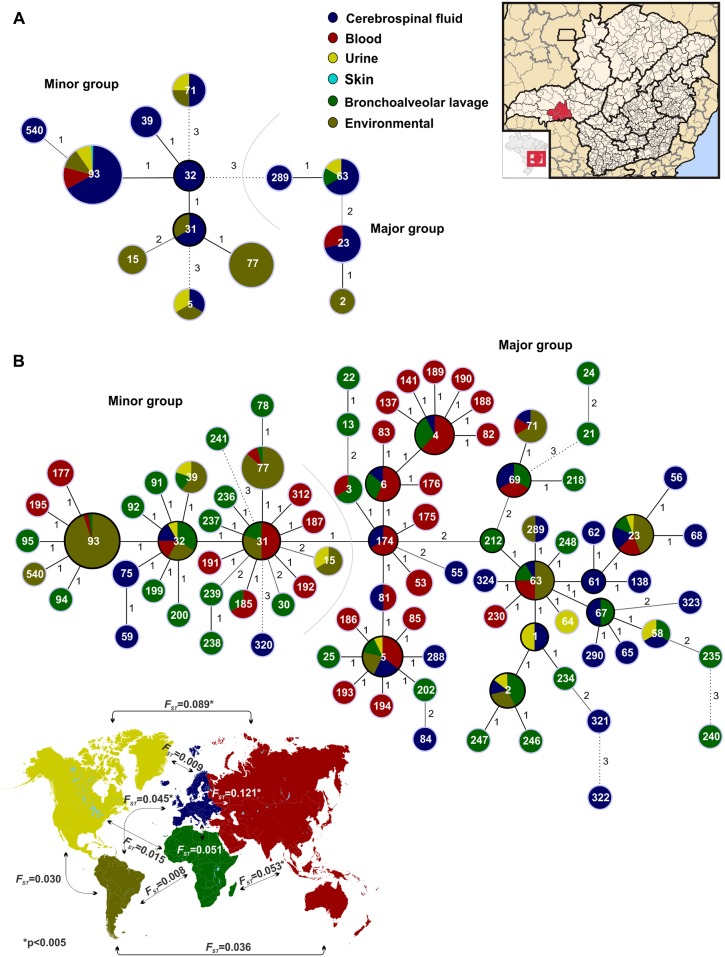
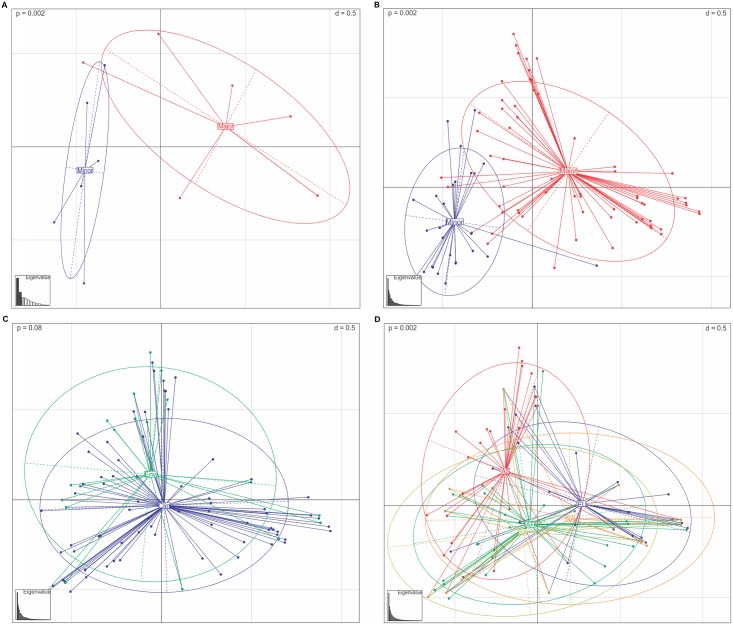
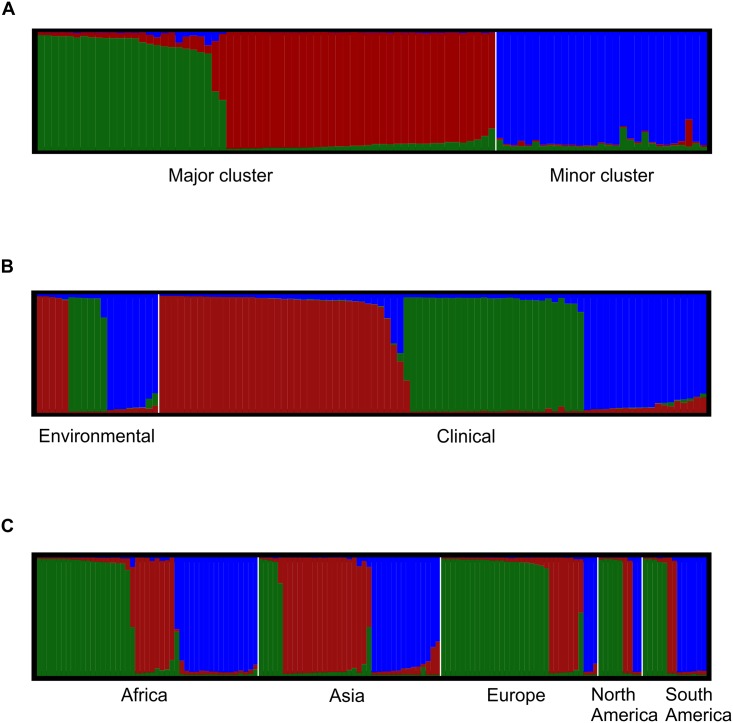
Cryptococcosis is an important fungal infection in immunocompromised individuals, especially those infected with HIV. In Brazil, despite the free availability of antiretroviral therapy (ART) in the public health system, the mortality rate due to Cryptococcus neoformans meningitis is still high. To obtain a more detailed picture of the population genetic structure of this species in southeast Brazil, we studied 108 clinical isolates from 101 patients and 35 environmental isolates. Among the patients, 59% had a fatal outcome mainly in HIV-positive male patients. All the isolates were found to be C. neoformans var. grubii major molecular type VNI and mating type locus alpha. Twelve were identified as diploid by flow cytometry, being homozygous (AαAα) for the mating type and by PCR screening of the STE20, GPA1, and PAK1 genes. Using the ISHAM consensus multilocus sequence typing (MLST) scheme, 13 sequence types (ST) were identified, with one being newly described. ST93 was identified from 81 (75%) of the clinical isolates, while ST77 and ST93 were identified from 19 (54%) and 10 (29%) environmental isolates, respectively. The southeastern Brazilian isolates had an overwhelming clonal population structure. When compared with populations from different continents based on data extracted from the ISHAM-MLST database (mlst.mycologylab.org) they showed less genetic variability. Two main clusters within C. neoformans var. grubii VNI were identified that diverged from VNB around 0.58 to 4.8 million years ago.
隐球菌病是免疫功能低下个体尤其是感染HIV者中一种重要的真菌感染。在巴西,尽管公共卫生系统中可免费获得抗逆转录病毒疗法(ART),但新型隐球菌脑膜炎导致的死亡率仍然很高。为了更详细地了解巴西东南部该物种的群体遗传结构,我们研究了来自101名患者的108株临床分离株和35株环境分离株。在这些患者中,59%有致命结局,主要是HIV阳性男性患者。所有分离株均被鉴定为新型隐球菌变种格鲁比变种,主要分子类型为VNI,交配型位点为α。通过流式细胞术鉴定出12株为二倍体,其交配型为纯合子(AαAα),并通过对STE20、GPA1和PAK1基因进行PCR筛选得以确认。使用ISHAM共识多位点序列分型(MLST)方案,鉴定出13种序列类型(ST),其中一种为新描述的类型。81株(75%)临床分离株鉴定为ST93,而19株(54%)和10株(29%)环境分离株分别鉴定为ST77和ST93。巴西东南部的分离株具有压倒性的克隆群体结构。与基于从ISHAM-MLST数据库(mlst.mycologylab.org)提取的数据的不同大陆群体相比,它们显示出较少的遗传变异性。在新型隐球菌变种格鲁比变种VNI内鉴定出两个主要聚类,它们在大约0.58至480万年前与VNB分化。