Jackson Katrina M, Kono Thomas J Y, Betancourt Jovany J, Wang Yina, Kabbale Kisakye D, Ding Minna, Kezh Perry, Ha Grace, Yoder J Marina, Fulton Sophie R, Mukaremera Liliane, Tiffin Peter, Gusa Asiya, Meya David B, Billmyre R Blake, Xue Chaoyang, Nielsen Kirsten
Department of Microbiology and Immunology, University of Minnesota, Minneapolis, MN, USA.
Pathogen and Microbiome Institute, Northern Arizona University, Flagstaff, AZ, USA.
Nat Commun. 2024 Dec 2;15(1):10491. doi: 10.1038/s41467-024-54729-6.
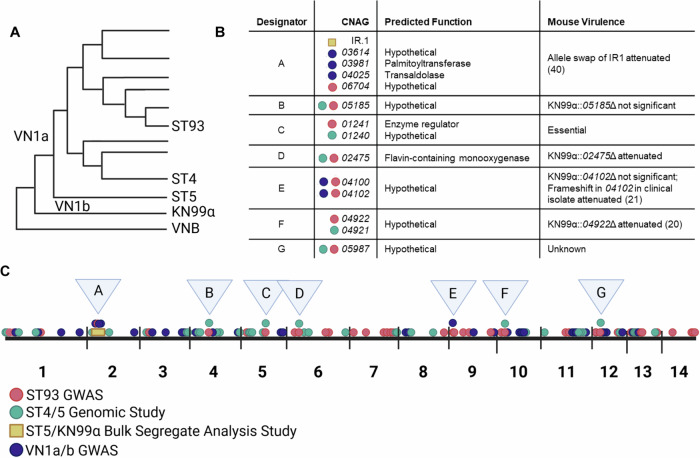
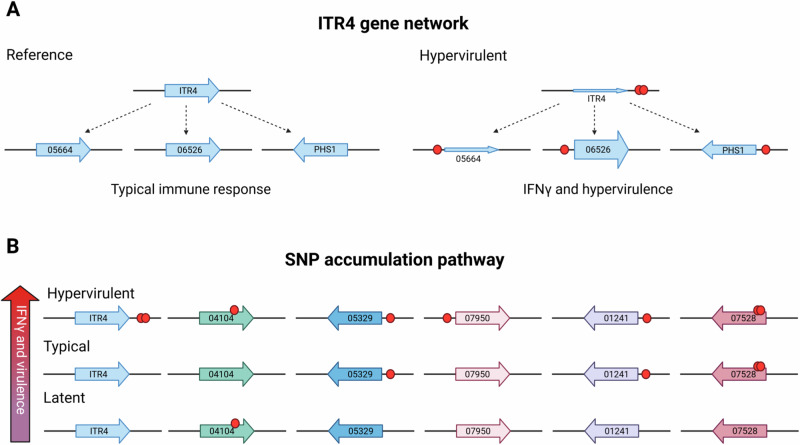
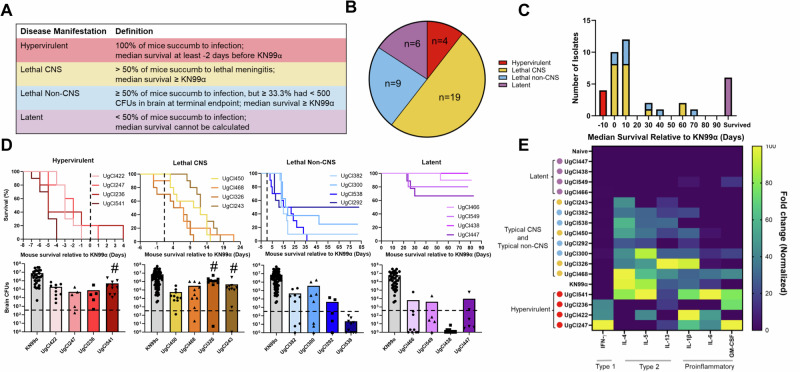
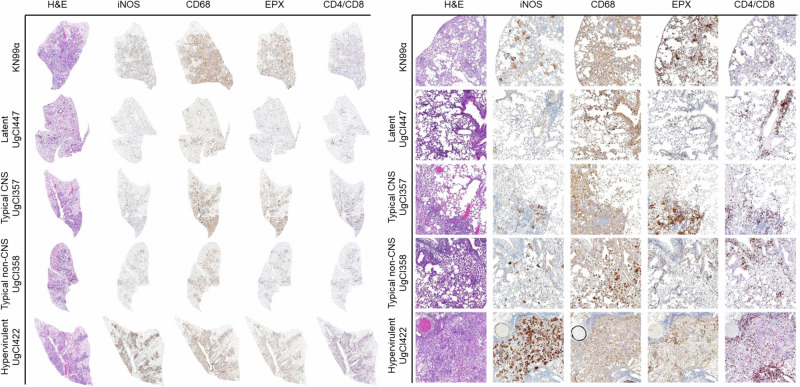
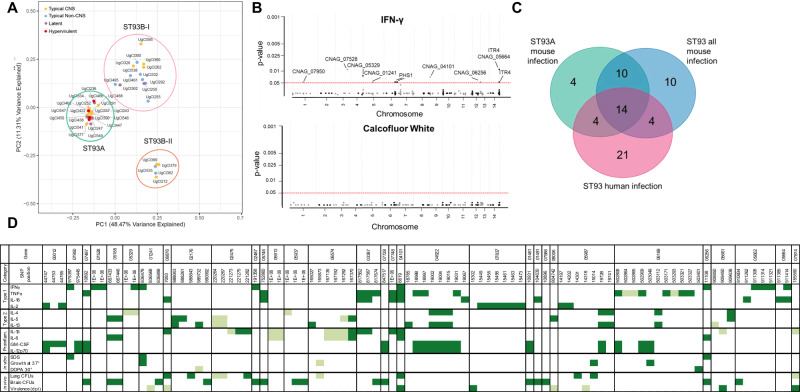
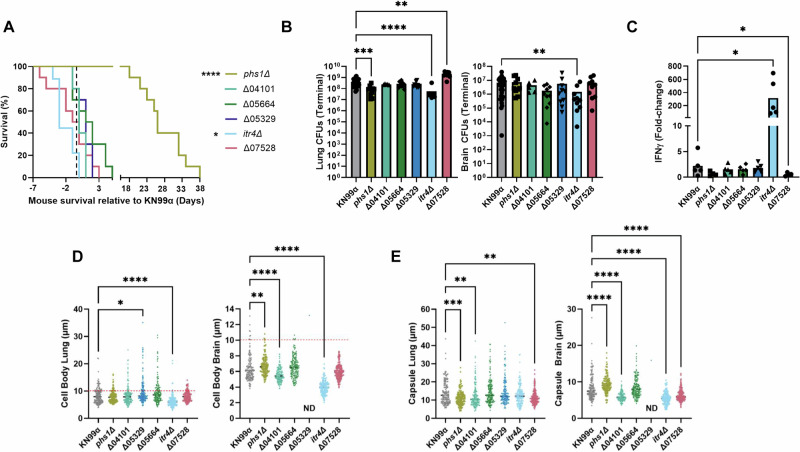
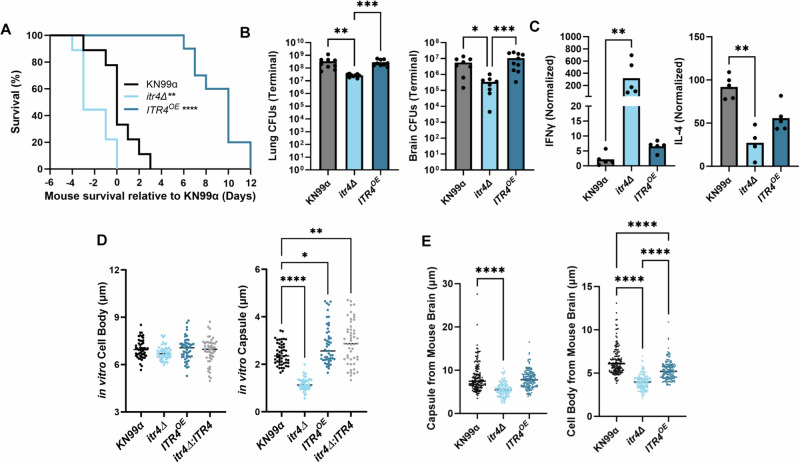
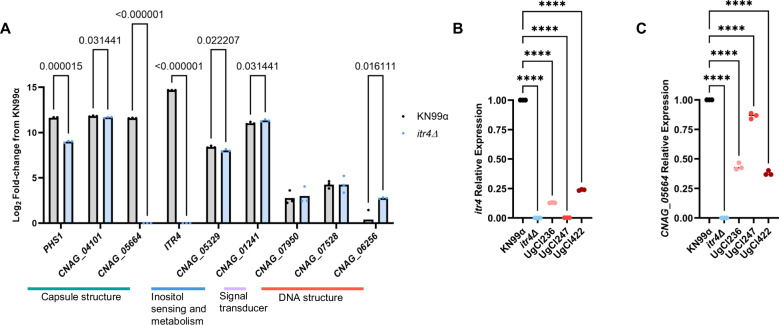
Studies across various pathogens highlight the importance of pathogen genetic differences in disease manifestation. In the human fungal pathogen Cryptococcus neoformans, sequence type (ST) associates with patient outcome. We performed a meta-analysis of four genomic studies and identified overlapping gene regions associated with virulence, suggesting the importance of these gene regions in cryptococcal disease in diverse clinical isolates. We explored the relationship between virulence and strain genetic differences using the cryptococcosis mouse model and a closely related library of ST93 clinical isolates. We identified four in vivo virulence phenotypes: hypervirulence, typical virulence with CNS disease, typical virulence with non-CNS disease, and latent disease. Hypervirulent isolates were clade specific and associated with an interferon gamma (IFNγ) dominated immune response. Using a genome wide association study (GWAS), we identified nine genes with polymorphisms associated with IFNγ production, including the inositol sensor ITR4. The itr4Δ mutant recapitulated the hypervirulence phenotype and ITR4 affects expression of two IFNγ associated genes. Finally, we showed that IFNγ production is associated with SNPs that downregulate ITR4 and with SNP accumulation in other IFNγ associated genes. These data highlight the complex role of pathogen genetics in virulence and identify genes associated with hypervirulence and IFNγ in Cryptococcus neoformans.
针对各种病原体的研究突出了病原体基因差异在疾病表现中的重要性。在人类真菌病原体新型隐球菌中,序列类型(ST)与患者预后相关。我们对四项基因组研究进行了荟萃分析,并确定了与毒力相关的重叠基因区域,这表明这些基因区域在不同临床分离株的隐球菌病中具有重要意义。我们使用隐球菌病小鼠模型和一个密切相关的ST93临床分离株文库,探索了毒力与菌株基因差异之间的关系。我们确定了四种体内毒力表型:高毒力、伴有中枢神经系统疾病的典型毒力、伴有非中枢神经系统疾病的典型毒力和潜伏性疾病。高毒力分离株具有进化枝特异性,并与以干扰素γ(IFNγ)为主导的免疫反应相关。通过全基因组关联研究(GWAS),我们确定了九个与IFNγ产生相关的多态性基因,包括肌醇传感器ITR4。itr4Δ突变体重现了高毒力表型,并且ITR4影响两个与IFNγ相关基因的表达。最后,我们表明IFNγ的产生与下调ITR4的单核苷酸多态性(SNP)以及其他与IFNγ相关基因中的SNP积累有关。这些数据突出了病原体遗传学在毒力中的复杂作用,并确定了新型隐球菌中与高毒力和IFNγ相关的基因。