Li Juan, Broster Lucas S, Jicha Gregory A, Munro Nancy B, Schmitt Frederick A, Abner Erin, Kryscio Richard, Smith Charles D, Jiang Yang
CAS Key Laboratory of Mental Health, Institute of Psychology, Chinese Academy of Sciences, 100101, Beijing, China.
Department of Behavioral Science, University of Kentucky College of Medicine, Lexington, KY, 40536, USA.
Alzheimers Res Ther. 2017 Jan 19;9(1):3. doi: 10.1186/s13195-016-0229-3.
Noninvasive and effective biomarkers for early detection of amnestic mild cognitive impairment (aMCI) before measurable changes in behavioral performance remain scarce. Cognitive event-related potentials (ERPs) measure synchronized synaptic neural activity associated with a cognitive event. Loss of synapses is a hallmark of the neuropathology of early Alzheimer's disease (AD). In the present study, we tested the hypothesis that ERP responses during working memory retrieval discriminate aMCI from cognitively normal controls (NC) matched in age and education.
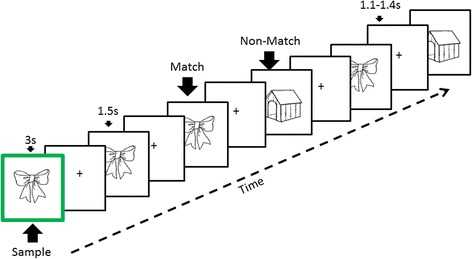
Eighteen NC, 17 subjects with aMCI, and 13 subjects with AD performed a delayed match-to-sample task specially designed not only to be easy enough for impaired participants to complete but also to generate comparable performance between subjects with NC and those with aMCI. Scalp electroencephalography, memory accuracy, and reaction times were measured.
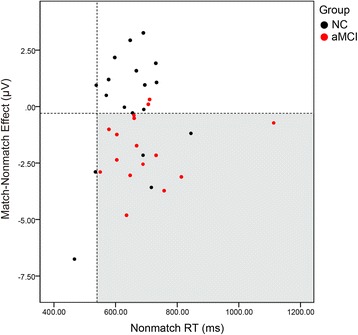
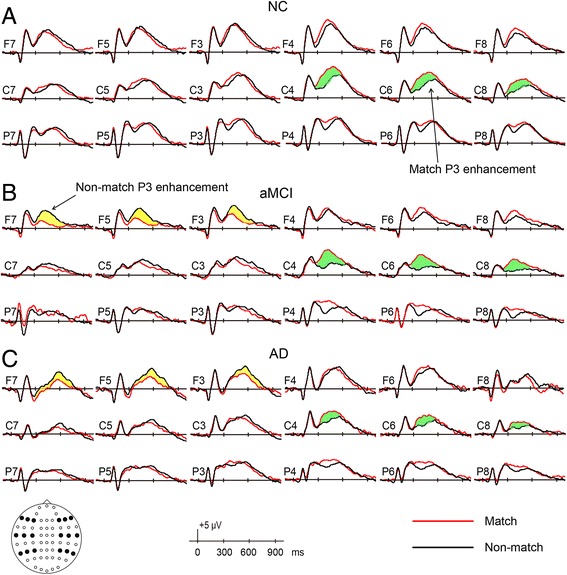
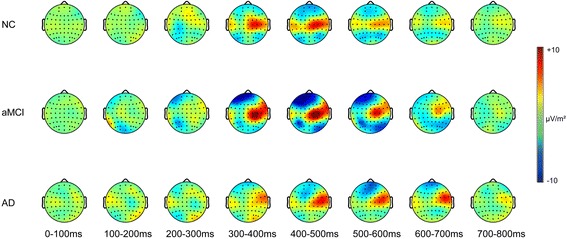
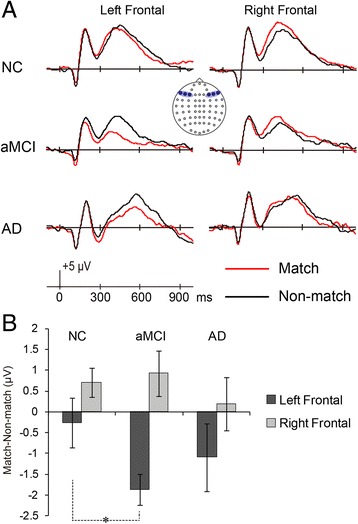
Whereas memory performance separated the AD group from the others, the performance of NC and subjects with aMCI was similar. In contrast, left frontal cognitive ERP patterns differentiated subjects with aMCI from NC. Enhanced P3 responses at left frontal sites were associated with nonmatching relative to matching stimuli during working memory tasks in patients with aMCI and AD, but not in NC. The accuracy of discriminating aMCI from NC was 85% by using left frontal match/nonmatch effect combined with nonmatch reaction time.
The left frontal cognitive ERP indicator holds promise as a sensitive, simple, affordable, and noninvasive biomarker for detection of early cognitive impairment.
在行为表现出现可测量变化之前,用于早期检测遗忘型轻度认知障碍(aMCI)的非侵入性有效生物标志物仍然匮乏。认知事件相关电位(ERP)测量与认知事件相关的同步突触神经活动。突触丧失是早期阿尔茨海默病(AD)神经病理学的一个标志。在本研究中,我们检验了这样一个假设,即工作记忆检索期间的ERP反应能够区分aMCI与年龄和教育程度相匹配的认知正常对照者(NC)。
18名NC、17名aMCI受试者和13名AD受试者执行了一项延迟匹配样本任务,该任务经过专门设计,不仅要足够简单以便受损参与者能够完成,而且要使NC组和aMCI组受试者之间产生可比的表现。测量头皮脑电图、记忆准确性和反应时间。
虽然记忆表现将AD组与其他组区分开来,但NC组和aMCI受试者的表现相似。相比之下,左额叶认知ERP模式将aMCI受试者与NC组区分开来。在工作记忆任务中,aMCI患者和AD患者左额叶部位增强的P3反应与非匹配刺激相对于匹配刺激有关,但在NC组中并非如此。通过使用左额叶匹配/非匹配效应结合非匹配反应时间,从NC组中区分出aMCI的准确率为85%。
左额叶认知ERP指标有望成为一种用于检测早期认知障碍的敏感、简单、经济且非侵入性的生物标志物。