Mardo Karin, Visnapuu Triinu, Vija Heiki, Aasamets Anneli, Viigand Katrin, Alamäe Tiina
Department of Genetics, Institute of Molecular and Cell Biology, University of Tartu, Tartu, Estonia.
Laboratory of Environmental Toxicology, National Institute of Chemical Physics and Biophysics, Tallinn, Estonia.
PLoS One. 2017 Jan 19;12(1):e0169989. doi: 10.1371/journal.pone.0169989. eCollection 2017.
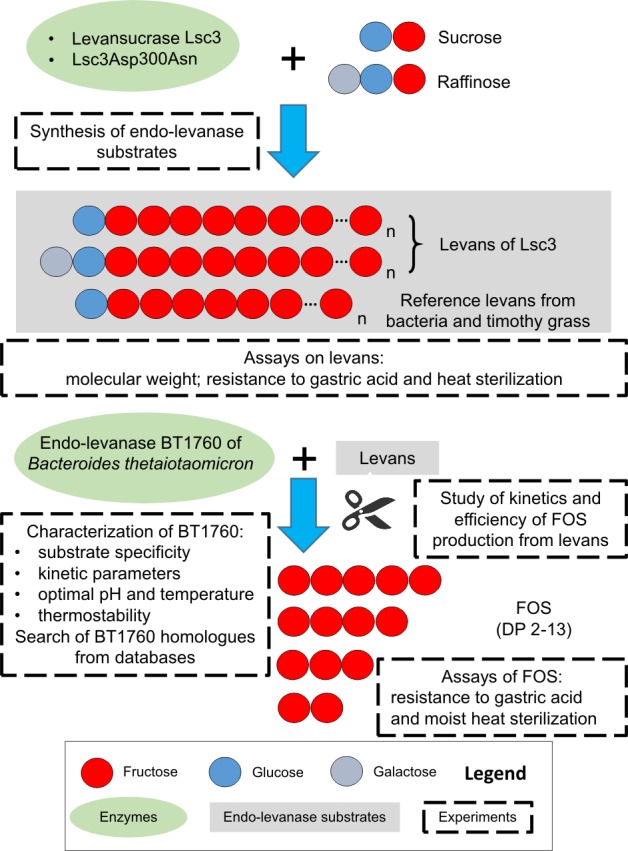
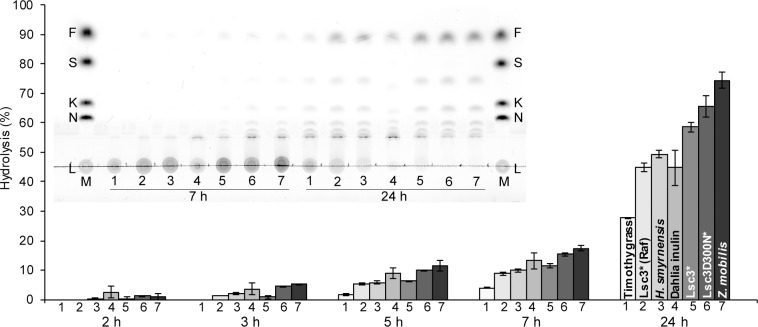
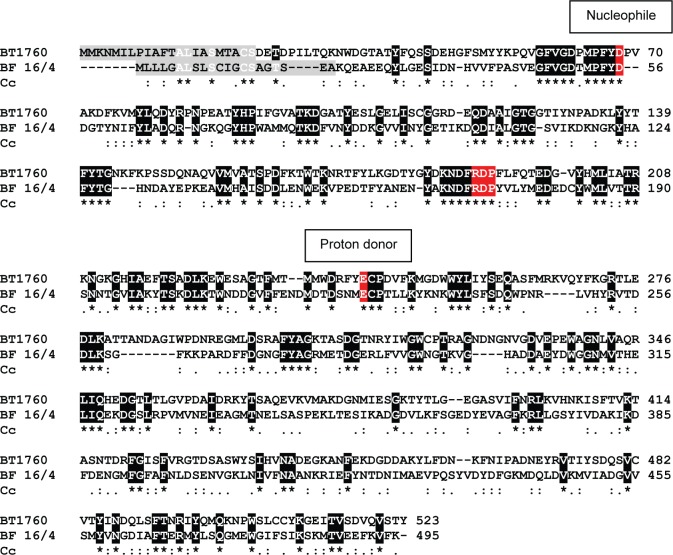
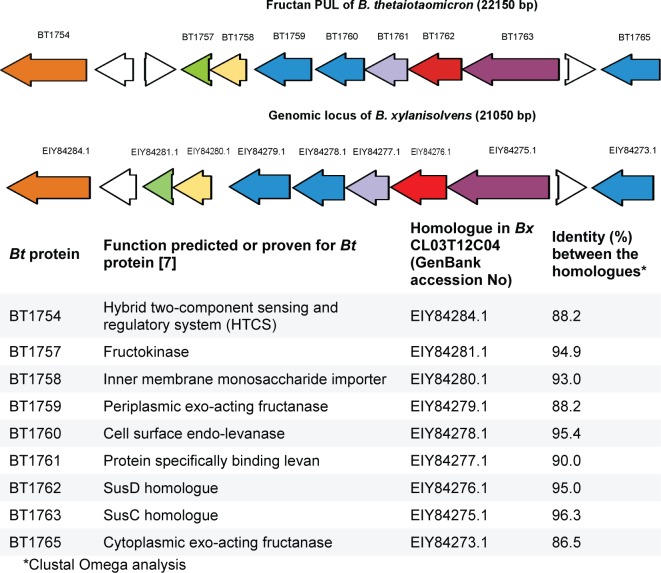
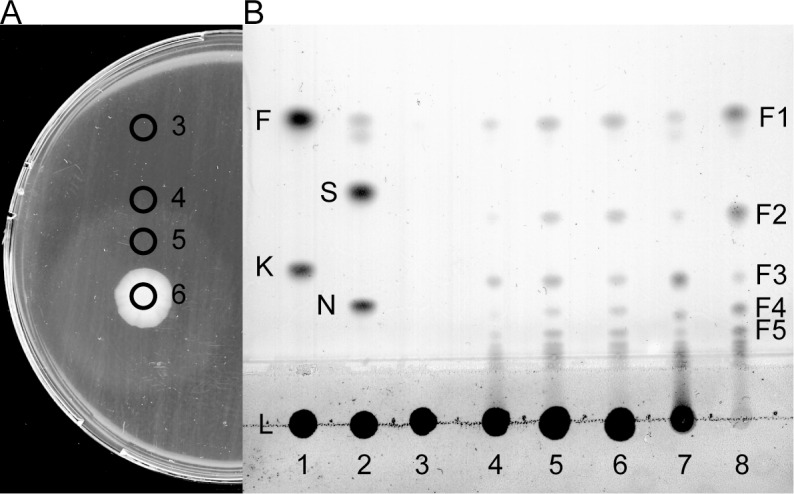
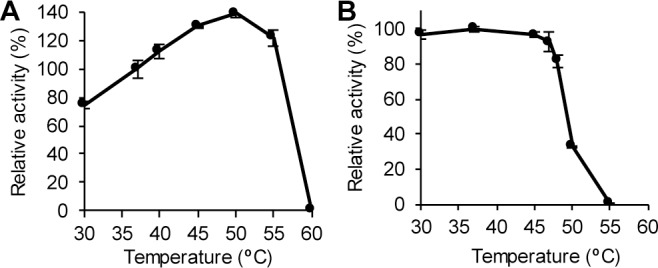
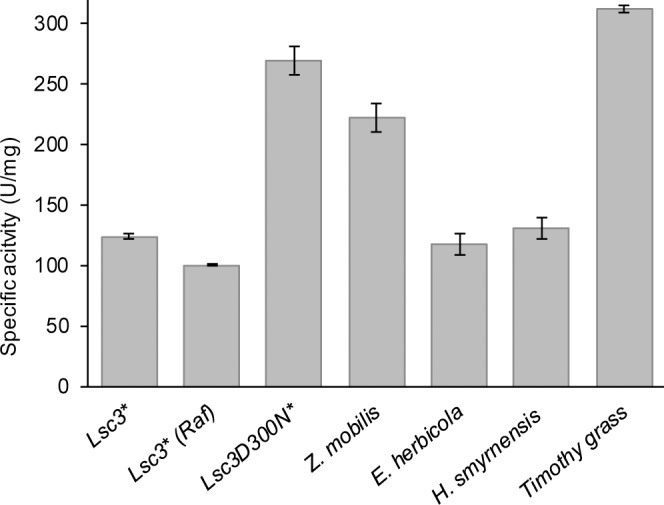
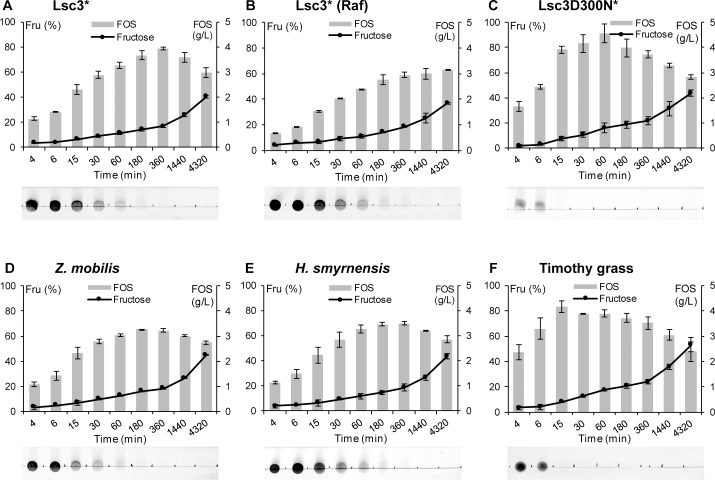
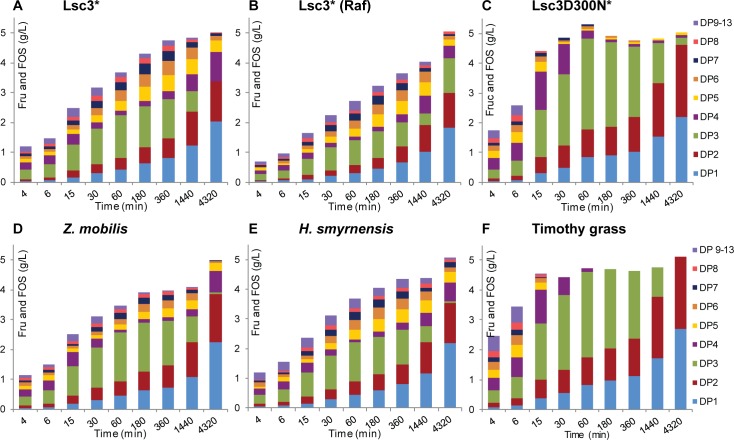
Bacteroides thetaiotaomicron, an abundant commensal of the human gut, degrades numerous complex carbohydrates. Recently, it was reported to grow on a β-2,6-linked polyfructan levan produced by Zymomonas mobilis degrading the polymer into fructooligosaccharides (FOS) with a cell surface bound endo-levanase BT1760. The FOS are consumed by B. thetaiotaomicron, but also by other gut bacteria, including health-promoting bifidobacteria and lactobacilli. Here we characterize biochemical properties of BT1760, including the activity of BT1760 on six bacterial levans synthesized by the levansucrase Lsc3 of Pseudomonas syringae pv. tomato, its mutant Asp300Asn, levansucrases of Zymomonas mobilis, Erwinia herbicola, Halomonas smyrnensis as well as on levan isolated from timothy grass. For the first time a plant levan is shown as a perfect substrate for an endo-fructanase of a human gut bacterium. BT1760 degraded levans to FOS with degree of polymerization from 2 to 13. At optimal reaction conditions up to 1 g of FOS were produced per 1 mg of BT1760 protein. Low molecular weight (<60 kDa) levans, including timothy grass levan and levan synthesized from sucrose by the Lsc3Asp300Asn, were degraded most rapidly whilst levan produced by Lsc3 from raffinose least rapidly. BT1760 catalyzed finely at human body temperature (37°C) and in moderately acidic environment (pH 5-6) that is typical for the gut lumen. According to differential scanning fluorimetry, the Tm of the endo-levanase was 51.5°C. All tested levans were sufficiently stable in acidic conditions (pH 2.0) simulating the gastric environment. Therefore, levans of both bacterial and plant origin may serve as a prebiotic fiber for B. thetaiotaomicron and contribute to short-chain fatty acids synthesis by gut microbiota. In the genome of Bacteroides xylanisolvens of human origin a putative levan degradation locus was disclosed.
多形拟杆菌是人类肠道中一种常见的共生菌,能降解多种复杂碳水化合物。最近有报道称,它能利用运动发酵单胞菌产生的β-2,6-连接的多聚果糖果聚糖生长,并通过细胞表面结合的内切果聚糖酶BT1760将该聚合物降解成果寡糖(FOS)。FOS不仅能被多形拟杆菌消耗,也能被其他肠道细菌利用,包括具有促进健康作用的双歧杆菌和乳酸杆菌。在此,我们对BT1760的生化特性进行了表征,包括BT1760对丁香假单胞菌番茄致病变种的蔗糖转化酶Lsc3、其突变体Asp300Asn、运动发酵单胞菌、草生欧文氏菌、斯米尔尼斯盐单胞菌的蔗糖转化酶以及从梯牧草中分离得到的果聚糖所合成的六种细菌果聚糖的活性。首次证明植物果聚糖是人类肠道细菌内切果聚糖酶的理想底物。BT1760将果聚糖降解为聚合度为2至13的FOS。在最佳反应条件下,每毫克BT1760蛋白可产生高达1克的FOS。低分子量(<60 kDa)的果聚糖,包括梯牧草果聚糖和由Lsc3Asp300Asn从蔗糖合成的果聚糖,降解速度最快,而由Lsc3从棉子糖产生的果聚糖降解速度最慢。BT1760在人体温度(37°C)和肠道腔典型的中等酸性环境(pH 5-6)中催化效果良好。根据差示扫描荧光法,内切果聚糖酶的熔解温度为51.5°C。所有测试的果聚糖在模拟胃环境的酸性条件(pH 2.0)下都具有足够的稳定性。因此,细菌来源和植物来源的果聚糖都可以作为多形拟杆菌的益生元纤维,并有助于肠道微生物群合成短链脂肪酸。在人类来源的解木聚糖拟杆菌基因组中发现了一个假定的果聚糖降解位点。