Muroi Daisuke, Hiroi Yasuhiro, Koshiba Teruaki, Suzuki Yohei, Kawaki Masahiro, Higuchi Takahiro
Department of Health Promotion Science, Tokyo Metropolitan University, Tokyo, Japan.
Department of Rehabilitation, Kameda Medical Center, Chiba, Japan.
PLoS One. 2017 Jan 19;12(1):e0170119. doi: 10.1371/journal.pone.0170119. eCollection 2017.
Walking through a narrow aperture requires unique postural configurations, i.e., body rotation in the yaw dimension. Stroke individuals may have difficulty performing the body rotations due to motor paralysis on one side of their body. The present study was therefore designed to investigate how successfully such individuals walk through apertures and how they perform body rotation behavior.
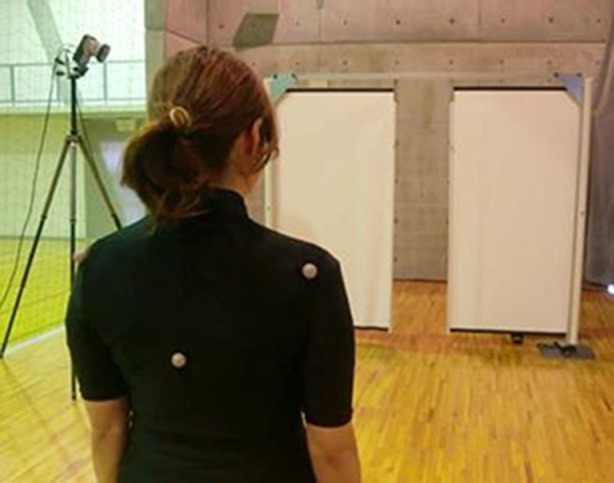
Stroke fallers (n = 10), stroke non-fallers (n = 13), and healthy controls (n = 23) participated. In the main task, participants walked for 4 m and passed through apertures of various widths (0.9-1.3 times the participant's shoulder width). Accidental contact with the frame of an aperture and kinematic characteristics at the moment of aperture crossing were measured. Participants also performed a perceptual judgment task to measure the accuracy of their perceived aperture passability.
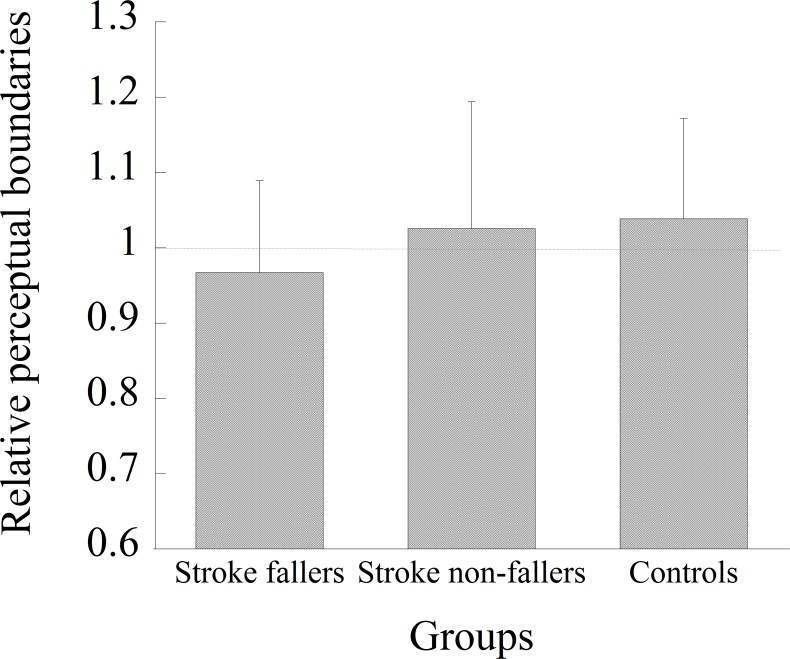
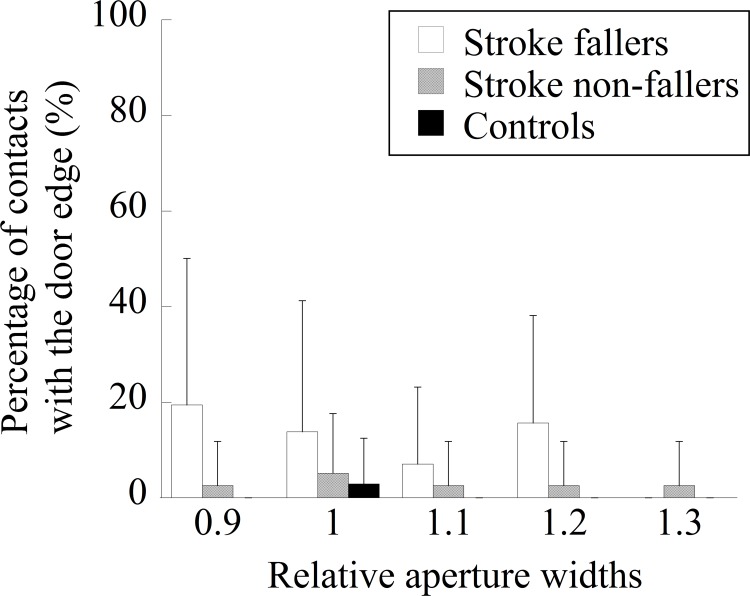
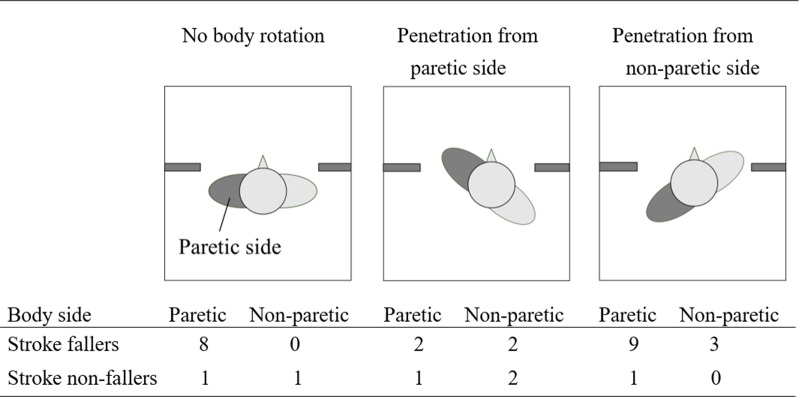
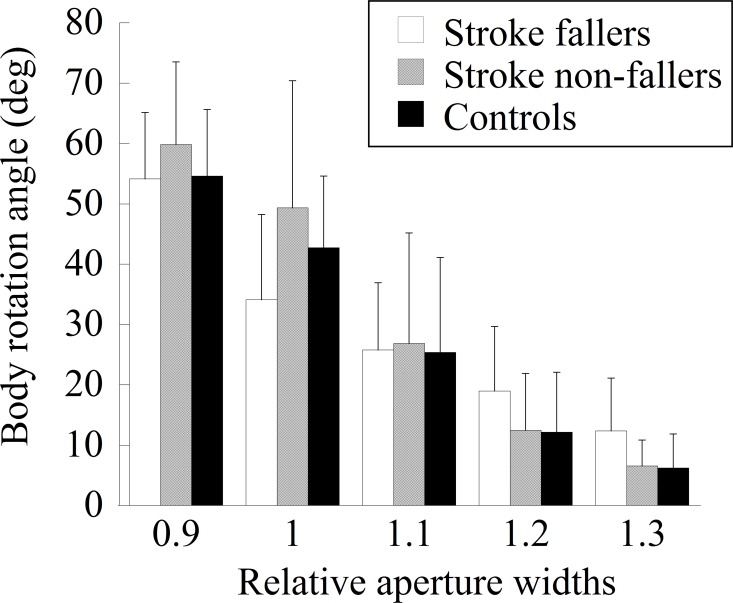
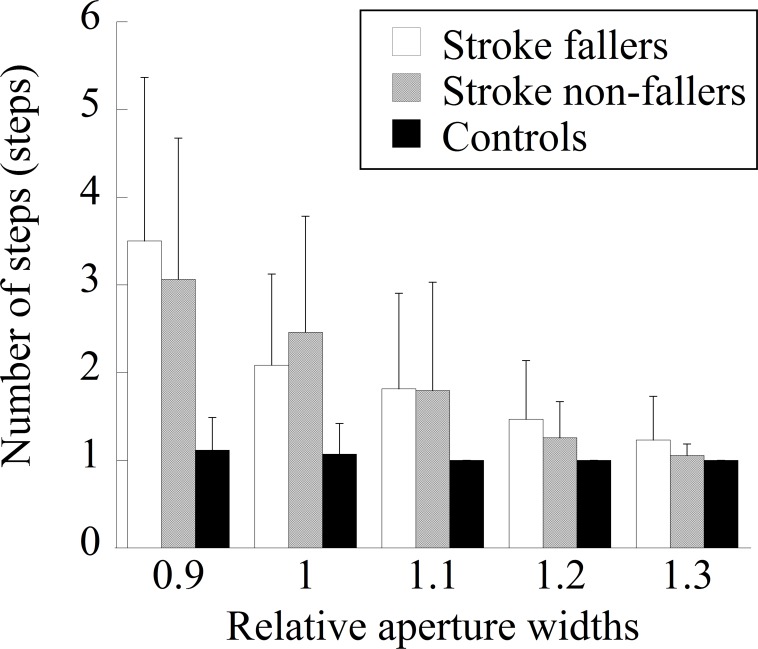
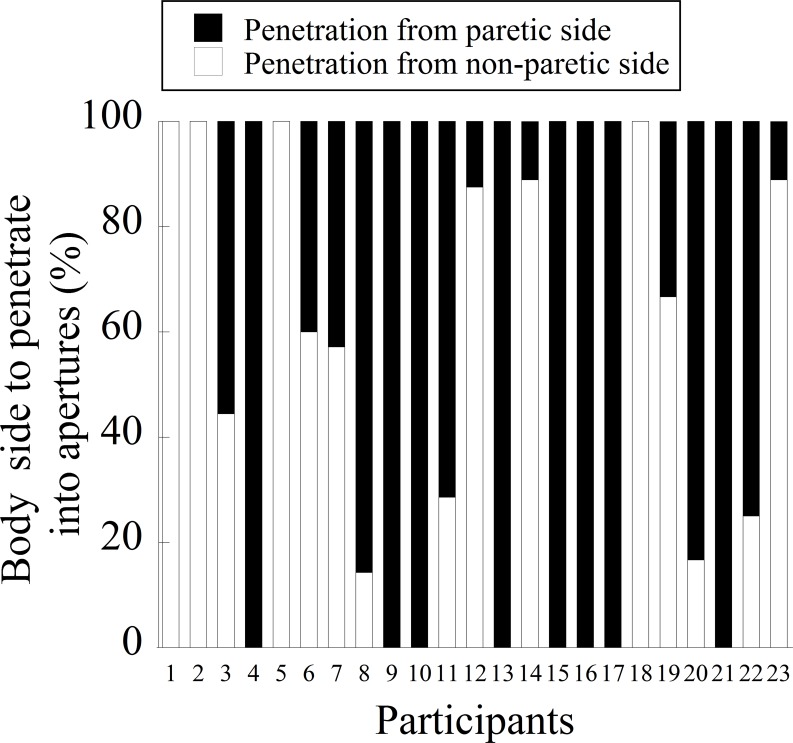
Stroke fallers made frequent contacts on their paretic side; however, the contacts were not frequent when they penetrated apertures from their paretic side. Stroke fallers and non-fallers rotated their body with multiple steps, rather than a single step, to deal with their motor paralysis. Although the minimum passable width was greater for stroke fallers, the body rotation angle was comparable among groups. This suggests that frequent contact in stroke fallers was due to insufficient body rotation. The fact that there was no significant group difference in the perceived aperture passability suggested that contact occurred mainly due to locomotor factors rather than perceptual factors. Two possible explanations (availability of vision and/or attention) were provided as to why accidental contact on the paretic side did not occur frequently when stroke fallers penetrated the apertures from their paretic side.
穿过狭窄孔径需要独特的姿势配置,即在偏航维度上进行身体旋转。中风患者可能由于身体一侧的运动麻痹而难以进行身体旋转。因此,本研究旨在调查这些个体在穿过孔径时的成功程度以及他们如何执行身体旋转行为。
中风跌倒者(n = 10)、中风未跌倒者(n = 13)和健康对照组(n = 23)参与了研究。在主要任务中,参与者行走4米并穿过各种宽度(为参与者肩宽的0.9 - 1.3倍)的孔径。测量与孔径框架的意外接触以及穿过孔径瞬间的运动学特征。参与者还执行了一项感知判断任务,以测量他们对孔径可通过性的感知准确性。
中风跌倒者在其患侧频繁接触;然而,当他们从患侧穿过孔径时,接触并不频繁。中风跌倒者和未跌倒者通过多步而不是单步来旋转身体,以应对他们的运动麻痹。尽管中风跌倒者的最小可通过宽度更大,但各组之间的身体旋转角度相当。这表明中风跌倒者的频繁接触是由于身体旋转不足。在感知孔径可通过性方面没有显著的组间差异这一事实表明,接触主要是由于运动因素而非感知因素引起的。针对中风跌倒者从患侧穿过孔径时患侧意外接触不频繁的原因,提供了两种可能的解释(视觉可用性和/或注意力)。