Gokhale Tanmay A, Kim Jong M, Kirkton Robert D, Bursac Nenad, Henriquez Craig S
Department of Biomedical Engineering, Duke University, Durham, North Carolina, United States of America.
Medical Scientist Training Program, Duke University, Durham, North Carolina, United States of America.
PLoS Comput Biol. 2017 Jan 20;13(1):e1005342. doi: 10.1371/journal.pcbi.1005342. eCollection 2017 Jan.
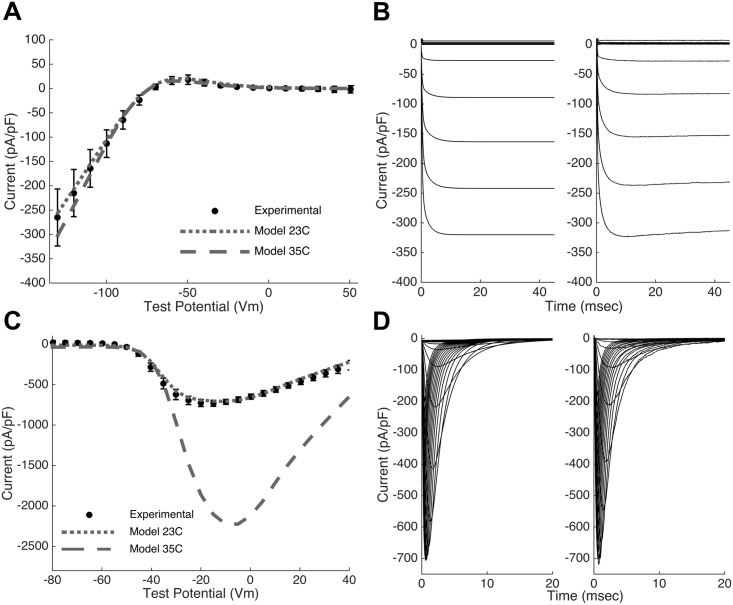
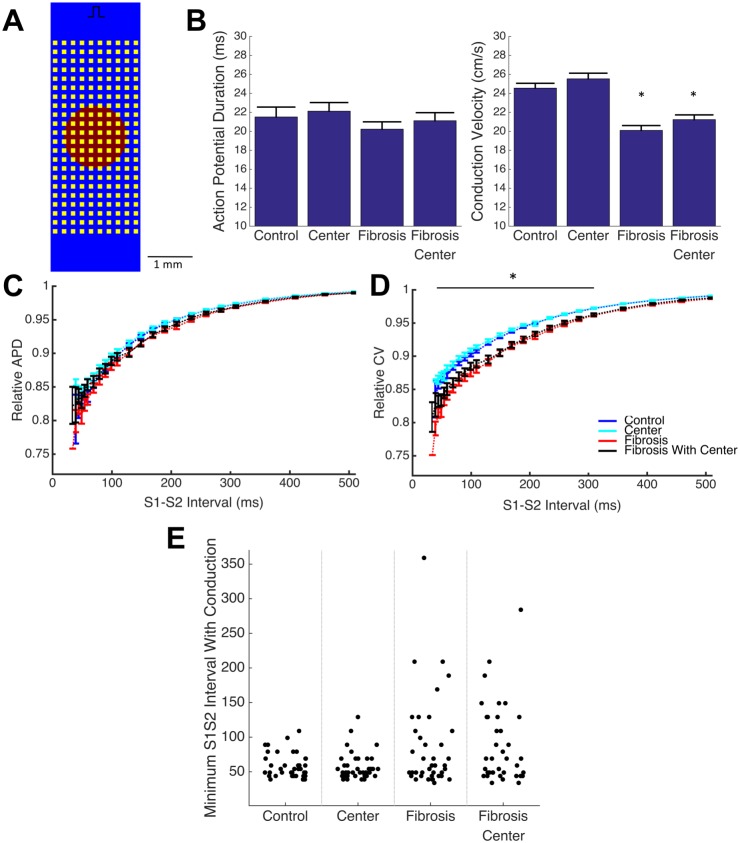
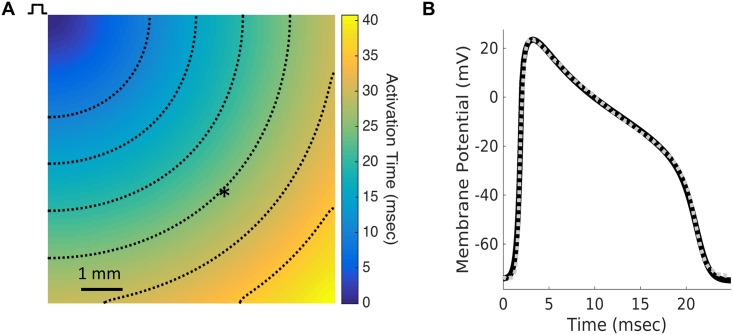
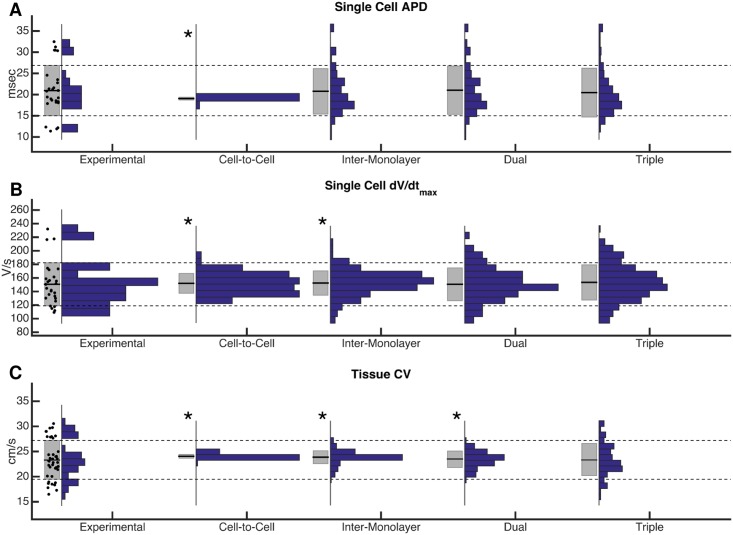
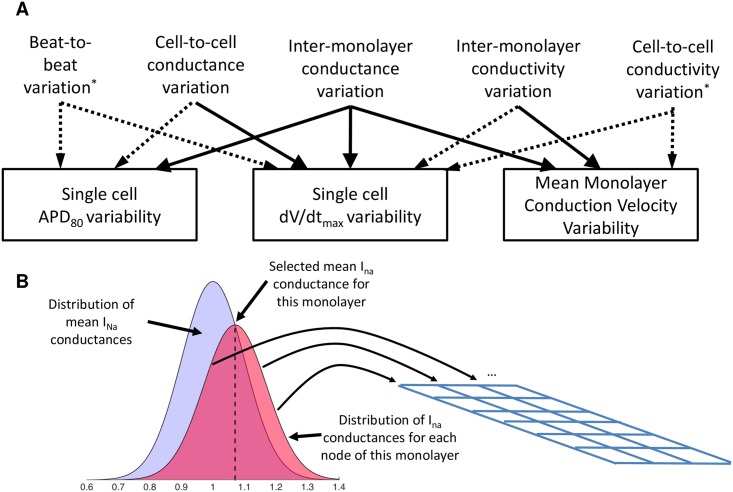
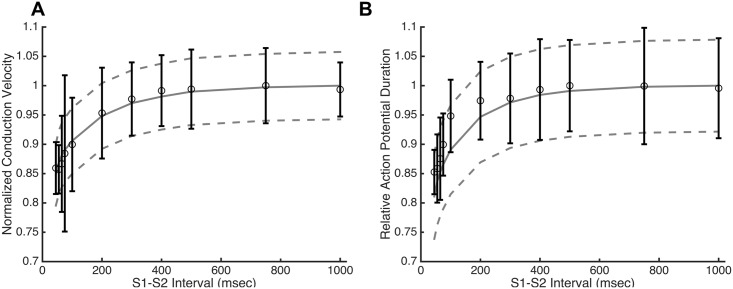
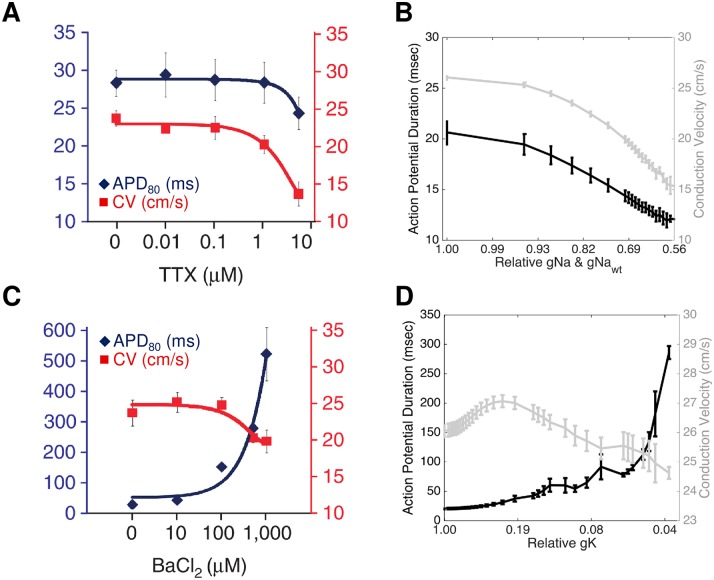
To understand how excitable tissues give rise to arrhythmias, it is crucially necessary to understand the electrical dynamics of cells in the context of their environment. Multicellular monolayer cultures have proven useful for investigating arrhythmias and other conduction anomalies, and because of their relatively simple structure, these constructs lend themselves to paired computational studies that often help elucidate mechanisms of the observed behavior. However, tissue cultures of cardiomyocyte monolayers currently require the use of neonatal cells with ionic properties that change rapidly during development and have thus been poorly characterized and modeled to date. Recently, Kirkton and Bursac demonstrated the ability to create biosynthetic excitable tissues from genetically engineered and immortalized HEK293 cells with well-characterized electrical properties and the ability to propagate action potentials. In this study, we developed and validated a computational model of these excitable HEK293 cells (called "Ex293" cells) using existing electrophysiological data and a genetic search algorithm. In order to reproduce not only the mean but also the variability of experimental observations, we examined what sources of variation were required in the computational model. Random cell-to-cell and inter-monolayer variation in both ionic conductances and tissue conductivity was necessary to explain the experimentally observed variability in action potential shape and macroscopic conduction, and the spatial organization of cell-to-cell conductance variation was found to not impact macroscopic behavior; the resulting model accurately reproduces both normal and drug-modified conduction behavior. The development of a computational Ex293 cell and tissue model provides a novel framework to perform paired computational-experimental studies to study normal and abnormal conduction in multidimensional excitable tissue, and the methodology of modeling variation can be applied to models of any excitable cell.
为了理解可兴奋组织如何引发心律失常,至关重要的是要在细胞所处环境的背景下理解其电动力学。多细胞单层培养已被证明有助于研究心律失常和其他传导异常,并且由于其结构相对简单,这些构建体适用于配对的计算研究,这通常有助于阐明所观察到行为的机制。然而,目前心肌细胞单层的组织培养需要使用具有在发育过程中迅速变化的离子特性的新生细胞,并且迄今为止其特性描述和建模都很差。最近,柯克顿和布尔萨克证明了利用具有特征明确的电特性和传播动作电位能力的基因工程化和永生化的HEK293细胞创建生物合成可兴奋组织的能力。在本研究中,我们利用现有的电生理数据和遗传搜索算法开发并验证了这些可兴奋的HEK293细胞(称为“Ex293”细胞)的计算模型。为了不仅再现实验观察值的平均值,还再现其变异性,我们研究了计算模型中需要哪些变异来源。离子电导和组织电导率在细胞间和单层间的随机变化对于解释实验观察到的动作电位形状和宏观传导的变异性是必要的,并且发现细胞间电导变化的空间组织不影响宏观行为;所得模型准确地再现了正常和药物修饰后的传导行为。计算Ex293细胞和组织模型的开发提供了一个新颖的框架,用于进行配对的计算 - 实验研究,以研究多维可兴奋组织中的正常和异常传导,并且建模变异的方法可以应用于任何可兴奋细胞的模型。