Groenendaal Willemijn, Ortega Francis A, Kherlopian Armen R, Zygmunt Andrew C, Krogh-Madsen Trine, Christini David J
Greenberg Division of Cardiology, Weill Cornell Medical College, New York, New York, United States of America.
Department of Physiology and Biophysics, Weill Cornell Medical College, New York, New York, United States of America.
PLoS Comput Biol. 2015 Apr 30;11(4):e1004242. doi: 10.1371/journal.pcbi.1004242. eCollection 2015 Apr.
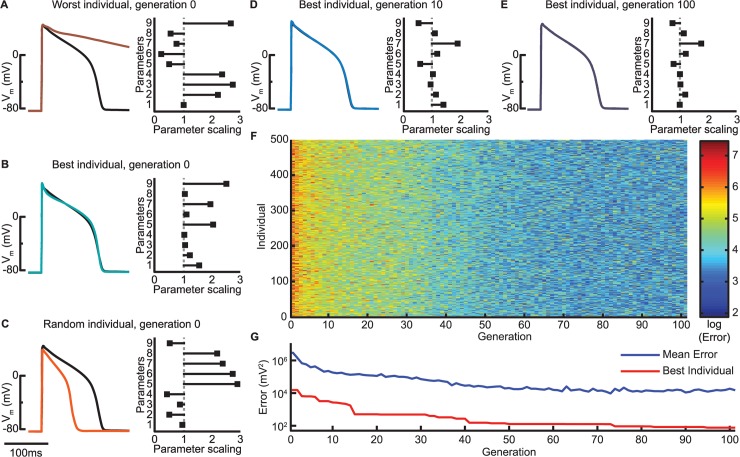
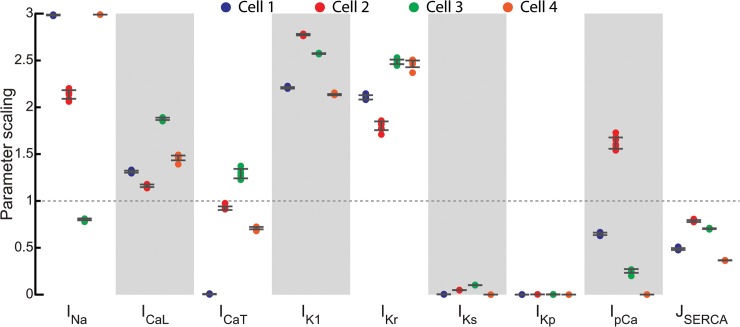
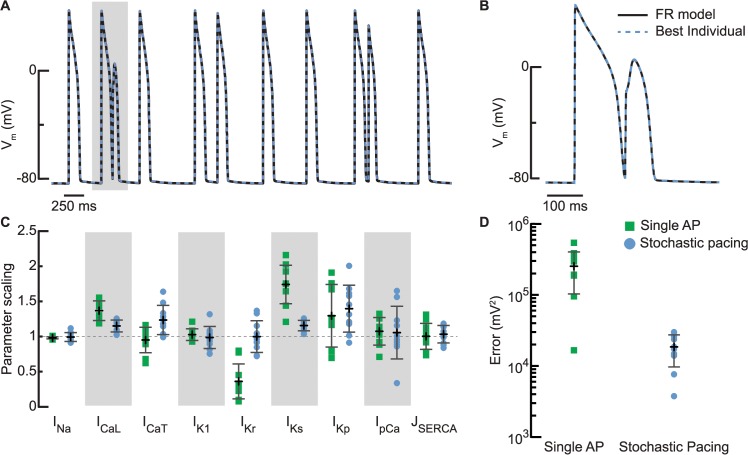
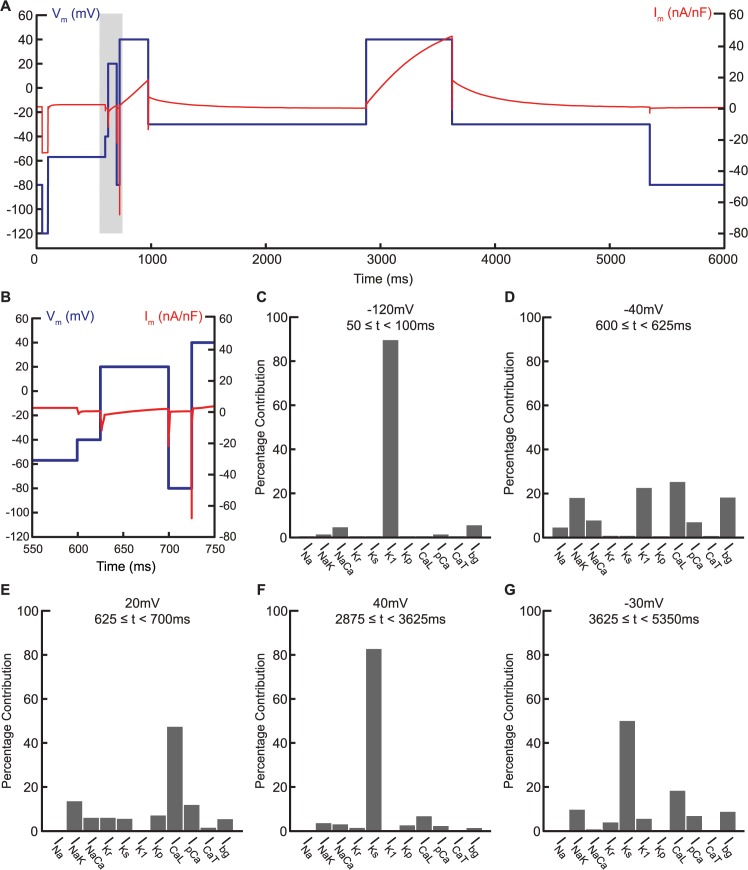
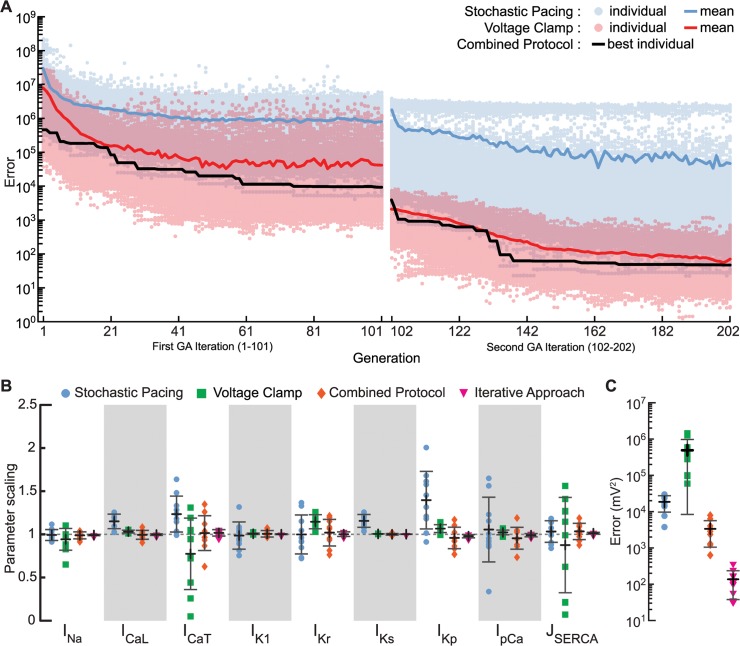
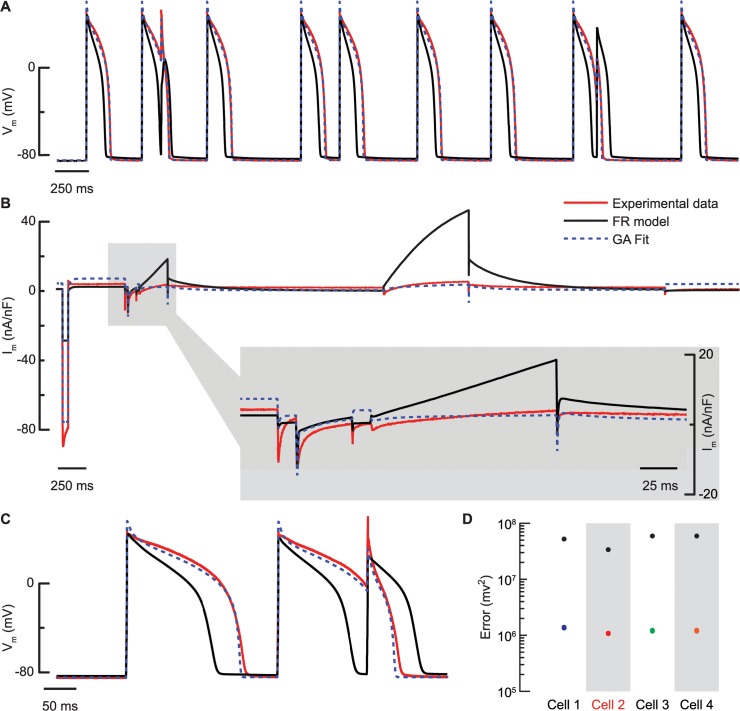
The traditional cardiac model-building paradigm involves constructing a composite model using data collected from many cells. Equations are derived for each relevant cellular component (e.g., ion channel, exchanger) independently. After the equations for all components are combined to form the composite model, a subset of parameters is tuned, often arbitrarily and by hand, until the model output matches a target objective, such as an action potential. Unfortunately, such models often fail to accurately simulate behavior that is dynamically dissimilar (e.g., arrhythmia) to the simple target objective to which the model was fit. In this study, we develop a new approach in which data are collected via a series of complex electrophysiology protocols from single cardiac myocytes and then used to tune model parameters via a parallel fitting method known as a genetic algorithm (GA). The dynamical complexity of the electrophysiological data, which can only be fit by an automated method such as a GA, leads to more accurately parameterized models that can simulate rich cardiac dynamics. The feasibility of the method is first validated computationally, after which it is used to develop models of isolated guinea pig ventricular myocytes that simulate the electrophysiological dynamics significantly better than does a standard guinea pig model. In addition to improving model fidelity generally, this approach can be used to generate a cell-specific model. By so doing, the approach may be useful in applications ranging from studying the implications of cell-to-cell variability to the prediction of intersubject differences in response to pharmacological treatment.
传统的心脏模型构建范式涉及使用从许多细胞收集的数据构建一个复合模型。针对每个相关的细胞成分(例如离子通道、离子交换器)独立推导方程。在将所有成分的方程组合以形成复合模型后,通常通过人工随意调整一部分参数,直到模型输出与目标对象(例如动作电位)匹配。不幸的是,这样的模型往往无法准确模拟与模型所拟合的简单目标对象动态不同的行为(例如心律失常)。在本研究中,我们开发了一种新方法,通过一系列复杂的电生理协议从单个心肌细胞收集数据,然后使用一种称为遗传算法(GA)的并行拟合方法来调整模型参数。电生理数据的动态复杂性只能通过诸如遗传算法这样的自动化方法来拟合,这导致可以模拟丰富心脏动态的参数化更准确的模型。该方法的可行性首先通过计算进行验证,之后用于开发分离的豚鼠心室肌细胞模型,该模型模拟电生理动态的效果明显优于标准豚鼠模型。除了总体上提高模型保真度外,这种方法还可用于生成细胞特异性模型。这样做,该方法可能在从研究细胞间变异性的影响到预测个体对药物治疗反应差异等各种应用中有用。