The Second Hospital of Tianjin Medical University, Tianjin Institute of Urology and School of Medical Laboratory, Tianjin Medical University, Tianjin, 300070, China.
Department of Laboratory Medicine, Children's Hospital of Hebei Province, Shijiazhuang, 050031, China.
J Exp Clin Cancer Res. 2019 Sep 3;38(1):386. doi: 10.1186/s13046-019-1347-0.
Renal cell carcinoma (RCC) is a deadly urological tumor that remains largely incurable. Our limited understanding of key molecular mechanisms underlying RCC invasion and metastasis has hampered efforts to identify molecular drivers with therapeutic potential. With evidence from our previous study revealing that nuclear overexpression of YBX1 is associated with RCC T stage and metastasis, we investigated the effects of YBX1 in RCC migration, invasion, and adhesion, and then characterized its interaction with RCC-associated proteins G3BP1 and SPP1.
Renal cancer cell lines, human embryonic kidney cells, and clinical samples were analyzed to investigate the functional role of YBX1 in RCC metastasis. YBX1 knockdown cells were established via lentiviral infection and subjected to adhesion, transwell migration, and invasion assay. Microarray, immunoprecipitation, dual-luciferase reporter assay, and classical biochemical assays were applied to characterize the mechanism of YBX1 interaction with RCC-associated proteins G3BP1 and SPP1.
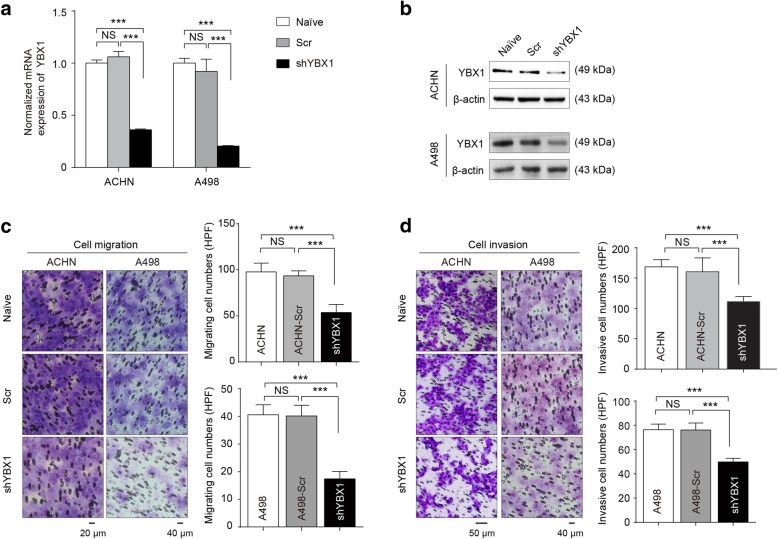
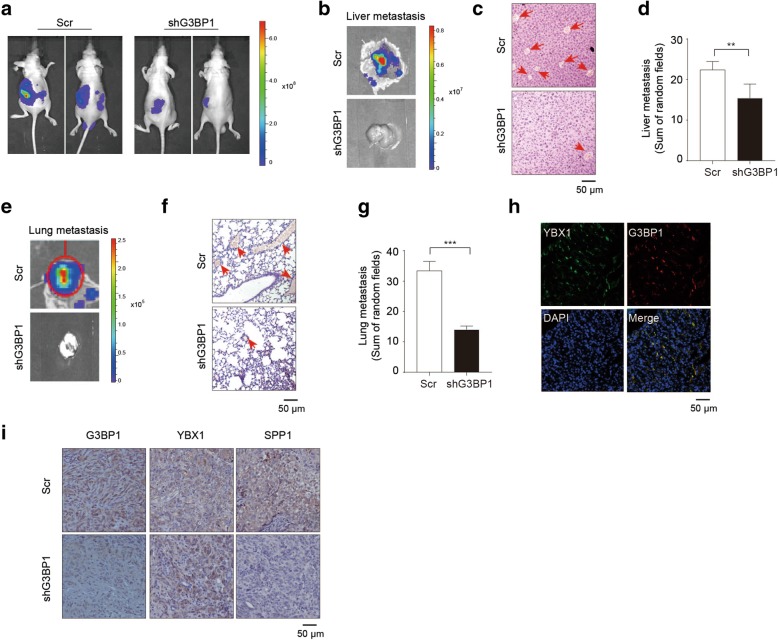
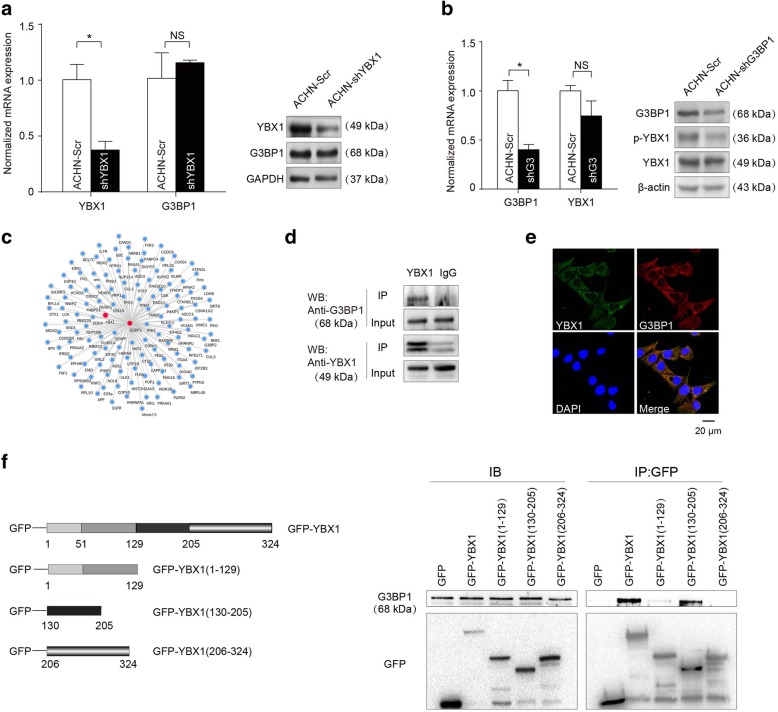
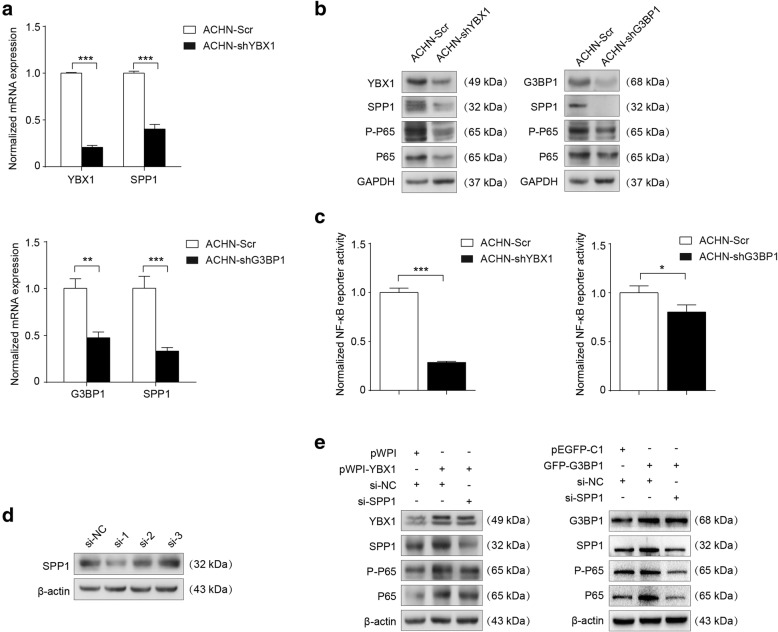
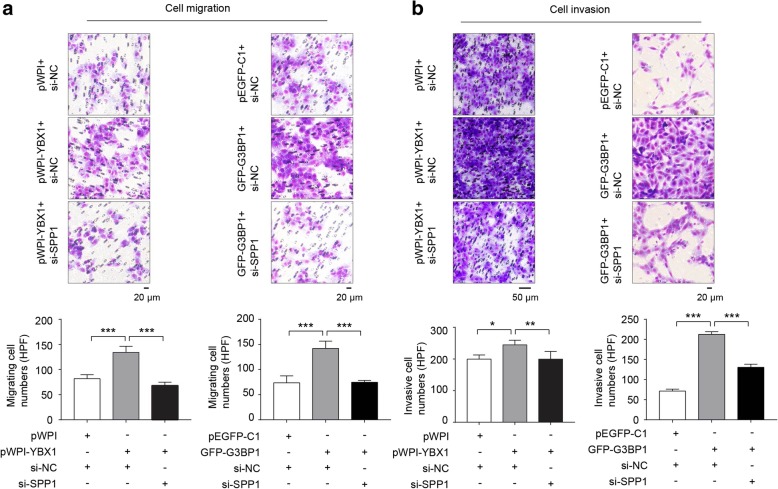
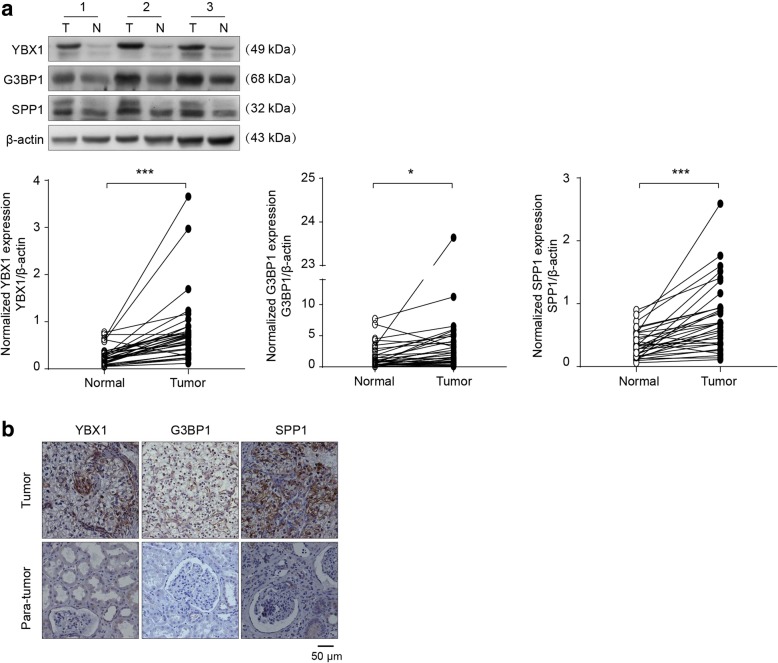
Knockdown of YBX1 in RCC cells dramatically inhibited cell adhesion, migration, and invasion. Mechanistic investigations revealed that YBX1 interaction with G3BP1 upregulated their downstream target SPP1 in vitro and in vivo, which led to an activated NF-κB signaling pathway. Meanwhile, knockdown of SPP1 rescued the YBX1/G3BP1-mediated activation of NF-κB signaling pathway, and RCC cell migration and invasion. We further showed that YBX1 expression was positively correlated with G3BP1 and SPP1 expression levels in clinical RCC samples.
YBX1 interacts with G3BP1 to promote metastasis of RCC by activating the YBX1/G3BP1-SPP1-NF-κB signaling axis.
肾细胞癌(RCC)是一种致命的泌尿系统肿瘤,目前基本上无法治愈。我们对 RCC 侵袭和转移的关键分子机制的了解有限,这阻碍了我们识别具有治疗潜力的分子驱动因素。我们之前的研究证据表明,YBX1 的核过表达与 RCC 的 T 分期和转移有关,因此我们研究了 YBX1 在 RCC 迁移、侵袭和黏附中的作用,然后对其与 RCC 相关蛋白 G3BP1 和 SPP1 的相互作用进行了特征描述。
分析了肾癌细胞系、人胚肾细胞和临床样本,以研究 YBX1 在 RCC 转移中的功能作用。通过慢病毒感染建立 YBX1 敲低细胞系,并进行黏附、Transwell 迁移和侵袭实验。应用微阵列、免疫沉淀、双荧光素酶报告基因检测和经典生化方法来描述 YBX1 与 RCC 相关蛋白 G3BP1 和 SPP1 相互作用的机制。
在 RCC 细胞中敲低 YBX1 可显著抑制细胞黏附、迁移和侵袭。机制研究表明,YBX1 与 G3BP1 的相互作用在体外和体内上调了它们的下游靶标 SPP1,从而激活了 NF-κB 信号通路。同时,敲低 SPP1 挽救了 YBX1/G3BP1 介导的 NF-κB 信号通路的激活以及 RCC 细胞的迁移和侵袭。我们进一步表明,在临床 RCC 样本中,YBX1 的表达与 G3BP1 和 SPP1 的表达水平呈正相关。
YBX1 与 G3BP1 相互作用,通过激活 YBX1/G3BP1-SPP1-NF-κB 信号轴促进 RCC 的转移。